
TCL 50 XE NxtPaper vs. Motorola Moto G Stylus 5G (2023): A Detailed Comparison
| Phones Images | |||||
|---|---|---|---|---|---|
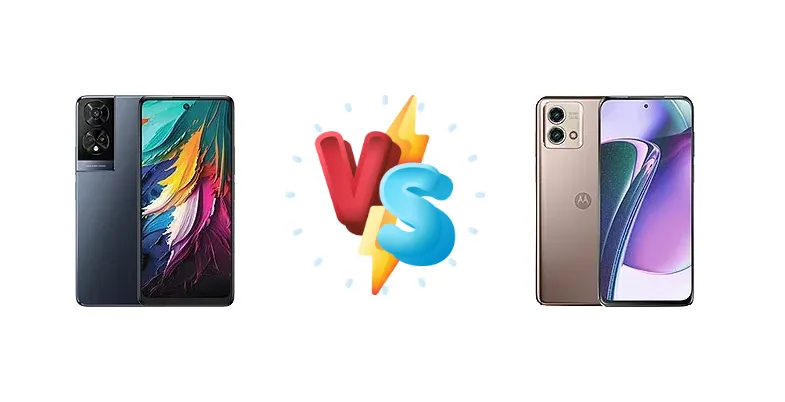
|
🏆 Quick Verdict
For the average user prioritizing sustained performance and efficiency, the Motorola Moto G Stylus 5G (2023) is the better choice. Its Snapdragon 6 Gen 1, built on a 4nm process, offers a noticeable advantage in thermal management and overall responsiveness compared to the TCL’s Dimensity 6100+.
| PHONES | ||
|---|---|---|
| Phone Names | TCL 50 XE NxtPaper | Motorola Moto G Stylus 5G (2023) |
| Network | ||
|---|---|---|
| 2G bands | GSM 850 / 900 / 1800 / 1900 | GSM 850 / 900 / 1800 / 1900 |
| 3G bands | HSDPA 850 / 1700(AWS) / 1900 | HSDPA 850 / 900 / 1700(AWS) / 1900 / 2100 |
| 4G bands | 1, 2, 3, 4, 5, 7, 8, 12, 13, 20, 25, 26, 28, 38, 39, 40, 41, 66, 71 | 1, 2, 3, 4, 5, 7, 8, 12, 13, 14, 17, 18, 19, 20, 25, 26, 29, 30, 38, 39, 40, 41, 48, 66, 71 |
| 5G bands | 2, 5, 25, 41, 48, 66, 71, 77 SA/NSA/Sub6 | 1, 2, 3, 5, 7, 12, 13, 14, 25, 26, 29, 30, 38, 41, 48, 66, 70, 71, 77, 78 SA/NSA |
| Speed | HSPA, LTE, 5G | HSPA, LTE, 5G |
| Technology | GSM / HSPA / LTE / 5G | GSM / HSPA / LTE / 5G |
| Launch | ||
|---|---|---|
| Announced | 2024, June | 2023, May 30 |
| Status | Available. Released 2024, July | Available. Released 2023, June 02 |
| Body | ||
|---|---|---|
| Build | - | Glass front, plastic frame, plastic back |
| Dimensions | 164.1 x 75 x 8.3 mm (6.46 x 2.95 x 0.33 in) | 162.8 x 73.8 x 9.2 mm (6.41 x 2.91 x 0.36 in) |
| SIM | Nano-SIM | Nano-SIM |
| Weight | 185 g (6.53 oz) | 202 g (7.13 oz) |
| Display | ||
|---|---|---|
| Resolution | 720 x 1612 pixels, 20:9 ratio (~269 ppi density) | 1080 x 2400 pixels, 20:9 ratio (~399 ppi density) |
| Size | 6.56 inches, 103.4 cm2 (~84.0% screen-to-body ratio) | 6.6 inches, 105.2 cm2 (~87.5% screen-to-body ratio) |
| Type | IPS LCD, 90Hz | IPS LCD, 120Hz |
| Platform | ||
|---|---|---|
| CPU | Octa-core (2x1.8 GHz Cortex-A76 & 6x1.8 GHz Cortex-A55) | Octa-core (4x2.2 GHz Cortex-A78 & 4x1.8 GHz Cortex-A55) |
| Chipset | Mediatek Dimensity 6100+ (6 nm) | Qualcomm SM6450 Snapdragon 6 Gen 1 (4 nm) |
| GPU | Mali-G57 MC2 | Adreno 710 |
| OS | Android 14 | Android 13, planned upgrade to Android 14 |
| Memory | ||
|---|---|---|
| Card slot | microSDXC | microSDXC (dedicated slot) |
| Internal | 128GB 4GB RAM | 64GB 4GB RAM, 128GB 4GB RAM, 128GB 6GB RAM, 256GB 6GB RAM |
| Main Camera | ||
|---|---|---|
| Dual | 50 MP, (wide), PDAF 5 MP, (ultrawide) Auxiliary lens | 50 MP, f/1.9, (wide), 1.0µm, PDAF 8 MP, f/2.2, (ultrawide), 1/4.0", 1.12µm, AF |
| Features | LED flash, HDR, panorama | LED flash, HDR, panorama |
| Video | 1080p@30fps | 4K@30fps, 1080p@30/60fps |
| Selfie camera | ||
|---|---|---|
| Features | - | HDR |
| Single | 8 MP, (wide) | 16 MP, f/2.5, (wide), 1.0µm |
| Video | 1080p@30fps | 1080p@30fps |
| Sound | ||
|---|---|---|
| 35mm jack | Yes | Yes |
| Loudspeaker | Yes, with stereo speakers | Yes, with stereo speakers |
| Comms | ||
|---|---|---|
| Bluetooth | 5.3, A2DP, LE | 5.1, A2DP, LE |
| NFC | Yes (market/region dependent) | Yes |
| Positioning | GPS, GLONASS, BDS, GALILEO | GPS (L1+L5), GALILEO |
| Radio | FM radio | FM radio |
| USB | USB Type-C, OTG | USB Type-C 2.0 |
| WLAN | Wi-Fi 802.11 a/b/g/n/ac, dual-band, Wi-Fi Direct | Wi-Fi 802.11 a/b/g/n/ac, dual-band |
| Features | ||
|---|---|---|
| Sensors | Fingerprint (side-mounted), gyro, accelerometer, proximity, compass, barometer | Fingerprint (side-mounted), accelerometer, gyro, proximity, compass, barometer |
| Battery | ||
|---|---|---|
| Charging | 18W wired | 20W wired |
| Type | 5010 mAh | Li-Po 5000 mAh |
| Misc | ||
|---|---|---|
| Colors | Space Blue | Cosmic Black, Rose Champagne |
| Models | T614J, T614WS | XT2315-1, XT2315-4 |
| Price | - | $ 93.43 |
| SAR | 1.19 W/kg (head) 1.10 W/kg (body) | - |
TCL 50 XE NxtPaper
- Unique NxtPaper display for eye comfort
- Potentially longer battery life due to display technology
- Competitive price point
- Less powerful chipset compared to the Snapdragon
- Slower charging speed (18W)
- Potentially lower display brightness
Motorola Moto G Stylus 5G (2023)
- More powerful and efficient Snapdragon 6 Gen 1 chipset
- Faster 20W wired charging
- Integrated stylus for note-taking and creativity
- May lack the eye comfort features of the NxtPaper display
- Potentially slightly shorter battery life under heavy load
- Stylus may not be useful for all users
Display Comparison
While both devices likely feature LCD panels (data not provided), the TCL 50 XE NxtPaper’s defining feature is its NxtPaper technology, aiming to mimic the texture of paper for reduced eye strain. The Motorola Moto G Stylus 5G (2023) likely offers a more standard, brighter display. The TCL’s focus on a paper-like experience may result in lower peak brightness and potentially less vibrant colors, but could be preferable for extended reading sessions. Without specific nit ratings, it's difficult to quantify the brightness difference, but the Motorola will likely be more visible outdoors.
Camera Comparison
Without detailed camera specs beyond the presence of a stylus on the Motorola, a direct comparison is limited. However, the Motorola’s brand history suggests a focus on computational photography, potentially offering better image processing. The TCL’s camera performance will likely be adequate for casual use, but may struggle in low-light conditions. The absence of information regarding sensor sizes and apertures makes a definitive judgment impossible, but the Motorola is likely to offer a more refined camera experience.
Performance
The core difference lies in the chipsets. The Motorola’s Qualcomm Snapdragon 6 Gen 1 (4nm) boasts a more efficient architecture than the TCL’s MediaTek Dimensity 6100+ (6nm). The Snapdragon utilizes 4x Cortex-A78 cores clocked at 2.2 GHz, offering a performance edge over the TCL’s 2x Cortex-A76 cores at 1.8 GHz. This translates to faster app loading times and smoother multitasking on the Motorola. The 4nm process node of the Snapdragon also contributes to better thermal efficiency, reducing the likelihood of performance throttling during prolonged gaming or demanding tasks. While both use Cortex-A55 cores for efficiency, the Snapdragon’s overall architecture is more modern and capable.
Battery Life
The TCL 50 XE NxtPaper features 18W wired charging, while the Motorola Moto G Stylus 5G (2023) supports 20W wired charging. While the difference isn’t massive, the faster charging on the Motorola will result in quicker top-ups. Battery life will depend heavily on usage patterns and optimization, but the Snapdragon 6 Gen 1’s superior efficiency should translate to slightly longer battery life for the Motorola, even if the TCL has a larger capacity (data not provided). The 2W charging difference will likely shave off 15-30 minutes from a full charge on the Motorola.
Buying Guide
Buy the TCL 50 XE NxtPaper if you prioritize eye comfort and a unique reading experience, and are willing to trade some raw processing power for the NxtPaper display technology. Buy the Motorola Moto G Stylus 5G (2023) if you value a more responsive user experience, better sustained performance for gaming and multitasking, and the added functionality of a stylus for note-taking and creative tasks.