
TCL 50 SE vs 50 XL NxtPaper: Which Budget TCL Phone Wins?
| Phones Images | |||||
|---|---|---|---|---|---|
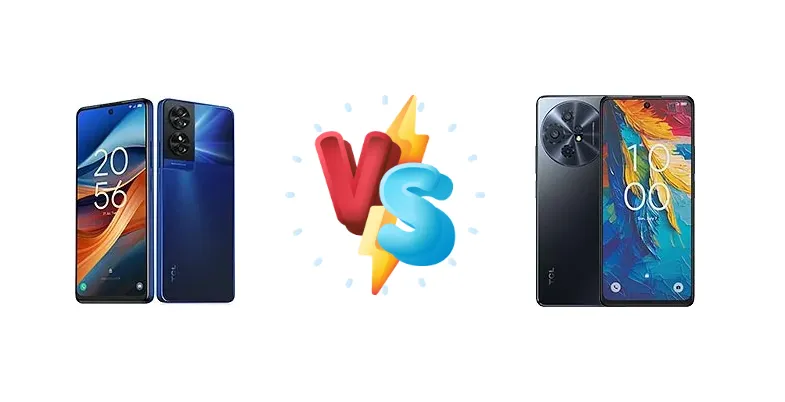
|
🏆 Quick Verdict
For most users, the TCL 50 XL NxtPaper is the better choice. While it sacrifices some charging speed, the more modern and efficient Mediatek Dimensity 6100+ chipset provides a noticeable performance boost and improved power management, making it ideal for daily tasks and moderate gaming. The NxtPaper display is also a significant differentiator.
| PHONES | ||
|---|---|---|
| Phone Names | TCL 50 SE | TCL 50 XL NxtPaper |
| Network | ||
|---|---|---|
| 2G bands | GSM 850 / 900 / 1800 / 1900 | GSM 850 / 900 / 1800 / 1900 |
| 3G bands | HSDPA 850 / 900 / 1700(AWS) / 1900 / 2100 | HSDPA 850 / 1700(AWS) / 1900 / 2100 |
| 4G bands | 1, 2, 3, 4, 5, 7, 8, 12, 13, 17, 20, 26, 28, 38, 40, 41, 66 | 1, 2, 3, 4, 5, 7, 8, 12, 13, 20, 25, 26, 28, 38, 39, 40, 41, 48, 66, 71 |
| 5G bands | - | 2, 5, 25, 41, 48, 66, 71, 77 SA/NSA/Sub6 |
| Speed | HSPA, LTE | HSPA, LTE, 5G |
| Technology | GSM / HSPA / LTE | GSM / HSPA / LTE / 5G |
| Launch | ||
|---|---|---|
| Announced | 2024, February 26 | 2024, June 26 |
| Status | Available. Released 2024, April 08 | Available. Released 2024, July 05 |
| Body | ||
|---|---|---|
| Build | Glass front, plastic frame, plastic back | - |
| Dimensions | 168.2 x 75.5 x 8.1 mm (6.62 x 2.97 x 0.32 in) | 167.6 x 75.5 x 8.2 mm (6.60 x 2.97 x 0.32 in) |
| SIM | · Nano-SIM· Nano-SIM + Nano-SIM | Nano-SIM |
| Weight | 195 g (6.88 oz) | 198.7 g (7.02 oz) |
| Display | ||
|---|---|---|
| Resolution | 1080 x 2460 pixels (~396 ppi density) | 1080 x 2460 pixels (~396 ppi density) |
| Size | 6.78 inches, 109.2 cm2 (~86.0% screen-to-body ratio) | 6.78 inches, 109.2 cm2 (~86.3% screen-to-body ratio) |
| Type | IPS LCD, 90Hz, 550 nits (typ) | IPS LCD, 120Hz |
| Platform | ||
|---|---|---|
| CPU | Octa-core (2x2.0 GHz Cortex-A75 & 6x1.8 GHz Cortex-A55) | Octa-core (2x2.2 GHz Cortex-A76 & 6x2.0 GHz Cortex-A55) |
| Chipset | Mediatek Helio G88 (12 nm) | Mediatek Dimensity 6100+ (6 nm) |
| GPU | Mali-G52 MC2 | Mali-G57 MC2 |
| OS | Android 14, planned upgrade to Android 15 | Android 14 |
| Memory | ||
|---|---|---|
| Card slot | microSDXC (dedicated slot) | microSDXC |
| Internal | 128GB 4GB RAM, 256GB 6GB RAM | 128GB 6GB RAM |
| Main Camera | ||
|---|---|---|
| Dual | 50 MP, f/1.8, (wide), 1/2.76", 0.64µm, PDAF 2 MP (macro) | - |
| Features | LED flash, HDR, panorama | LED flash, HDR, panorama |
| Triple | - | 50 MP, (wide), PDAF 5 MP, (ultrawide) Auxiliary lens |
| Video | 1080p@30fps | 1080p@30fps |
| Selfie camera | ||
|---|---|---|
| Features | HDR | - |
| Single | 8 MP, f/2.0, (wide), 1/4.0", 1.12µm | 32 MP, (wide) |
| Video | 1080p@30fps | 1080p@30fps |
| Sound | ||
|---|---|---|
| 35mm jack | Yes | Yes |
| Loudspeaker | Yes, with stereo speakers | Yes, with stereo speakers |
| Comms | ||
|---|---|---|
| Bluetooth | 5.1, A2DP, LE | 5.3, A2DP, LE |
| NFC | Yes (market/region dependent) | Yes |
| Positioning | GPS, GLONASS, GALILEO, BDS | GPS, GLONASS, BDS, GALILEO |
| Radio | Unspecified | FM radio |
| USB | USB Type-C 2.0 | USB Type-C, OTG |
| WLAN | Wi-Fi 802.11 a/b/g/n/ac, dual-band, Wi-Fi Direct | Wi-Fi 802.11 a/b/g/n/ac, dual-band |
| Features | ||
|---|---|---|
| Sensors | Fingerprint (side-mounted), accelerometer, proximity, compass | Fingerprint (side-mounted), gyro, accelerometer, proximity, compass, barometer |
| Battery | ||
|---|---|---|
| Charging | 33W wired, 50% in 30 min | 18W wired |
| Type | 5010 mAh | 5010 mAh |
| Misc | ||
|---|---|---|
| Colors | Midnight Blue, Space Gray | Space Blue |
| Models | T611B | T702M, T704SP |
| Price | About 150 EUR | - |
| SAR | - | 1.22 W/kg (head) 0.87 W/kg (body) |
TCL 50 SE
- Faster 33W charging for quick top-ups
- Potentially lower price point (depending on retailer)
- Sufficient performance for basic smartphone tasks
- Less efficient Mediatek Helio G88 chipset
- Likely shorter battery life compared to the XL NxtPaper
- Older processor architecture
TCL 50 XL NxtPaper
- More efficient Mediatek Dimensity 6100+ chipset
- NxtPaper display for reduced eye strain
- Improved CPU performance for smoother multitasking
- Slower 18W charging
- Potentially higher price point
- NxtPaper display may not appeal to all users
Display Comparison
Both devices feature 50-inch displays, but details beyond size are scarce. The TCL 50 XL NxtPaper’s defining feature is its NxtPaper display, designed to mimic the texture of paper for reduced eye strain. While specific brightness nits aren't provided, the NxtPaper technology inherently prioritizes readability over peak brightness. The SE likely utilizes a standard IPS LCD. Bezels are expected to be similar given the price bracket, and color accuracy will likely be standard for this segment – adequate, but not professional-grade.
Camera Comparison
Without detailed camera specifications, a direct comparison is difficult. Both phones likely feature a multi-camera setup, but the sensor sizes and lens apertures are unknown. The presence of a 2MP macro camera on either device is unlikely to significantly impact image quality; these are often included for marketing purposes rather than practical use. The Dimensity 6100+’s image signal processor (ISP) is likely more advanced than the Helio G88’s, potentially leading to better image processing, especially in low-light conditions. However, without knowing the main sensor resolution and aperture, it’s impossible to declare a clear winner.
Performance
The core difference lies in the chipsets. The TCL 50 SE’s Mediatek Helio G88 (12nm) is a capable but older processor. Its octa-core configuration (2x2.0 GHz Cortex-A75 & 6x1.8 GHz Cortex-A55) provides sufficient power for basic tasks. However, the TCL 50 XL NxtPaper’s Mediatek Dimensity 6100+ (6nm) represents a significant leap forward. The 6nm process node is inherently more efficient, leading to lower power consumption and reduced heat generation. The CPU configuration (2x2.2 GHz Cortex-A76 & 6x2.0 GHz Cortex-A55) also benefits from newer Cortex-A76 cores, offering improved single-core and multi-core performance. This translates to snappier app launches, smoother multitasking, and better gaming performance on the XL NxtPaper. RAM specifications are not provided, but the Dimensity 6100+’s superior architecture will be the dominant factor.
Battery Life
Battery capacity isn’t specified for either device, making a direct mAh comparison impossible. However, the TCL 50 XL NxtPaper’s more efficient Dimensity 6100+ chipset will undoubtedly result in longer battery life, even with a potentially smaller battery. The TCL 50 SE compensates with 33W wired charging, claiming 50% charge in 30 minutes. The XL NxtPaper is limited to 18W wired charging, meaning a full charge will take considerably longer. This trade-off – faster charging versus longer runtime – is a key consideration for potential buyers.
Buying Guide
Buy the TCL 50 SE if you absolutely prioritize the fastest possible charging speeds and frequently find yourself needing to top up quickly. It's a good option for users who are constantly on the go and can't afford downtime. Buy the TCL 50 XL NxtPaper if you value a smoother user experience, better long-term performance, and a more comfortable viewing experience, especially for reading or prolonged screen time. It’s the better all-rounder for everyday use.