
TCL 50 SE vs. Motorola Moto G Stylus 5G (2023): A Deep Dive into Performance and Value
| Phones Images | |||||
|---|---|---|---|---|---|
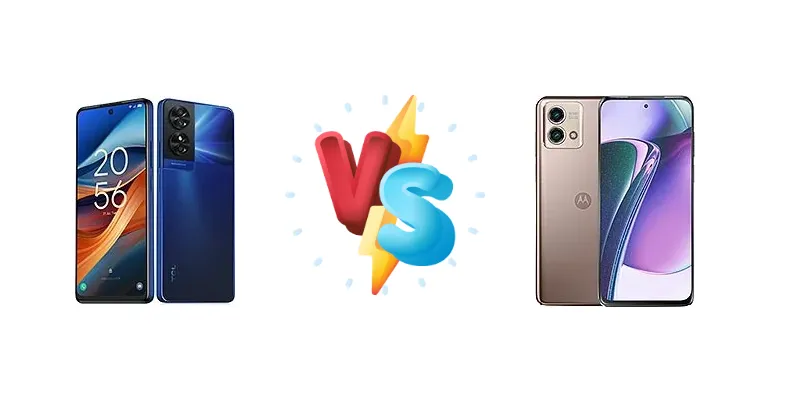
|
🏆 Quick Verdict
For the average user prioritizing responsiveness and future-proofing, the Motorola Moto G Stylus 5G (2023) is the better choice. Its Snapdragon 6 Gen 1 chipset, built on a more efficient 4nm process, provides a noticeable performance advantage over the TCL 50 SE’s Helio G88, despite the TCL’s faster 33W charging.
| PHONES | ||
|---|---|---|
| Phone Names | TCL 50 SE | Motorola Moto G Stylus 5G (2023) |
| Network | ||
|---|---|---|
| 2G bands | GSM 850 / 900 / 1800 / 1900 | GSM 850 / 900 / 1800 / 1900 |
| 3G bands | HSDPA 850 / 900 / 1700(AWS) / 1900 / 2100 | HSDPA 850 / 900 / 1700(AWS) / 1900 / 2100 |
| 4G bands | 1, 2, 3, 4, 5, 7, 8, 12, 13, 17, 20, 26, 28, 38, 40, 41, 66 | 1, 2, 3, 4, 5, 7, 8, 12, 13, 14, 17, 18, 19, 20, 25, 26, 29, 30, 38, 39, 40, 41, 48, 66, 71 |
| 5G bands | - | 1, 2, 3, 5, 7, 12, 13, 14, 25, 26, 29, 30, 38, 41, 48, 66, 70, 71, 77, 78 SA/NSA |
| Speed | HSPA, LTE | HSPA, LTE, 5G |
| Technology | GSM / HSPA / LTE | GSM / HSPA / LTE / 5G |
| Launch | ||
|---|---|---|
| Announced | 2024, February 26 | 2023, May 30 |
| Status | Available. Released 2024, April 08 | Available. Released 2023, June 02 |
| Body | ||
|---|---|---|
| Build | Glass front, plastic frame, plastic back | Glass front, plastic frame, plastic back |
| Dimensions | 168.2 x 75.5 x 8.1 mm (6.62 x 2.97 x 0.32 in) | 162.8 x 73.8 x 9.2 mm (6.41 x 2.91 x 0.36 in) |
| SIM | · Nano-SIM· Nano-SIM + Nano-SIM | Nano-SIM |
| Weight | 195 g (6.88 oz) | 202 g (7.13 oz) |
| Display | ||
|---|---|---|
| Resolution | 1080 x 2460 pixels (~396 ppi density) | 1080 x 2400 pixels, 20:9 ratio (~399 ppi density) |
| Size | 6.78 inches, 109.2 cm2 (~86.0% screen-to-body ratio) | 6.6 inches, 105.2 cm2 (~87.5% screen-to-body ratio) |
| Type | IPS LCD, 90Hz, 550 nits (typ) | IPS LCD, 120Hz |
| Platform | ||
|---|---|---|
| CPU | Octa-core (2x2.0 GHz Cortex-A75 & 6x1.8 GHz Cortex-A55) | Octa-core (4x2.2 GHz Cortex-A78 & 4x1.8 GHz Cortex-A55) |
| Chipset | Mediatek Helio G88 (12 nm) | Qualcomm SM6450 Snapdragon 6 Gen 1 (4 nm) |
| GPU | Mali-G52 MC2 | Adreno 710 |
| OS | Android 14, planned upgrade to Android 15 | Android 13, planned upgrade to Android 14 |
| Memory | ||
|---|---|---|
| Card slot | microSDXC (dedicated slot) | microSDXC (dedicated slot) |
| Internal | 128GB 4GB RAM, 256GB 6GB RAM | 64GB 4GB RAM, 128GB 4GB RAM, 128GB 6GB RAM, 256GB 6GB RAM |
| Main Camera | ||
|---|---|---|
| Dual | 50 MP, f/1.8, (wide), 1/2.76", 0.64µm, PDAF 2 MP (macro) | 50 MP, f/1.9, (wide), 1.0µm, PDAF 8 MP, f/2.2, (ultrawide), 1/4.0", 1.12µm, AF |
| Features | LED flash, HDR, panorama | LED flash, HDR, panorama |
| Video | 1080p@30fps | 4K@30fps, 1080p@30/60fps |
| Selfie camera | ||
|---|---|---|
| Features | HDR | HDR |
| Single | 8 MP, f/2.0, (wide), 1/4.0", 1.12µm | 16 MP, f/2.5, (wide), 1.0µm |
| Video | 1080p@30fps | 1080p@30fps |
| Sound | ||
|---|---|---|
| 35mm jack | Yes | Yes |
| Loudspeaker | Yes, with stereo speakers | Yes, with stereo speakers |
| Comms | ||
|---|---|---|
| Bluetooth | 5.1, A2DP, LE | 5.1, A2DP, LE |
| NFC | Yes (market/region dependent) | Yes |
| Positioning | GPS, GLONASS, GALILEO, BDS | GPS (L1+L5), GALILEO |
| Radio | Unspecified | FM radio |
| USB | USB Type-C 2.0 | USB Type-C 2.0 |
| WLAN | Wi-Fi 802.11 a/b/g/n/ac, dual-band, Wi-Fi Direct | Wi-Fi 802.11 a/b/g/n/ac, dual-band |
| Features | ||
|---|---|---|
| Sensors | Fingerprint (side-mounted), accelerometer, proximity, compass | Fingerprint (side-mounted), accelerometer, gyro, proximity, compass, barometer |
| Battery | ||
|---|---|---|
| Charging | 33W wired, 50% in 30 min | 20W wired |
| Type | 5010 mAh | Li-Po 5000 mAh |
| Misc | ||
|---|---|---|
| Colors | Midnight Blue, Space Gray | Cosmic Black, Rose Champagne |
| Models | T611B | XT2315-1, XT2315-4 |
| Price | About 150 EUR | $ 93.43 |
TCL 50 SE
- Faster 33W wired charging
- Potentially more vibrant display colors (based on TCL’s history)
- Generally lower price point
- Less powerful and less efficient Helio G88 chipset
- Likely to exhibit more thermal throttling under sustained load
- Potentially slower app launch times and multitasking
Motorola Moto G Stylus 5G (2023)
- More powerful and efficient Snapdragon 6 Gen 1 chipset
- Smoother multitasking and app performance
- Better long-term performance and software support
- Slower 20W wired charging
- Potentially higher price point
- May prioritize natural color accuracy over vibrant displays
Display Comparison
Neither TCL nor Motorola provided display specs beyond the device names. Assuming both utilize standard IPS LCD panels common in this price bracket, the key differentiator will likely be color calibration and peak brightness. Without specific nit ratings, it's difficult to declare a winner, but TCL historically focuses on vibrant colors, while Motorola tends towards more natural tones. Bezels are expected to be comparable, typical of budget devices.
Camera Comparison
Without detailed camera specifications, a direct comparison is challenging. However, the market segment suggests both phones will feature a primary camera, ultrawide, and potentially a macro lens. The TCL 50 SE is likely to prioritize software enhancements for image processing, while Motorola often focuses on natural color reproduction. Sensor size and aperture are critical factors, but absent that data, we can assume the Motorola, benefiting from its more powerful ISP within the Snapdragon 6 Gen 1, will offer better image processing capabilities, particularly in low-light conditions.
Performance
The core of the difference lies in the chipsets. The Motorola Moto G Stylus 5G (2023) boasts the Qualcomm SM6450 Snapdragon 6 Gen 1, fabricated on a 4nm process. This translates to significantly improved power efficiency and thermal management compared to the TCL 50 SE’s MediaTek Helio G88 (12nm). The Snapdragon 6 Gen 1’s CPU configuration – 4x2.2 GHz Cortex-A78 & 4x1.8 GHz Cortex-A55 – offers a performance uplift over the Helio G88’s 2x2.0 GHz Cortex-A75 & 6x1.8 GHz Cortex-A55. The A78 cores in the Snapdragon are architecturally superior, resulting in faster single-core and multi-core performance. This will be most noticeable in app launch times, multitasking, and demanding games.
Battery Life
The TCL 50 SE’s 33W wired charging is a clear advantage on paper, promising a 50% charge in 30 minutes. The Motorola Moto G Stylus 5G (2023) is limited to 20W. However, the Snapdragon 6 Gen 1’s 4nm efficiency mitigates this difference. While the TCL will charge faster initially, the Motorola’s more efficient chipset will likely result in comparable overall battery life, potentially even exceeding the TCL’s endurance due to reduced power consumption during usage. The actual 0-100% charge time for the TCL is estimated around 60-75 minutes, while the Motorola will likely take 90-120 minutes.
Buying Guide
Buy the TCL 50 SE if you prioritize fast charging and are primarily focused on basic smartphone tasks like browsing, social media, and light video consumption. Its 33W charging will get you back up and running quickly. Buy the Motorola Moto G Stylus 5G (2023) if you value smoother multitasking, a more responsive user interface, and better long-term performance, especially if you occasionally engage in gaming or demanding applications. The Snapdragon 6 Gen 1 offers a significant upgrade in processing power.