
TCL 50 NxtPaper vs. Motorola Moto G Stylus 5G (2023): Which Mid-Range Phone Reigns Supreme?
| Phones Images | |||||
|---|---|---|---|---|---|
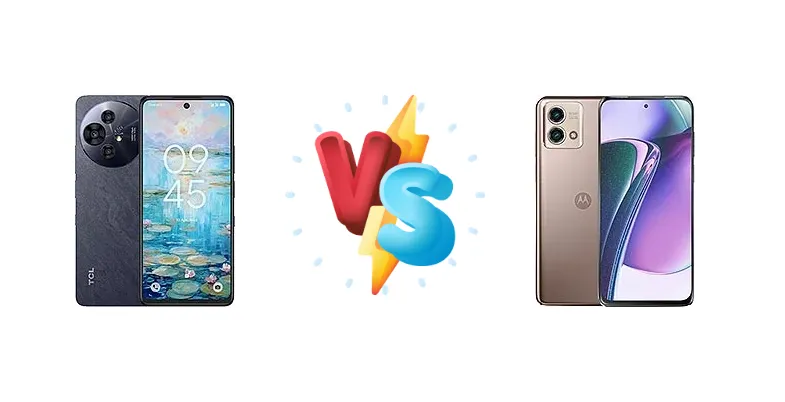
|
🏆 Quick Verdict
For users prioritizing all-day battery life and a unique, eye-friendly display, the TCL 50 NxtPaper is the clear winner. However, the Motorola Moto G Stylus 5G (2023) offers a more efficient chipset and a potentially smoother experience for demanding tasks, making it ideal for power users.
| PHONES | ||
|---|---|---|
| Phone Names | TCL 50 NxtPaper | Motorola Moto G Stylus 5G (2023) |
| Network | ||
|---|---|---|
| 2G bands | GSM 850 / 900 / 1800 / 1900 | GSM 850 / 900 / 1800 / 1900 |
| 3G bands | HSDPA 850 / 900 / 1700(AWS) / 1900 / 2100 | HSDPA 850 / 900 / 1700(AWS) / 1900 / 2100 |
| 4G bands | 1, 2, 3, 4, 5, 7, 8, 17, 20, 26, 28, 32, 38, 40, 41, 42 | 1, 2, 3, 4, 5, 7, 8, 12, 13, 14, 17, 18, 19, 20, 25, 26, 29, 30, 38, 39, 40, 41, 48, 66, 71 |
| 5G bands | 1, 3, 5, 7, 8, 20, 26, 28, 38, 40, 41, 48, 77, 78 SA/NSA | 1, 2, 3, 5, 7, 12, 13, 14, 25, 26, 29, 30, 38, 41, 48, 66, 70, 71, 77, 78 SA/NSA |
| Speed | HSPA, LTE, 5G | HSPA, LTE, 5G |
| Technology | GSM / HSPA / LTE / 5G | GSM / HSPA / LTE / 5G |
| Launch | ||
|---|---|---|
| Announced | 2024, September 04 | 2023, May 30 |
| Status | Available. Released 2024, September | Available. Released 2023, June 02 |
| Body | ||
|---|---|---|
| Build | - | Glass front, plastic frame, plastic back |
| Dimensions | 167.6 x 75.5 x 8 mm (6.60 x 2.97 x 0.31 in) | 162.8 x 73.8 x 9.2 mm (6.41 x 2.91 x 0.36 in) |
| SIM | Nano-SIM + eSIM | Nano-SIM |
| Weight | 196 g (6.91 oz) | 202 g (7.13 oz) |
| Display | ||
|---|---|---|
| Protection | Mohs level 7 | - |
| Resolution | 1080 x 2460 pixels (~395 ppi density) | 1080 x 2400 pixels, 20:9 ratio (~399 ppi density) |
| Size | 6.8 inches, 109.8 cm2 (~86.8% screen-to-body ratio) | 6.6 inches, 105.2 cm2 (~87.5% screen-to-body ratio) |
| Type | IPS LCD, 120Hz | IPS LCD, 120Hz |
| Platform | ||
|---|---|---|
| CPU | Octa-core (2x2.4 GHz Cortex-A76 & 6x2.0 GHz Cortex-A55) | Octa-core (4x2.2 GHz Cortex-A78 & 4x1.8 GHz Cortex-A55) |
| Chipset | Mediatek Dimensity 6300 (6 nm) | Qualcomm SM6450 Snapdragon 6 Gen 1 (4 nm) |
| GPU | Mali-G57 MC2 | Adreno 710 |
| OS | Android 14, up to 2 major Android upgrades | Android 13, planned upgrade to Android 14 |
| Memory | ||
|---|---|---|
| Card slot | microSDXC (dedicated slot) | microSDXC (dedicated slot) |
| Internal | 256GB 8GB RAM | 64GB 4GB RAM, 128GB 4GB RAM, 128GB 6GB RAM, 256GB 6GB RAM |
| Main Camera | ||
|---|---|---|
| Dual | - | 50 MP, f/1.9, (wide), 1.0µm, PDAF 8 MP, f/2.2, (ultrawide), 1/4.0", 1.12µm, AF |
| Features | LED flash, HDR | LED flash, HDR, panorama |
| Triple | 108 MP, f/1.8, (wide), 1/1.67", 0.64µm, PDAF 8 MP, f/2.2, 120˚ (ultrawide), 1/4.0", 1.12µm 2 MP (macro) | - |
| Video | 1080p@30fps | 4K@30fps, 1080p@30/60fps |
| Selfie camera | ||
|---|---|---|
| Features | HDR | HDR |
| Single | 8 MP, f/2.0, (wide), 1/4.0", 1.12µm | 16 MP, f/2.5, (wide), 1.0µm |
| Video | 1080p@30fps | 1080p@30fps |
| Sound | ||
|---|---|---|
| 35mm jack | Yes | Yes |
| Loudspeaker | Yes, with stereo speakers | Yes, with stereo speakers |
| Comms | ||
|---|---|---|
| Bluetooth | 5.3, A2DP, LE | 5.1, A2DP, LE |
| NFC | Yes | Yes |
| Positioning | GPS, GLONASS, BDS, GALILEO | GPS (L1+L5), GALILEO |
| Radio | Unspecified | FM radio |
| USB | USB Type-C 2.0 | USB Type-C 2.0 |
| WLAN | Wi-Fi 802.11 a/b/g/n/ac, dual-band, Wi-Fi Direct | Wi-Fi 802.11 a/b/g/n/ac, dual-band |
| Features | ||
|---|---|---|
| Sensors | Fingerprint (side-mounted), gyro, accelerometer, proximity, compass, barometer | Fingerprint (side-mounted), accelerometer, gyro, proximity, compass, barometer |
| Battery | ||
|---|---|---|
| Charging | 33W wired | 20W wired |
| Type | 5010 mAh | Li-Po 5000 mAh |
| Misc | ||
|---|---|---|
| Colors | Moon Gray, Midnight Blue, Pale Gold, Rosy Purple | Cosmic Black, Rose Champagne |
| Models | T702D | XT2315-1, XT2315-4 |
| Price | About 230 EUR | $ 93.43 |
| EU LABEL | ||
|---|---|---|
| Battery | 45:11h endurance, 1000 cycles | - |
| Energy | Class B | - |
| Free fall | Class B (180 falls) | - |
| Repairability | Class B | - |
TCL 50 NxtPaper
- Exceptional battery life (45:11h endurance)
- Unique NxtPaper display for eye comfort
- Faster 33W charging
- Long-term battery health with 1000 charge cycles
- Potentially less powerful CPU for demanding tasks
- 6nm chipset may run warmer under sustained load
Motorola Moto G Stylus 5G (2023)
- More efficient 4nm Snapdragon 6 Gen 1 chipset
- Potentially smoother performance for multitasking and gaming
- Integrated stylus for note-taking and creativity
- Qualcomm ISP for potentially better image processing
- Shorter battery life compared to the TCL
- Slower 20W charging
Display Comparison
While specific display specs beyond the NxtPaper technology are missing for the TCL, its focus is clearly on eye comfort. The NxtPaper display aims to mimic the texture of paper, reducing blue light and glare. The Motorola Moto G Stylus 5G (2023) likely features a standard LCD or AMOLED panel, but lacks the specialized eye-care features of the TCL. The TCL’s display tech is a significant differentiator for users sensitive to screen flicker or those who spend extended periods reading on their phones. The 6nm Dimensity 6300 likely requires a less power-hungry display to maximize battery life, potentially resulting in lower peak brightness compared to a Motorola with a more efficient panel.
Camera Comparison
Without detailed camera specifications, a direct comparison is limited. However, the Motorola Moto G Stylus 5G (2023) likely benefits from Qualcomm’s image signal processor (ISP), known for its strong image processing capabilities. The TCL’s camera performance will depend heavily on its sensor size and lens quality, which are currently unknown. Given the market segment, both phones likely feature a primary camera around 50MP, but the Motorola’s ISP could provide better dynamic range and low-light performance. We can assume both phones include standard wide and ultrawide lenses, but the TCL’s NxtPaper focus doesn’t necessarily translate to camera improvements.
Performance
The chipset battle pits MediaTek’s Dimensity 6300 (6nm) against Qualcomm’s Snapdragon 6 Gen 1 (4nm). The Snapdragon 6 Gen 1, built on a smaller 4nm process, generally offers superior power efficiency and thermal performance compared to the 6nm Dimensity 6300. While both are octa-core CPUs, the Snapdragon utilizes 4x Cortex-A78 cores clocked at 2.2 GHz, offering a performance advantage over the TCL’s 2x Cortex-A76 cores at 2.4 GHz for sustained workloads. This translates to potentially smoother multitasking and gaming on the Motorola. The TCL’s CPU configuration may excel in burst performance, but the Motorola’s architecture is better suited for prolonged, demanding tasks.
Battery Life
The TCL 50 NxtPaper boasts an impressive 45:11h endurance rating, a significant advantage over what we’d expect from the Motorola. This is likely achieved through a combination of the power-efficient Dimensity 6300 and optimized software. The Motorola, with its more powerful Snapdragon 6 Gen 1, will likely have shorter battery life, despite the efficiency gains of the 4nm process. The TCL supports 33W wired charging, while the Motorola is limited to 20W. This means the TCL will charge faster, mitigating some of the potential downtime. The TCL’s 1000 charge cycles suggest a focus on long-term battery health.
Buying Guide
Buy the TCL 50 NxtPaper if you need exceptional battery endurance – its 45:11h rating is a standout – and value a display designed to reduce eye strain during prolonged use. Buy the Motorola Moto G Stylus 5G (2023) if you prefer a more modern, efficient chipset like the Snapdragon 6 Gen 1, and benefit from the integrated stylus for note-taking and creative tasks, even if it means slightly less battery life.