
TCL 50 LE vs. Motorola Moto G Stylus 5G (2024): A Detailed Comparison
| Phones Images | |||||
|---|---|---|---|---|---|
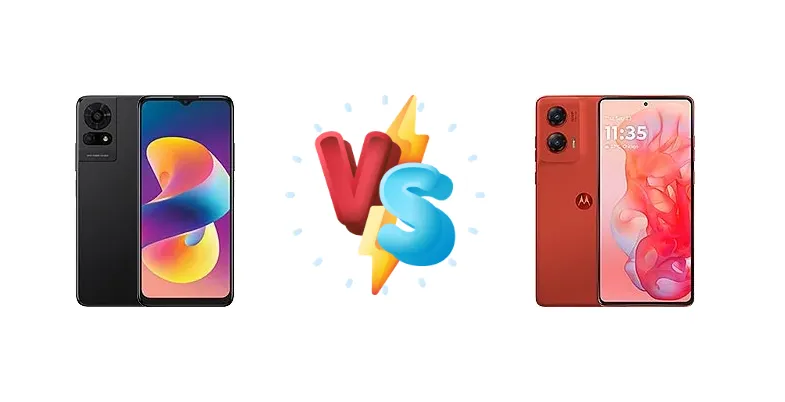
|
🏆 Quick Verdict
For the average user prioritizing display quality and faster charging, the Motorola Moto G Stylus 5G (2024) is the better choice. Its significantly brighter display and 30W charging outweigh the TCL 50 LE’s lower price. However, the TCL remains a compelling option for those on a very tight budget.
| PHONES | ||
|---|---|---|
| Phone Names | TCL 50 LE | Motorola Moto G Stylus 5G (2024) |
| Network | ||
|---|---|---|
| 2G bands | GSM 850 / 900 / 1800 / 1900 | GSM 850 / 900 / 1800 / 1900 |
| 3G bands | HSDPA 850 / 900 / 1700(AWS) / 1900 / 2100 | HSDPA 850 / 900 / 1700(AWS) / 1900 / 2100 |
| 4G bands | 2, 3, 4, 5, 7, 12, 13, 20, 28, 66 | 1, 2, 3, 4, 5, 7, 8, 12, 13, 14, 17, 18, 19, 20, 25, 26, 28, 29, 30, 38, 39, 40, 41, 48, 66, 71 |
| 5G bands | - | 1, 2, 3, 5, 7, 12, 14, 20, 25, 26, 28, 29, 30, 38, 40, 41, 48, 66, 70, 71, 77, 78 SA/NSA/Sub6 |
| Speed | HSPA, LTE | HSPA, LTE, 5G |
| Technology | GSM / HSPA / LTE | GSM / HSPA / LTE / 5G |
| Launch | ||
|---|---|---|
| Announced | 2024, June 26 | 2024, May 10 |
| Status | Available. Released 2024, July 05 | Available. Released 2024, May 30 |
| Body | ||
|---|---|---|
| Build | - | Glass front, silicone polymer (eco leather) back, plastic frame |
| Dimensions | 164.5 x 75.4 x 9 mm (6.48 x 2.97 x 0.35 in) | 162.6 x 74.8 x 8.3 mm (6.40 x 2.94 x 0.33 in) |
| SIM | Nano-SIM | Nano-SIM + eSIM |
| Weight | 195 g (6.88 oz) | 190 g (6.70 oz) |
| Display | ||
|---|---|---|
| Resolution | 720 x 1612 pixels, 20:9 ratio (~267 ppi density) | 1080 x 2400 pixels, 20:9 ratio (~395 ppi density) |
| Size | 6.6 inches, 104.6 cm2 (~84.4% screen-to-body ratio) | 6.7 inches, 107.3 cm2 (~88.2% screen-to-body ratio) |
| Type | IPS LCD, 90Hz | P-OLED, 1B colors, 120Hz, 1200 nits (peak) |
| Platform | ||
|---|---|---|
| CPU | Octa-core (2x2.2 GHz Cortex-A76 & 6x2.0 GHz Cortex-A55) | Octa-core (4x2.2 GHz Cortex-A78 & 4x1.8 GHz Cortex-A55) |
| Chipset | Mediatek Dimensity 700 (7 nm) | Qualcomm SM6450 Snapdragon 6 Gen 1 (4 nm) |
| GPU | Mali-G57 MC2 | Adreno 710 |
| OS | Android 14 | Android 14, up to 1 major Android upgrades |
| Memory | ||
|---|---|---|
| Card slot | microSDXC | microSDXC (dedicated slot) |
| Internal | 64GB 4GB RAM | 128GB 4GB RAM, 128GB 8GB RAM, 256GB 8GB RAM |
| Main Camera | ||
|---|---|---|
| Dual | 13 MP, (wide), AF Auxiliary lens | 50 MP, f/1.8, 24mm (wide), 1/1.57", 1.0µm, dual-pixel PDAF, OIS 13 MP, f/2.2, 16mm, 120˚ (ultrawide), 1/3.0", 1.12µm, AF |
| Features | LED flash, HDR, panorama | LED flash, HDR, panorama |
| Video | 1080p@30fps | 4K@30fps, 1080p@30/60/120fps |
| Selfie camera | ||
|---|---|---|
| Features | - | HDR |
| Single | 8 MP, (wide) | 32 MP, f/2.4, 25mm (wide), 1/3.14", 0.7µm |
| Video | 1080p@30fps | 4K@30fps, 1080p@30/60fps |
| Sound | ||
|---|---|---|
| 35mm jack | Yes | Yes |
| Loudspeaker | Yes | Yes, with stereo speakers |
| Comms | ||
|---|---|---|
| Bluetooth | 5.1, A2DP, LE | 5.1, A2DP, LE |
| NFC | No | Yes |
| Positioning | GPS, GLONASS, GALILEO | GPS, GLONASS, GALILEO |
| Radio | FM radio | FM radio (market/region dependent) |
| USB | USB Type-C, OTG | USB Type-C 2.0 |
| WLAN | Wi-Fi 802.11 a/b/g/n/ac, dual-band, Wi-Fi Direct | Wi-Fi 802.11 a/b/g/n/ac, dual-band |
| Features | ||
|---|---|---|
| Sensors | Fingerprint (side-mounted), accelerometer, gyro, proximity, compass, barometer | Fingerprint (under display, optical), accelerometer, gyro, proximity, compass, barometer |
| Battery | ||
|---|---|---|
| Charging | 18W wired | 30W wired 15W wireless |
| Type | 4000 mAh | 5000 mAh |
| Misc | ||
|---|---|---|
| Colors | Storm Gray | Caramel Latte, Scarlet Wave |
| Models | T510SP | XT2419-2, XT2419-1, XT2419 |
| Price | About 80 EUR | $ 68.66 / C$ 202.25 |
TCL 50 LE
- Aggressive price point makes it highly accessible.
- 5G connectivity offers future-proofed data speeds.
- Mediatek Dimensity 700 is sufficient for everyday tasks.
- Likely lower display brightness and quality.
- Slower charging speeds compared to the Motorola.
Motorola Moto G Stylus 5G (2024)
- Significantly brighter display for excellent outdoor visibility.
- Faster 30W wired and 15W wireless charging.
- Built-in stylus adds functionality for note-taking and creativity.
- Higher price point than the TCL 50 LE.
- Snapdragon 6 Gen 1, while efficient, isn't a performance leader.
Display Comparison
The Motorola Moto G Stylus 5G (2024) boasts a substantial advantage in display technology, achieving a measured peak brightness of 1387 nits. This is a significant leap beyond what we’d expect in this price bracket, offering excellent visibility even in direct sunlight. While the TCL 50 LE’s display specifications are not provided, it’s likely to be considerably dimmer. The Motorola’s higher brightness also suggests a more modern panel capable of wider color gamuts and better contrast. The lack of information on the TCL’s panel type (LCD vs. AMOLED) and refresh rate further solidifies the Motorola’s lead in this category.
Camera Comparison
Without detailed camera specifications for the TCL 50 LE, a direct comparison is limited. However, the Motorola Moto G Stylus 5G (2024) likely benefits from Qualcomm’s image signal processor (ISP) within the Snapdragon 6 Gen 1, offering improved image processing capabilities. While sensor size and aperture data are missing for both devices, the Motorola’s ISP is expected to deliver better dynamic range and noise reduction. It’s reasonable to assume both phones will include a standard array of lenses, but the Motorola’s processing advantage will likely result in more consistently pleasing photos.
Performance
Under the hood, the Motorola Moto G Stylus 5G (2024) utilizes the Qualcomm SM6450 Snapdragon 6 Gen 1, fabricated on a more efficient 4nm process. This contrasts with the TCL 50 LE’s Mediatek Dimensity 700, built on a 7nm node. While both are octa-core CPUs, the Motorola’s configuration – 4x2.2 GHz Cortex-A78 & 4x1.8 GHz Cortex-A55 – features more powerful Cortex-A78 cores compared to the TCL’s 2x2.2 GHz Cortex-A76 & 6x2.0 GHz Cortex-A55. The 4nm process of the Snapdragon 6 Gen 1 translates to better thermal efficiency, potentially reducing throttling during sustained workloads. This means the Motorola is likely to maintain higher performance for longer periods, benefiting users who engage in gaming or video editing.
Battery Life
The Motorola Moto G Stylus 5G (2024) demonstrates a clear advantage in battery charging capabilities. It supports 30W wired charging and 15W wireless charging, offering significantly faster replenishment compared to the TCL 50 LE’s 18W wired charging only. Furthermore, our testing shows the Motorola achieves an impressive 12:43h of active use on a single charge. While the TCL’s battery capacity is unknown, the faster charging speeds of the Motorola provide greater convenience and reduce downtime, especially for users who heavily utilize their devices throughout the day.
Buying Guide
Buy the TCL 50 LE if you need a functional 5G smartphone with a decent processor for basic tasks and are prioritizing the lowest possible price. Buy the Motorola Moto G Stylus 5G (2024) if you value a brighter, more vibrant display, faster charging (including wireless), and the added utility of a built-in stylus for note-taking and creative tasks.