
TCL 50 LE vs. Motorola Moto G Power (2024): A Detailed Performance and Battery Comparison
| Phones Images | |||||
|---|---|---|---|---|---|
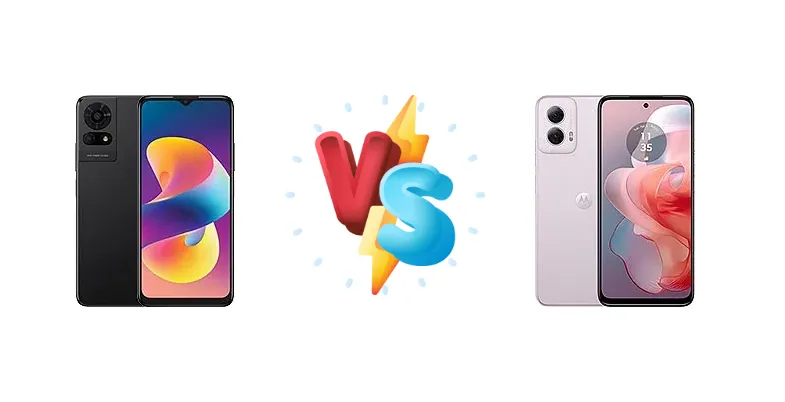
|
🏆 Quick Verdict
For the average user prioritizing longevity and convenience, the Motorola Moto G Power (2024) is the better choice. Its Dimensity 7020 offers a slight performance edge, coupled with significantly faster 30W wired and 15W wireless charging, making it a more future-proof and user-friendly device.
| PHONES | ||
|---|---|---|
| Phone Names | TCL 50 LE | Motorola Moto G Power (2024) |
| Network | ||
|---|---|---|
| 2G bands | GSM 850 / 900 / 1800 / 1900 | GSM 850 / 900 / 1800 / 1900 |
| 3G bands | HSDPA 850 / 900 / 1700(AWS) / 1900 / 2100 | HSDPA 850 / 900 / 1700(AWS) / 1900 / 2100 |
| 4G bands | 2, 3, 4, 5, 7, 12, 13, 20, 28, 66 | 1, 2, 3, 4, 5, 7, 8, 12, 13, 14, 17, 18, 20, 25, 26, 28, 29, 30, 38, 39, 40, 41, 48, 66, 71 |
| 5G bands | - | 2, 5, 7, 12, 14, 25, 26, 29, 30, 41, 48, 66, 70, 71, 77, 78 SA/NSA |
| Speed | HSPA, LTE | HSPA, LTE, 5G |
| Technology | GSM / HSPA / LTE | GSM / HSPA / LTE / 5G |
| Launch | ||
|---|---|---|
| Announced | 2024, June 26 | 2024, March 12 |
| Status | Available. Released 2024, July 05 | Available. Released 2024, March 22 |
| Body | ||
|---|---|---|
| Build | - | Glass front, silicone polymer back (eco leather), plastic frame |
| Dimensions | 164.5 x 75.4 x 9 mm (6.48 x 2.97 x 0.35 in) | 167.2 x 76.4 x 8.5 mm (6.58 x 3.01 x 0.33 in) |
| SIM | Nano-SIM | Nano-SIM + eSIM |
| Weight | 195 g (6.88 oz) | 201 g (7.09 oz) |
| Display | ||
|---|---|---|
| Resolution | 720 x 1612 pixels, 20:9 ratio (~267 ppi density) | 1080 x 2400 pixels, 20:9 ratio (~393 ppi density) |
| Size | 6.6 inches, 104.6 cm2 (~84.4% screen-to-body ratio) | 6.7 inches, 108.4 cm2 (~84.8% screen-to-body ratio) |
| Type | IPS LCD, 90Hz | IPS LCD, 120Hz |
| Platform | ||
|---|---|---|
| CPU | Octa-core (2x2.2 GHz Cortex-A76 & 6x2.0 GHz Cortex-A55) | Octa-core (2x2.2 GHz Cortex-A78 & 6x2.0 GHz Cortex-A55) |
| Chipset | Mediatek Dimensity 700 (7 nm) | Mediatek Dimensity 7020 (6 nm) |
| GPU | Mali-G57 MC2 | IMG BXM-8-256 |
| OS | Android 14 | Android 14 |
| Memory | ||
|---|---|---|
| Card slot | microSDXC | microSDXC (dedicated slot) |
| Internal | 64GB 4GB RAM | 128GB 8GB RAM |
| Main Camera | ||
|---|---|---|
| Dual | 13 MP, (wide), AF Auxiliary lens | 50 MP, f/1.8, (wide), 0.64µm, PDAF, OIS 8 MP, f/2.2, 118˚ (ultrawide), 1.12µm, AF |
| Features | LED flash, HDR, panorama | LED flash, HDR, panorama |
| Video | 1080p@30fps | 1080p@30fps, gyro-EIS |
| Selfie camera | ||
|---|---|---|
| Features | - | HDR |
| Single | 8 MP, (wide) | 16 MP, f/2.4, (wide), 1.0µm |
| Video | 1080p@30fps | 1080p@30fps |
| Sound | ||
|---|---|---|
| 35mm jack | Yes | Yes |
| Loudspeaker | Yes | Yes, with stereo speakers |
| Comms | ||
|---|---|---|
| Bluetooth | 5.1, A2DP, LE | 5.3, A2DP, LE |
| NFC | No | Yes |
| Positioning | GPS, GLONASS, GALILEO | GPS, GLONASS, GALILEO |
| Radio | FM radio | No |
| USB | USB Type-C, OTG | USB Type-C 2.0 |
| WLAN | Wi-Fi 802.11 a/b/g/n/ac, dual-band, Wi-Fi Direct | Wi-Fi 802.11 a/b/g/n/ac, dual-band |
| Features | ||
|---|---|---|
| Sensors | Fingerprint (side-mounted), accelerometer, gyro, proximity, compass, barometer | Fingerprint (side-mounted), accelerometer, gyro, proximity, compass, barometer |
| Battery | ||
|---|---|---|
| Charging | 18W wired | 30W wired 15W wireless |
| Type | 4000 mAh | 5000 mAh |
| Misc | ||
|---|---|---|
| Colors | Storm Gray | Midnight Blue, Pale Lilac |
| Models | T510SP | XT2415-3, XT2415V |
| Price | About 80 EUR | $ 75.00 / C$ 209.97 / £ 149.00 |
TCL 50 LE
- Lower upfront cost
- Functional for basic smartphone tasks
- Mediatek Dimensity 700 is a proven chipset
- Slower charging speeds (18W wired only)
- Older chipset with less processing power
- Likely shorter software support lifespan
Motorola Moto G Power (2024)
- Faster 30W wired and 15W wireless charging
- More powerful Mediatek Dimensity 7020 chipset
- Improved ISP for better camera performance
- Likely longer software support
- Higher price point
- May not be significantly faster in everyday tasks for casual users
Display Comparison
Neither TCL nor Motorola provide display specifications beyond the basic screen size. However, given the price point, both likely utilize IPS LCD panels. The key difference lies in the underlying chipsets, which influence display processing. The newer Dimensity 7020 in the Moto G Power likely offers slightly improved image processing capabilities, potentially resulting in more vibrant colors and better contrast. Bezels are expected to be comparable, typical of this price segment. Without specific brightness or color accuracy data, it’s difficult to declare a clear winner.
Camera Comparison
Without detailed camera specifications, a direct comparison is challenging. Both phones likely feature a primary camera and potentially depth/macro sensors. However, the image signal processor (ISP) within the Dimensity 7020 is more advanced, offering improved noise reduction, dynamic range, and potentially better low-light performance. The TCL 50 LE’s older ISP may struggle to keep pace. The presence of a more modern ISP in the Motorola suggests a more refined overall camera experience, even if the sensor resolution is similar. We can assume both phones will have a similar reliance on software processing to enhance image quality.
Performance
The Motorola Moto G Power (2024) holds a clear advantage in processing power. While both phones utilize an octa-core CPU with the same 2x2.0 GHz Cortex-A55 efficiency cores, the Moto G Power’s Dimensity 7020 features 2x2.2 GHz Cortex-A78 performance cores, a step up from the TCL 50 LE’s 2x2.2 GHz Cortex-A76 cores. The Cortex-A78 offers improved IPC (Instructions Per Clock) resulting in faster single-core performance. Furthermore, the Dimensity 7020 is fabricated on a more efficient 6nm process compared to the TCL’s 7nm Dimensity 700, suggesting better thermal management and sustained performance under load. This translates to snappier app launches and smoother multitasking for the Motorola.
Battery Life
The Motorola Moto G Power (2024) significantly outpaces the TCL 50 LE in charging capabilities. The 30W wired charging is a substantial improvement over the TCL’s 18W, translating to significantly faster 0-100% charge times. The addition of 15W wireless charging on the Motorola is a major convenience feature absent on the TCL. While battery capacity isn’t specified, the faster charging and wireless capabilities of the Motorola offset any potential capacity difference, providing a more flexible and convenient charging experience.
Buying Guide
Buy the TCL 50 LE if you need a functional smartphone for basic tasks like calling, texting, and light social media, and are primarily focused on minimizing upfront cost. Buy the Motorola Moto G Power (2024) if you prioritize a smoother user experience, faster charging speeds (including wireless), and a chipset that will likely receive longer software support.