
TCL 40 XE vs Motorola Moto G Stylus 5G (2023): A Deep Dive into Budget 5G Performance
| Phones Images | |||||
|---|---|---|---|---|---|
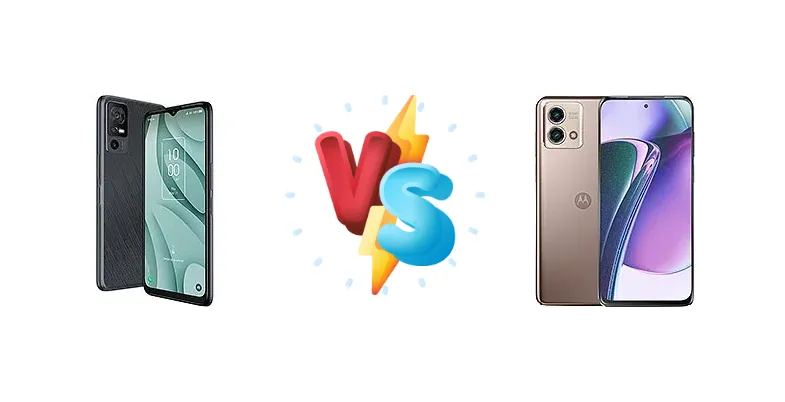
|
🏆 Quick Verdict
For the average user prioritizing consistent performance and a slightly more efficient processor, the Motorola Moto G Stylus 5G (2023) is the better choice. Its Snapdragon 6 Gen 1, built on a 4nm process, provides a noticeable advantage in sustained performance and power efficiency compared to the TCL 40 XE’s Dimensity 700.
| PHONES | ||
|---|---|---|
| Phone Names | TCL 40 XE | Motorola Moto G Stylus 5G (2023) |
| Network | ||
|---|---|---|
| 2G bands | GSM 850 / 900 / 1800 / 1900 | GSM 850 / 900 / 1800 / 1900 |
| 3G bands | HSDPA 850 / 1700(AWS) / 1900 - USA | HSDPA 850 / 900 / 1700(AWS) / 1900 / 2100 |
| 4G bands | 2, 4, 5, 12, 13, 25, 26, 41, 66, 71 - USA | 1, 2, 3, 4, 5, 7, 8, 12, 13, 14, 17, 18, 19, 20, 25, 26, 29, 30, 38, 39, 40, 41, 48, 66, 71 |
| 5G bands | SA/NSA | 1, 2, 3, 5, 7, 12, 13, 14, 25, 26, 29, 30, 38, 41, 48, 66, 70, 71, 77, 78 SA/NSA |
| Speed | HSPA, LTE, 5G | HSPA, LTE, 5G |
| Technology | GSM / HSPA / LTE / 5G | GSM / HSPA / LTE / 5G |
| eMMC 5.1 | - | |
| Launch | ||
|---|---|---|
| Announced | 2023, February 26 | 2023, May 30 |
| Status | Available. Released 2023, June | Available. Released 2023, June 02 |
| Body | ||
|---|---|---|
| Build | Glass front, plastic frame, plastic back | Glass front, plastic frame, plastic back |
| Dimensions | 164.5 x 75.4 x 0 mm (6.48 x 2.97 x 0.0 in) | 162.8 x 73.8 x 9.2 mm (6.41 x 2.91 x 0.36 in) |
| SIM | · Nano-SIM· Nano-SIM + Nano-SIM | Nano-SIM |
| Weight | 195 g (6.88 oz) | 202 g (7.13 oz) |
| Display | ||
|---|---|---|
| Resolution | 720 x 1612 pixels, 20:9 ratio (~269 ppi density) | 1080 x 2400 pixels, 20:9 ratio (~399 ppi density) |
| Size | 6.56 inches, 103.4 cm2 (~83.4% screen-to-body ratio) | 6.6 inches, 105.2 cm2 (~87.5% screen-to-body ratio) |
| Type | IPS LCD, 90Hz | IPS LCD, 120Hz |
| Platform | ||
|---|---|---|
| CPU | Octa-core (2x2.2 GHz Cortex-A76 & 6x2.0 GHz Cortex-A55) | Octa-core (4x2.2 GHz Cortex-A78 & 4x1.8 GHz Cortex-A55) |
| Chipset | Mediatek Dimensity 700 (7 nm) | Qualcomm SM6450 Snapdragon 6 Gen 1 (4 nm) |
| GPU | Mali-G57 MC2 | Adreno 710 |
| OS | Android 13, TCL UI | Android 13, planned upgrade to Android 14 |
| Memory | ||
|---|---|---|
| Card slot | microSDXC | microSDXC (dedicated slot) |
| Internal | 64GB 4GB RAM | 64GB 4GB RAM, 128GB 4GB RAM, 128GB 6GB RAM, 256GB 6GB RAM |
| Main Camera | ||
|---|---|---|
| Dual | - | 50 MP, f/1.9, (wide), 1.0µm, PDAF 8 MP, f/2.2, (ultrawide), 1/4.0", 1.12µm, AF |
| Features | LED flash, HDR, panorama | LED flash, HDR, panorama |
| Single | 8 MP, f/2.0, 26mm (wide) 1/4.0", 1.12µm | - |
| Triple | 13 MP, f/2.2, 27mm (wide) 1/3.0", 1.12µm, PDAF 2 MP (macro) Auxiliary lens | - |
| Video | 1080p@30fps | 4K@30fps, 1080p@30/60fps |
| Selfie camera | ||
|---|---|---|
| Features | - | HDR |
| Single | 8 MP, f/2.0, 26mm (wide) 1/4.0", 1.12µm | 16 MP, f/2.5, (wide), 1.0µm |
| Video | 1080p@30fps | 1080p@30fps |
| Sound | ||
|---|---|---|
| 3.5mm jack | Yes | - |
| 35mm jack | Yes | Yes |
| Loudspeaker | Yes | Yes, with stereo speakers |
| Comms | ||
|---|---|---|
| Bluetooth | 5.1, A2DP, LE | 5.1, A2DP, LE |
| NFC | No | Yes |
| Positioning | GPS, GLONASS, GALILEO, BDS | GPS (L1+L5), GALILEO |
| Radio | FM radio | FM radio |
| USB | USB Type-C 2.0 | USB Type-C 2.0 |
| WLAN | Wi-Fi 802.11 a/b/g/n/ac, dual-band, Wi-Fi Direct | Wi-Fi 802.11 a/b/g/n/ac, dual-band |
| Features | ||
|---|---|---|
| Sensors | Fingerprint (side-mounted), accelerometer, gyro, proximity, compass | Fingerprint (side-mounted), accelerometer, gyro, proximity, compass, barometer |
| Battery | ||
|---|---|---|
| Charging | 18W wired | 20W wired |
| Type | Li-Ion 5000 mAh | Li-Po 5000 mAh |
| Misc | ||
|---|---|---|
| Colors | Starlight Black | Cosmic Black, Rose Champagne |
| Models | T609SPP | XT2315-1, XT2315-4 |
| Price | About 100 EUR | $ 93.43 |
| SAR | 1.38 W/kg (head) 1.12 W/kg (body) | - |
TCL 40 XE
- More affordable price point
- Functional 5G connectivity
- Acceptable performance for basic tasks
- Less efficient Dimensity 700 chipset
- Potential for thermal throttling
- Likely slower charging speeds
Motorola Moto G Stylus 5G (2023)
- More efficient Snapdragon 6 Gen 1 chipset
- Built-in stylus for added functionality
- Faster 20W wired charging
- Slightly higher price
- May not offer a significantly better camera experience
- Still a budget-focused device with inherent limitations
Display Comparison
Neither TCL nor Motorola provide detailed display specs beyond resolution. However, the display quality is likely similar, focusing on cost-effectiveness. The key difference lies elsewhere. Both will likely utilize LCD panels, common in this price bracket. Bezels are expected to be moderate on both devices, prioritizing affordability over an edge-to-edge design. Color accuracy will likely be standard for the segment, with neither phone aiming for professional-grade color reproduction.
Camera Comparison
Without detailed camera specs, a direct comparison is difficult. However, both phones likely employ a similar strategy: a primary sensor paired with supporting lenses of limited utility. The Motorola, given its slightly higher price point, *may* have a larger primary sensor, resulting in better low-light performance. Image processing will likely differ, with Motorola leaning towards a more saturated look and TCL potentially aiming for a more natural tone. The presence of a stylus on the Motorola could also be leveraged for camera features like remote shutter control or annotation.
Performance
The core of the difference between these two phones lies in their chipsets. The Motorola Moto G Stylus 5G (2023) utilizes the Qualcomm SM6450 Snapdragon 6 Gen 1, fabricated on a more efficient 4nm process. This translates to better thermal management and sustained performance under load. The TCL 40 XE, with its Mediatek Dimensity 700 (7nm), is a capable chip but will likely throttle more quickly during prolonged gaming or intensive multitasking. The Snapdragon 6 Gen 1’s CPU configuration – 4x2.2 GHz Cortex-A78 & 4x1.8 GHz Cortex-A55 – offers a performance edge over the Dimensity 700’s 2x2.2 GHz Cortex-A76 & 6x2.0 GHz Cortex-A55, particularly in multi-threaded tasks. While both phones likely feature similar RAM configurations, the more efficient chipset in the Motorola will allow for smoother operation with the same amount of memory.
Battery Life
Battery life will depend heavily on usage patterns. While specific mAh ratings are unavailable, the Snapdragon 6 Gen 1’s 4nm process gives the Motorola Moto G Stylus 5G (2023) an advantage in power efficiency. This means it will likely deliver comparable or better battery life despite potentially having a similar battery capacity to the TCL 40 XE. The Motorola also supports 20W wired charging, slightly faster than the TCL’s 18W charging, resulting in quicker top-ups. While neither offers exceptionally fast charging, the 2W difference can shave off some time during a full charge.
Buying Guide
Buy the TCL 40 XE if you need a functional 5G phone with a focus on affordability and aren't heavily reliant on demanding applications or extended gaming sessions. Buy the Motorola Moto G Stylus 5G (2023) if you prioritize smoother multitasking, better sustained performance for gaming, and the added utility of a built-in stylus for note-taking and creative tasks.