
TCL 40 X vs Motorola Moto G Stylus 5G (2023): A Deep Dive into Budget 5G Performance
| Phones Images | |||||
|---|---|---|---|---|---|
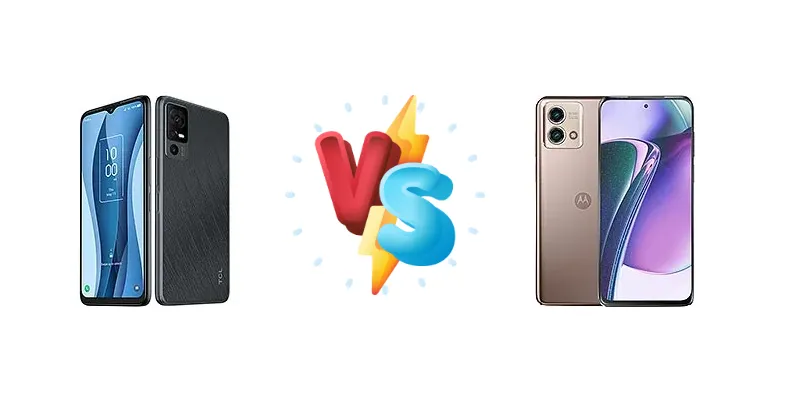
|
🏆 Quick Verdict
For the average user prioritizing sustained performance and efficiency, the Motorola Moto G Stylus 5G (2023) is the better choice. Its Snapdragon 6 Gen 1, built on a 4nm process, provides a noticeable advantage in thermal management and overall responsiveness compared to the TCL 40 X’s Dimensity 700.
| PHONES | ||
|---|---|---|
| Phone Names | TCL 40 X | Motorola Moto G Stylus 5G (2023) |
| Network | ||
|---|---|---|
| 2G bands | GSM 850 / 900 / 1800 / 1900 | GSM 850 / 900 / 1800 / 1900 |
| 3G bands | HSDPA 850 / 1700(AWS) / 1900 - USA | HSDPA 850 / 900 / 1700(AWS) / 1900 / 2100 |
| 4G bands | 2, 4, 5, 12, 13, 25, 26, 41, 66, 71 - USA | 1, 2, 3, 4, 5, 7, 8, 12, 13, 14, 17, 18, 19, 20, 25, 26, 29, 30, 38, 39, 40, 41, 48, 66, 71 |
| 5G bands | 2, 5, 66, 77 SA/NSA | 1, 2, 3, 5, 7, 12, 13, 14, 25, 26, 29, 30, 38, 41, 48, 66, 70, 71, 77, 78 SA/NSA |
| Speed | HSPA, LTE, 5G | HSPA, LTE, 5G |
| Technology | GSM / HSPA / LTE / 5G | GSM / HSPA / LTE / 5G |
| Launch | ||
|---|---|---|
| Announced | 2023, February 26 | 2023, May 30 |
| Status | Available. Released 2023, June | Available. Released 2023, June 02 |
| Body | ||
|---|---|---|
| Build | Glass front, plastic frame, plastic back | Glass front, plastic frame, plastic back |
| Dimensions | 164.5 x 75.4 x 9 mm (6.48 x 2.97 x 0.35 in) | 162.8 x 73.8 x 9.2 mm (6.41 x 2.91 x 0.36 in) |
| SIM | · Nano-SIM· Nano-SIM + Nano-SIM | Nano-SIM |
| Weight | 195 g (6.88 oz) | 202 g (7.13 oz) |
| Display | ||
|---|---|---|
| Resolution | 720 x 1612 pixels, 20:9 ratio (~269 ppi density) | 1080 x 2400 pixels, 20:9 ratio (~399 ppi density) |
| Size | 6.56 inches, 103.4 cm2 (~83.4% screen-to-body ratio) | 6.6 inches, 105.2 cm2 (~87.5% screen-to-body ratio) |
| Type | IPS LCD, 90Hz | IPS LCD, 120Hz |
| Platform | ||
|---|---|---|
| CPU | Octa-core (2x2.2 GHz Cortex-A76 & 6x2.0 GHz Cortex-A55) | Octa-core (4x2.2 GHz Cortex-A78 & 4x1.8 GHz Cortex-A55) |
| Chipset | Mediatek Dimensity 700 (7 nm) | Qualcomm SM6450 Snapdragon 6 Gen 1 (4 nm) |
| GPU | Mali-G57 MC2 | Adreno 710 |
| OS | Android 13, TCL UI | Android 13, planned upgrade to Android 14 |
| Memory | ||
|---|---|---|
| Card slot | microSDXC | microSDXC (dedicated slot) |
| Internal | 64GB 4GB RAM | 64GB 4GB RAM, 128GB 4GB RAM, 128GB 6GB RAM, 256GB 6GB RAM |
| Main Camera | ||
|---|---|---|
| Dual | - | 50 MP, f/1.9, (wide), 1.0µm, PDAF 8 MP, f/2.2, (ultrawide), 1/4.0", 1.12µm, AF |
| Features | LED flash, HDR, panorama | LED flash, HDR, panorama |
| Single | 8 MP, (wide) | - |
| Triple | 50 MP, (wide), PDAF 2 MP (macro) Auxiliary lens | - |
| Video | 1080p@30fps | 4K@30fps, 1080p@30/60fps |
| Selfie camera | ||
|---|---|---|
| Features | - | HDR |
| Single | 8 MP, (wide) | 16 MP, f/2.5, (wide), 1.0µm |
| Video | 1080p@30fps | 1080p@30fps |
| Sound | ||
|---|---|---|
| 3.5mm jack | Yes | - |
| 35mm jack | Yes | Yes |
| Loudspeaker | Yes, with dual speakers | Yes, with stereo speakers |
| Comms | ||
|---|---|---|
| Bluetooth | 5.1, A2DP, LE | 5.1, A2DP, LE |
| NFC | No | Yes |
| Positioning | GPS | GPS (L1+L5), GALILEO |
| Radio | Unspecified | FM radio |
| USB | USB Type-C 2.0 | USB Type-C 2.0 |
| WLAN | Wi-Fi 802.11 a/b/g/n/ac, dual-band | Wi-Fi 802.11 a/b/g/n/ac, dual-band |
| Features | ||
|---|---|---|
| Sensors | Fingerprint (side-mounted), accelerometer, gyro, proximity, compass, barometer (USA only) | Fingerprint (side-mounted), accelerometer, gyro, proximity, compass, barometer |
| Battery | ||
|---|---|---|
| Charging | 18W wired | 20W wired |
| Type | Li-Ion 5000 mAh | Li-Po 5000 mAh |
| Misc | ||
|---|---|---|
| Colors | Black | Cosmic Black, Rose Champagne |
| Models | T609M | XT2315-1, XT2315-4 |
| Price | About 190 EUR | $ 93.43 |
TCL 40 X
- Lower upfront cost
- Functional 5G connectivity
- Simple and easy-to-use interface
- Less efficient chipset
- Potential for thermal throttling
- Likely inferior camera performance
Motorola Moto G Stylus 5G (2023)
- More efficient Snapdragon 6 Gen 1
- Built-in stylus for added functionality
- Better sustained performance
- Slightly higher price point
- May not offer significant camera improvements over competitors
- Stylus may not be useful for all users
Display Comparison
Neither TCL nor Motorola provide detailed display specs beyond resolution in their marketing materials. However, given the price point, both likely utilize IPS LCD panels. The key difference lies under the hood. The TCL 40 X’s Dimensity 700 likely pairs with a less sophisticated display driver, potentially impacting color accuracy and brightness. The Moto G Stylus 5G, benefiting from a newer chipset, may have a slightly more refined display experience, though neither is expected to compete with higher-end OLED panels.
Camera Comparison
Without detailed sensor information, a direct camera comparison is difficult. However, the Motorola Moto G Stylus 5G (2023) likely benefits from Qualcomm’s image signal processor (ISP) within the Snapdragon 6 Gen 1, offering potentially better image processing and noise reduction. The TCL 40 X’s Dimensity 700 ISP is capable, but generally lags behind Qualcomm’s offerings. Both phones likely include a standard macro lens, which are often of limited practical use due to low resolution and poor image quality. Focusing on the main sensor performance, the Snapdragon’s ISP is more likely to deliver consistently better results in varying lighting conditions.
Performance
The core of the difference between these two phones is the chipset. The Motorola Moto G Stylus 5G (2023) utilizes the Qualcomm SM6450 Snapdragon 6 Gen 1, fabricated on a 4nm process. This smaller node size translates directly to improved power efficiency and reduced heat generation. The TCL 40 X, with its Mediatek Dimensity 700 (7nm), will likely exhibit more thermal throttling under sustained load. While both CPUs feature octa-core architectures, the Snapdragon 6 Gen 1 employs more modern Cortex-A78 cores (4x2.2 GHz) compared to the TCL’s Cortex-A76 cores (2x2.2 GHz). This architectural advantage, combined with the process node difference, gives the Motorola a clear edge in CPU-intensive tasks and gaming.
Battery Life
Both phones offer adequate battery capacity for all-day use, but the Snapdragon 6 Gen 1’s superior efficiency gives the Motorola Moto G Stylus 5G (2023) an advantage. While the TCL 40 X charges at 18W, and the Motorola at 20W, the difference in charging speed is marginal. The real benefit of the Motorola’s chipset is reduced power consumption during typical usage, translating to longer screen-on time and less frequent charging. The 4nm process allows for more efficient operation, extending battery life even with similar usage patterns.
Buying Guide
Buy the TCL 40 X if you need a simple, functional 5G phone and prioritize minimizing upfront cost. It’s a solid option for basic tasks and light usage. Buy the Motorola Moto G Stylus 5G (2023) if you prefer a smoother user experience, better multitasking capabilities, and the added utility of a built-in stylus for note-taking and creative tasks. The Snapdragon chipset offers a more future-proof experience.