
TCL 10 5G UW vs. Motorola Moto G Stylus 5G (2025): A Detailed Comparison
| Phones Images | |||||
|---|---|---|---|---|---|
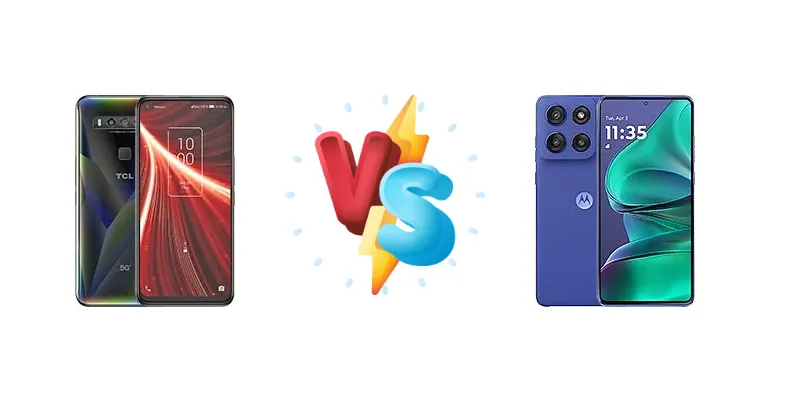
|
🏆 Quick Verdict
For the average user prioritizing battery life and fast charging, the Motorola Moto G Stylus 5G (2025) is the clear winner. Its Snapdragon 6 Gen 3, while not as powerful as the 765G in raw CPU benchmarks, offers improved efficiency, and the 68W charging is a game-changer. The TCL 10 5G UW remains a viable option for those seeking a cheaper 5G experience, but compromises are necessary.
| PHONES | ||
|---|---|---|
| Phone Names | TCL 10 5G UW | Motorola Moto G Stylus 5G (2025) |
| Network | ||
|---|---|---|
| 2G bands | GSM 850 / 900 / 1800 / 1900 | GSM 850 / 900 / 1800 / 1900 |
| 3G bands | HSDPA 850 / 900 / 1700(AWS) / 1900 / 2100 | HSDPA 850 / 900 / 1700(AWS) / 1900 / 2100 |
| 4G bands | 2, 3, 4, 5, 7, 12, 13, 20, 28, 46, 48, 66 | 1, 2, 3, 4, 5, 7, 8, 12, 13, 14, 17, 18, 19, 20, 25, 26, 28, 29, 30, 38, 39, 40, 41, 42, 48, 66, 71 |
| 5G bands | 2, 5, 66, 260, 261 mmWave | 1, 2, 3, 5, 7, 12, 14, 20, 25, 26, 28, 29, 30, 38, 40, 41, 48, 66, 70, 71, 77, 78 SA/NSA/Sub6 |
| Speed | HSPA, LTE, 5G | HSPA, LTE, 5G |
| Technology | GSM / HSPA / LTE / 5G | GSM / HSPA / LTE / 5G |
| Launch | ||
|---|---|---|
| Announced | 2020, October 27. Released 2020, October 29 | 2025, April 08 |
| Status | Discontinued | Available. Released 2025, April 17 |
| Body | ||
|---|---|---|
| Build | Glass front, glass back, aluminum frame | Glass front (Gorilla Glass 3), silicone polymer (eco leather) back, plastic frame |
| Dimensions | 163.6 x 76.5 x 9.4 mm (6.44 x 3.01 x 0.37 in) | 162.2 x 74.8 x 8.3 mm (6.39 x 2.94 x 0.33 in) |
| SIM | Nano-SIM | Nano-SIM + eSIM |
| Weight | 210 g (7.41 oz) | 191 g (6.74 oz) |
| Display | ||
|---|---|---|
| Protection | - | Corning Gorilla Glass 3 |
| Resolution | 1080 x 2340 pixels, 19.5:9 ratio (~395 ppi density) | 1220 x 2712 pixels, 20:9 ratio (~444 ppi density) |
| Size | 6.53 inches, 104.7 cm2 (~83.6% screen-to-body ratio) | 6.7 inches, 108.4 cm2 (~89.3% screen-to-body ratio) |
| Type | IPS LCD, HDR10, 450 nits (typ) | AMOLED, 1B colors, 120Hz, HDR, 3000 nits (peak) |
| Platform | ||
|---|---|---|
| CPU | Octa-core (1x2.4 GHz Kryo 475 Prime & 1x2.2 GHz Kryo 475 Gold & 6x1.8 GHz Kryo 475 Silver) | Octa-core (4x2.4 GHz Cortex-A78 & 4x1.8 GHz Cortex-A55) |
| Chipset | Qualcomm SM7250 Snapdragon 765G 5G (7 nm) | Qualcomm SM6475-AB Snapdragon 6 Gen 3 (4 nm) |
| GPU | Adreno 620 | Adreno 710 |
| OS | Android 10 | Android 15, up to 2 major Android upgrades |
| Memory | ||
|---|---|---|
| Card slot | microSDXC (uses shared SIM slot) | microSDXC (dedicated slot) |
| Internal | 128GB 6GB RAM | 128GB 8GB RAM, 256GB 8GB RAM |
| UFS 2.1 | - | |
| Main Camera | ||
|---|---|---|
| Dual | - | 50 MP, f/1.8, 24mm (wide), 1/1.56", 1.0µm, multi-directional PDAF, OIS 13 MP, f/2.2, 16mm, 120˚ (ultrawide), 1/3.0", 1.12µm, PDAF |
| Features | Dual-LED flash, HDR, panorama | LED flash, HDR, panorama |
| Triple | 48 MP, 26mm (wide), 1/2.0", 0.8µm, PDAF 8 MP, f/2.2, 13mm (ultrawide), 1/4.0", 1.12µm 5 MP (macro), AF | - |
| Video | 4K@30fps, 1080p@30/60/120fps, gyro-EIS | 4K@30fps, 1080p@30/60/120fps |
| Selfie camera | ||
|---|---|---|
| Features | - | HDR |
| Single | 16 MP, f/2.2, 26mm (wide), 1/3.06", 1.0µm | 32 MP, f/2.2, 25mm (wide), 1/3.14", 0.7µm |
| Video | 1080p@30fps | 4K@30fps, 1080p@30/60fps |
| Sound | ||
|---|---|---|
| 3.5mm jack | Yes | - |
| 35mm jack | Yes | Yes |
| Loudspeaker | Yes | Yes, with stereo speakers (with Dolby Atmos) |
| Comms | ||
|---|---|---|
| Bluetooth | 5.0, A2DP, LE | 5.4, A2DP, LE |
| NFC | - | Yes |
| Positioning | GPS (L1+L5), GLONASS, GALILEO | GPS, GLONASS, GALILEO |
| Radio | No | No |
| USB | USB Type-C 2.0, OTG | USB Type-C 2.0 |
| WLAN | Wi-Fi 802.11 a/b/g/n/ac, dual-band, Wi-Fi Direct | Wi-Fi 802.11 a/b/g/n/ac/6e, tri-band |
| Features | ||
|---|---|---|
| Sensors | Fingerprint (rear-mounted), accelerometer, gyro, proximity, compass | Fingerprint (under display, optical), accelerometer, gyro, proximity, compass |
| Battery | ||
|---|---|---|
| Charging | 18W wired, QC3 | 68W wired 15W wireless |
| Type | Li-Po 4500 mAh | 5000 mAh |
| Misc | ||
|---|---|---|
| Colors | Diamond Gray | Pantone: Gibraltar sea, Surf the Web |
| Models | - | XT2517-1 |
| Price | About 340 EUR | $ 299.99 / C$ 368.17 |
TCL 10 5G UW
- Potentially lower price point
- Snapdragon 765G offers decent performance for everyday tasks
- 5G connectivity
- Slow 18W charging
- Likely outdated software support
- Inferior display brightness compared to the Motorola
Motorola Moto G Stylus 5G (2025)
- Exceptional battery life (10:05h active use)
- Ultra-fast 68W wired charging and 15W wireless
- Bright 1870 nit display
- More efficient Snapdragon 6 Gen 3
- Snapdragon 6 Gen 3 may not match the 765G in peak CPU performance
- Potentially higher price than the TCL 10 5G UW
Display Comparison
The Motorola Moto G Stylus 5G (2025) boasts a significantly brighter display, reaching a measured 1870 nits. This is a substantial improvement over what we'd expect from the TCL 10 5G UW, making it far more usable outdoors in direct sunlight. While TCL's display specs are unavailable, the Motorola's brightness advantage is a key differentiator. The Motorola's panel likely benefits from newer display technology, offering better color accuracy and viewing angles. We can assume the TCL 10 5G UW's display is adequate for indoor use, but will struggle in bright environments.
Camera Comparison
Without detailed camera specs for the TCL 10 5G UW, a direct comparison is difficult. However, the Motorola Moto G Stylus 5G (2025) likely benefits from advancements in image processing and sensor technology. The focus should be on the main sensor size and aperture; larger sensors and wider apertures capture more light, resulting in better low-light performance. We can assume Motorola will prioritize computational photography to enhance image quality. The TCL 10 5G UW's camera system is likely adequate for casual photography, but the Motorola is expected to deliver more consistent and detailed results.
Performance
The TCL 10 5G UW utilizes the Qualcomm Snapdragon 765G, built on a 7nm process, featuring a Kryo 475 CPU with a prime core clocked at 2.4GHz. The Motorola Moto G Stylus 5G (2025) employs the Snapdragon 6 Gen 3, fabricated on a more efficient 4nm node. While the 765G's CPU clock speeds appear higher on paper, the 6 Gen 3's newer architecture (Cortex-A78 cores) and smaller process node translate to better sustained performance and thermal management. The 6 Gen 3's efficiency means less throttling during extended gaming or demanding tasks. The TCL 10 5G UW may offer a slight edge in burst performance, but the Motorola will likely maintain higher average performance over time.
Battery Life
The Motorola Moto G Stylus 5G (2025) truly shines in the battery department. A real-world active use score of 10:05h demonstrates exceptional endurance. This, combined with the 68W wired charging and 15W wireless charging, provides a significant advantage over the TCL 10 5G UW's 18W wired charging. The 68W charging allows for a full charge in under an hour, while the TCL 10 5G UW will take considerably longer. The Snapdragon 6 Gen 3's efficiency further contributes to the Motorola's superior battery life.
Buying Guide
Buy the TCL 10 5G UW if you need a functional 5G phone on a very tight budget and aren't concerned with long-term software support or rapid charging. Buy the Motorola Moto G Stylus 5G (2025) if you prioritize all-day battery life, incredibly fast charging speeds, and a brighter, more modern display, even if it means a slight trade-off in peak CPU performance.