
T-Mobile T Phone 3 vs. Motorola Moto G Stylus 5G (2023): A Deep Dive into Budget 5G Performance
| Phones Images | |||||
|---|---|---|---|---|---|
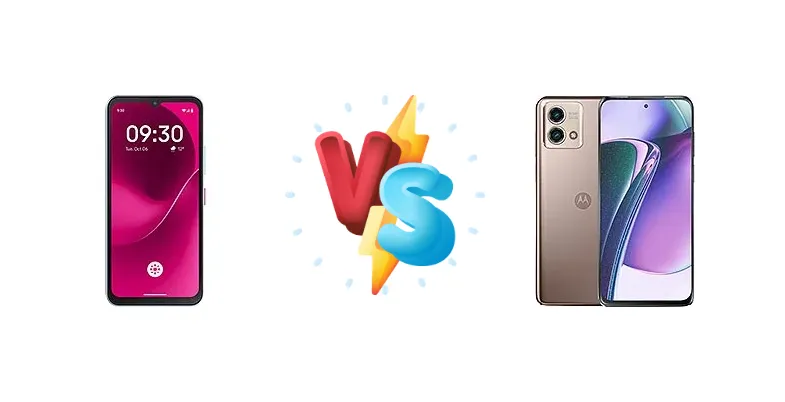
|
🏆 Quick Verdict
For most users, the T-Mobile T Phone 3 emerges as the stronger choice. Its Snapdragon 6 Gen 3 chipset, built on a 4nm process, offers a performance edge and significantly better battery life (46:58h endurance) compared to the Moto G Stylus 5G (2023). While the Moto G Stylus offers the convenience of a built-in stylus, the T-Phone 3’s efficiency and newer architecture provide a more future-proof experience.
| PHONES | ||
|---|---|---|
| Phone Names | T-Mobile T Phone 3 | Motorola Moto G Stylus 5G (2023) |
| Network | ||
|---|---|---|
| 2G bands | GSM 850 / 900 / 1800 / 1900 | GSM 850 / 900 / 1800 / 1900 |
| 3G bands | HSDPA 850 / 900 / 2100 - International | HSDPA 850 / 900 / 1700(AWS) / 1900 / 2100 |
| 4G bands | 2, 4, 5, 7, 12, 25, 26, 28, 41, 48, 66, 71 - USA | 1, 2, 3, 4, 5, 7, 8, 12, 13, 14, 17, 18, 19, 20, 25, 26, 29, 30, 38, 39, 40, 41, 48, 66, 71 |
| 5G bands | 1, 3, 7, 28, 38, 75, 78 SA/NSA | 1, 2, 3, 5, 7, 12, 13, 14, 25, 26, 29, 30, 38, 41, 48, 66, 70, 71, 77, 78 SA/NSA |
| Speed | HSPA, LTE, 5G | HSPA, LTE, 5G |
| Technology | GSM / HSPA / LTE / 5G | GSM / HSPA / LTE / 5G |
| Launch | ||
|---|---|---|
| Announced | 2025, August 14 | 2023, May 30 |
| Status | Available. Released 2025, August 14 | Available. Released 2023, June 02 |
| Body | ||
|---|---|---|
| Build | - | Glass front, plastic frame, plastic back |
| Dimensions | 166.5 x 77.1 x 9.3 mm (6.56 x 3.04 x 0.37 in) | 162.8 x 73.8 x 9.2 mm (6.41 x 2.91 x 0.36 in) |
| SIM | Nano-SIM + eSIM | Nano-SIM |
| Weight | 218 g (7.69 oz) | 202 g (7.13 oz) |
| Display | ||
|---|---|---|
| Protection | Mohs level 6 | - |
| Resolution | 1080 x 2408 pixels, 20:9 ratio (~401 ppi density) | 1080 x 2400 pixels, 20:9 ratio (~399 ppi density) |
| Size | 6.58 inches, 104.3 cm2 (~81.2% screen-to-body ratio) | 6.6 inches, 105.2 cm2 (~87.5% screen-to-body ratio) |
| Type | IPS LCD, 120Hz | IPS LCD, 120Hz |
| Platform | ||
|---|---|---|
| CPU | Octa-core (4x2.4 GHz Cortex-A78 & 4x1.8 GHz Cortex-A55) | Octa-core (4x2.2 GHz Cortex-A78 & 4x1.8 GHz Cortex-A55) |
| Chipset | Qualcomm SM6475-AB Snapdragon 6 Gen 3 (4 nm) | Qualcomm SM6450 Snapdragon 6 Gen 1 (4 nm) |
| GPU | Adreno 710 | Adreno 710 |
| OS | Android 15, up to 3 major Android upgrades | Android 13, planned upgrade to Android 14 |
| Memory | ||
|---|---|---|
| Card slot | microSDXC | microSDXC (dedicated slot) |
| Internal | 128GB 6GB RAM | 64GB 4GB RAM, 128GB 4GB RAM, 128GB 6GB RAM, 256GB 6GB RAM |
| Main Camera | ||
|---|---|---|
| Dual | 50 MP, (wide), PDAF, OIS 2 MP (macro) | 50 MP, f/1.9, (wide), 1.0µm, PDAF 8 MP, f/2.2, (ultrawide), 1/4.0", 1.12µm, AF |
| Features | LED flash, HDR, panorama | LED flash, HDR, panorama |
| Video | Yes | 4K@30fps, 1080p@30/60fps |
| Selfie camera | ||
|---|---|---|
| Features | - | HDR |
| Single | 13 MP | 16 MP, f/2.5, (wide), 1.0µm |
| Video | 1080p@30fps | 1080p@30fps |
| Sound | ||
|---|---|---|
| 35mm jack | Yes | Yes |
| Loudspeaker | Yes, with stereo speakers | Yes, with stereo speakers |
| Comms | ||
|---|---|---|
| Bluetooth | 5.1, A2DP, LE | 5.1, A2DP, LE |
| NFC | Yes | Yes |
| Positioning | GPS | GPS (L1+L5), GALILEO |
| Radio | No | FM radio |
| USB | USB Type-C 2.0 | USB Type-C 2.0 |
| WLAN | Wi-Fi 802.11 a/b/g/n/ac, dual-band | Wi-Fi 802.11 a/b/g/n/ac, dual-band |
| Features | ||
|---|---|---|
| Sensors | Fingerprint (side-mounted); unspecified sensors | Fingerprint (side-mounted), accelerometer, gyro, proximity, compass, barometer |
| Battery | ||
|---|---|---|
| Charging | 25W wired, PD3.0, QC3 | 20W wired |
| Type | 5000 mAh | Li-Po 5000 mAh |
| Misc | ||
|---|---|---|
| Colors | Icy Silver | Cosmic Black, Rose Champagne |
| Models | - | XT2315-1, XT2315-4 |
| Price | About 150 EUR | $ 93.43 |
| EU LABEL | ||
|---|---|---|
| Battery | 46:58h endurance, 1000 cycles | - |
| Energy | Class B | - |
| Free fall | Class A (350 falls) | - |
| Repairability | Class A | - |
T-Mobile T Phone 3
- Superior chipset performance with Snapdragon 6 Gen 3
- Exceptional battery life (46:58h endurance)
- Faster and more versatile charging (25W, PD3.0, QC3)
- Stylus functionality absent
- Detailed display specs unknown
Motorola Moto G Stylus 5G (2023)
- Integrated stylus for note-taking and creativity
- Familiar Motorola software experience
- Established brand reputation
- Older Snapdragon 6 Gen 1 chipset
- Slower 20W charging
- Likely shorter battery life
Display Comparison
Both devices are likely to feature LCD panels, typical for this price bracket, but detailed display specs (resolution, brightness, color gamut) are unavailable. The focus here is on internal performance. The absence of high refresh rate or OLED technology isn't surprising, but the efficiency of the chipsets will impact perceived smoothness.
Camera Comparison
Without detailed camera specs, a direct comparison is difficult. However, the chipset’s image signal processor (ISP) plays a crucial role. The newer Snapdragon 6 Gen 3 in the T-Phone 3 likely benefits from advancements in image processing algorithms, potentially resulting in better low-light performance and more accurate color reproduction. The Moto G Stylus 5G (2023) may rely on software optimizations to compensate, but the hardware advantage leans towards the T-Phone 3.
Performance
The core difference lies in the chipsets. The T-Mobile T Phone 3’s Qualcomm SM6475-AB Snapdragon 6 Gen 3 (4nm) represents a generational leap over the Motorola’s Snapdragon 6 Gen 1 (4nm). While both are 4nm chips, the Gen 3 features a slightly faster CPU configuration (2.4 GHz Cortex-A78 vs 2.2 GHz on the Moto G Stylus), translating to quicker app launches and snappier multitasking. The Snapdragon 6 Gen 3’s improved architecture also contributes to better thermal management, potentially reducing throttling during sustained workloads. The RAM configuration is unknown for both, but the chipset advantage favors the T-Phone 3.
Battery Life
The T-Mobile T Phone 3 truly shines in battery endurance, boasting an impressive 46:58 hours of usage. While the Moto G Stylus 5G (2023)’s battery capacity is unknown, the less efficient chipset and slower 20W charging suggest it won’t match the T-Phone 3’s longevity. The T-Phone 3 also supports PD3.0 and QC3 fast charging standards, offering greater compatibility with a wider range of chargers, while the Moto G Stylus 5G (2023) is limited to 20W.
Buying Guide
Buy the T-Mobile T Phone 3 if you prioritize long battery life, smoother performance in demanding apps, and a more modern chipset. This phone is ideal for users who stream a lot of video, play mobile games occasionally, and want a phone that will last through a full day (and then some). Buy the Motorola Moto G Stylus 5G (2023) if you heavily rely on a stylus for note-taking, sketching, or navigation, and prefer a more established brand with a familiar software experience. It’s a solid choice for productivity-focused users who value the stylus functionality above all else.