
T-Mobile REVVL 4+ vs. Apple iPhone 11: A Detailed Showdown
| Phones Images | |||||
|---|---|---|---|---|---|
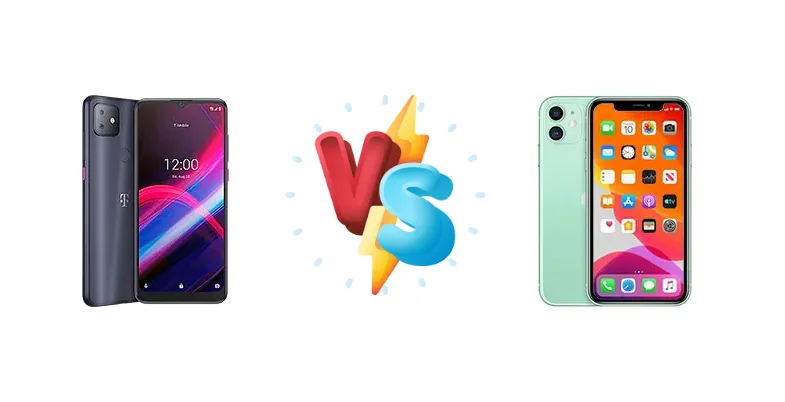
|
🏆 Quick Verdict
The iPhone 11 is the clear winner in terms of overall performance, camera quality, and software experience. However, the REVVL 4+ provides exceptional value for budget-conscious buyers who prioritize affordability over premium features. It's a trade-off between power and price.
| PHONES | ||
|---|---|---|
| Phone Names | T-Mobile REVVL 4+ | Apple iPhone 11 |
| Network | ||
|---|---|---|
| 2G bands | GSM 850 / 900 / 1800 / 1900 | GSM 850 / 900 / 1800 / 1900 |
| 3G bands | HSDPA 850 / 1700(AWS) / 1900 | HSDPA 850 / 900 / 1700(AWS) / 1900 / 2100 |
| 4G bands | 1, 2, 3, 4, 5, 7, 8, 12, 13, 20, 25, 26, 28, 38, 39, 40, 41, 66, 71 | 1, 2, 3, 4, 5, 7, 8, 11, 12, 13, 17, 18, 19, 20, 21, 25, 26, 28, 29, 30, 32, 34, 38, 39, 40, 41, 42, 46, 48, 66 - A2221 |
| Speed | HSPA, LTE | HSPA 42.2/5.76 Mbps, LTE Cat16 1024/150 Mbps, EV-DO Rev.A 3.1 Mbps |
| Technology | GSM / HSPA / LTE | GSM / CDMA / HSPA / EVDO / LTE |
| - | 1, 2, 3, 4, 5, 7, 8, 12, 13, 14, 17, 18, 19, 20, 25, 26, 29, 30, 34, 38, 39, 40, 41, 42, 46, 48, 66, 71 - A2111, A2223 | |
| Launch | ||
|---|---|---|
| Announced | 2020, August 27. Released 2020, September 04 | 2019, September 10 |
| Status | Discontinued | Available. Released 2019, September 20 |
| Body | ||
|---|---|---|
| Build | - | Glass front (Corning-made glass), glass back (Corning-made glass), aluminum frame (7000 series) |
| Dimensions | 165.4 x 75.2 x 8.1 mm (6.51 x 2.96 x 0.32 in) | 150.9 x 75.7 x 8.3 mm (5.94 x 2.98 x 0.33 in) |
| SIM | Nano-SIM | · Nano-SIM + eSIM· Nano-SIM + Nano-SIM (China) |
| Weight | 180 g (6.35 oz) | 194 g (6.84 oz) |
| - | IP68 dust/water resistant (up to 2m for 30 min) Apple Pay (Visa, MasterCard, AMEX certified) | |
| Display | ||
|---|---|---|
| Protection | - | Scratch-resistant glass |
| Resolution | 720 x 1440 pixels, 18:9 ratio (~247 ppi density) | 828 x 1792 pixels, 19.5:9 ratio (~326 ppi density) |
| Size | 6.52 inches, 109.7 cm2 (~88.2% screen-to-body ratio) | 6.1 inches, 90.3 cm2 (~79.0% screen-to-body ratio) |
| Type | IPS LCD | Liquid Retina IPS LCD, 625 nits (typ) |
| Platform | ||
|---|---|---|
| CPU | Octa-core (4x2.0 GHz Kryo 260 Gold & 4x1.8 GHz Kryo 260 Silver) | Hexa-core (2x2.65 GHz Lightning + 4x1.8 GHz Thunder) |
| Chipset | Qualcomm SDM665 Snapdragon 665 (11 nm) | Apple A13 Bionic (7 nm+) |
| GPU | Adreno 610 | Apple GPU (4-core graphics) |
| OS | Android 10 | iOS 13, upgradable to iOS 26.1 |
| Memory | ||
|---|---|---|
| Card slot | microSDXC | No |
| Internal | 64GB 4GB RAM | 64GB 4GB RAM, 128GB 4GB RAM, 256GB 4GB RAM |
| eMMC 5.1 | NVMe | |
| Main Camera | ||
|---|---|---|
| Dual | 16 MP, PDAF 5 MP | 12 MP, f/1.8, 26mm (wide), 1/2.55", 1.4µm, dual pixel PDAF, OIS 12 MP, f/2.4, 120˚, 13mm (ultrawide), 1/3.6" |
| Features | Dual-LED dual-tone flash, HDR, panorama | Dual-LED dual-tone flash, HDR (photo/panorama) |
| Video | 1080p@30fps | 4K@24/25/30/60fps, 1080p@25/30/60/120/240fps, HDR, stereo sound rec. |
| Selfie camera | ||
|---|---|---|
| Features | - | HDR |
| Single | 16 MP | 12 MP, f/2.2, 23mm (wide), 1/3.6", 1.0µm SL 3D, (depth/biometrics sensor) |
| Video | 1080p@30fps | 4K@24/25/30/60fps, 1080p@25/30/60/120fps, gyro-EIS |
| Sound | ||
|---|---|---|
| 3.5mm jack | Yes | No |
| 35mm jack | Yes | No |
| Loudspeaker | Yes | Yes, with stereo speakers |
| Comms | ||
|---|---|---|
| Bluetooth | 5.0, A2DP, LE | 5.0, A2DP, LE |
| NFC | Yes | Yes |
| Positioning | GPS | GPS, GLONASS, GALILEO, QZSS |
| Radio | No | No |
| USB | USB Type-C 2.0 | Lightning, USB 2.0 |
| WLAN | Wi-Fi 802.11 a/b/g/n/ac, dual-band, Wi-Fi Direct | Wi-Fi 802.11 a/b/g/n/ac/6, dual-band, hotspot |
| Features | ||
|---|---|---|
| Sensors | Fingerprint (rear-mounted), accelerometer, proximity | Face ID, accelerometer, gyro, proximity, compass, barometer |
| - | Ultra Wideband (UWB) support | |
| Battery | ||
|---|---|---|
| Charging | - | Wired, PD2.0, 50% in 30 min Wireless (Qi) |
| Type | Li-Ion 4000 mAh | Li-Ion 3110 mAh, non-removable (11.91 Wh) |
| Misc | ||
|---|---|---|
| Colors | Steel Gray | Black, Green, Yellow, Purple, Red, White |
| Models | 5062W, 5062Z | A2221, A2111, A2223, iPhone12,1 |
| Price | About 160 EUR | $ 167.50 / C$ 228.68 / £ 175.00 / € 193.32 |
| SAR | - | 1.09 W/kg (head) 1.18 W/kg (body) |
| SAR EU | - | 0.95 W/kg (head) 0.99 W/kg (body) |
| Pricing | ||
|---|---|---|
| 128GB 4GB RAM | - | $ 359.95 |
| 256GB 4GB RAM | - | $ 469.99 |
| 64GB 4GB RAM | - | $ 292.79 |
| RENEWED | - | £ 214.00 |
| Tests | ||
|---|---|---|
| Audio quality | - | Noise -94.2dB / Crosstalk -80.8dB |
| Battery life | - | Endurance rating 94h |
| Camera | - | Photo / Video |
| Display | - | Contrast ratio: 1505:1 (nominal) |
| Loudspeaker | - | Voice 70dB / Noise 72dB / Ring 76dB |
| Performance | - | AnTuTu: 419453 (v7) GeekBench: 13882 (v4.4) GFXBench: 60fps (ES 3.1 onscreen) |
T-Mobile REVVL 4+
- Affordable price
- Decent battery life
- Expandable storage (likely via microSD)
- Reliable for basic tasks
- Lower performance
- Less impressive camera
- Basic display
- Slower charging
Apple iPhone 11
- Powerful performance (A13 Bionic)
- Excellent camera system
- Premium display
- Fast charging (PD 2.0)
- Seamless iOS experience
- Higher price
- Limited storage options (base models)
- No expandable storage
- Older model
Display Comparison
The iPhone 11 boasts a superior display with a higher brightness (644 nits vs REVVL 4+'s likely lower brightness) and excellent color accuracy. While both offer LCD panels, the iPhone 11's contrast ratio (1505:1) provides richer blacks and better overall image quality. The REVVL 4+ display is adequate for everyday use but lacks the vibrancy and clarity of the iPhone 11.
Camera Comparison
The iPhone 11's camera system is a major advantage. It captures stunning photos and videos with excellent dynamic range and detail. The REVVL 4+ camera is decent for casual snapshots, but it lacks the advanced features and image processing capabilities of the iPhone 11. Low-light performance is also considerably better on the iPhone 11.
Performance
The Apple A13 Bionic chip in the iPhone 11 is significantly faster and more efficient than the Qualcomm Snapdragon 665 in the REVVL 4+. This translates to smoother multitasking, faster app loading times, and a more responsive user experience. The iPhone 11 handles demanding games and applications with ease, while the REVVL 4+ may struggle with more intensive tasks.
Battery Life
Both phones offer impressive battery life, with endurance ratings of 94 hours. However, the iPhone 11 supports faster charging with PD 2.0, allowing for a 50% charge in just 30 minutes. The REVVL 4+ likely uses a slower charging standard.
Buying Guide
The T-Mobile REVVL 4+ is ideal for first-time smartphone users, those on a tight budget, or individuals who need a basic phone for calls, texts, and light social media use. The Apple iPhone 11 is best suited for users who value a premium experience, powerful performance, a top-tier camera, and seamless integration with the Apple ecosystem.