
Sony Xperia XZs vs Xperia XZ Premium: Which Flagship Should You Choose?
| Phones Images | |||||
|---|---|---|---|---|---|
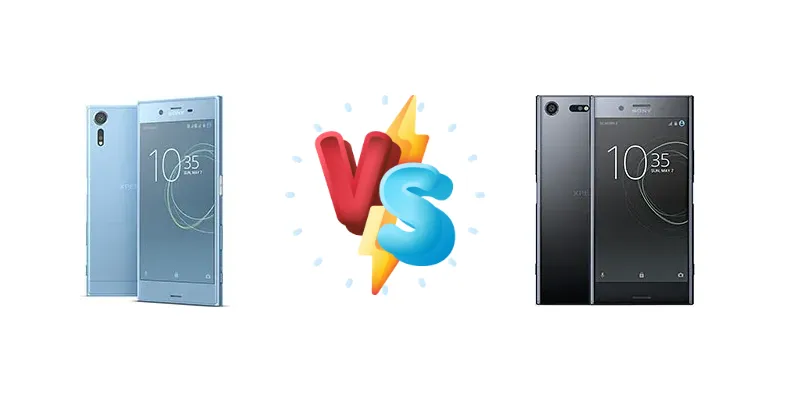
|
🏆 Quick Verdict
The Xperia XZ Premium offers a noticeable performance boost thanks to its Snapdragon 835 and improved display brightness. While battery life is nearly identical, the XZ Premium's superior processing power and slightly better screen make it the overall winner, despite a potentially higher price.
| PHONES | ||
|---|---|---|
| Phone Names | Sony Xperia XZs | Sony Xperia XZ Premium |
| Network | ||
|---|---|---|
| 2G bands | GSM 850 / 900 / 1800 / 1900 - SIM 1 & SIM 2 (G8232) | GSM 850 / 900 / 1800 / 1900 - SIM 1 & SIM 2 - G8142 |
| 3G bands | HSDPA 800 / 850 / 900 / 1700(AWS) / 1900 / 2100 - G8231, G8232 | HSDPA 800 / 850 / 900 / 1700(AWS) / 1900 / 2100 - G8141, G8142 |
| 4G bands | 1, 2, 3, 4, 5, 7, 8, 12, 13, 17, 19, 20, 26, 28, 29, 32, 38, 39, 40, 41 - G8231, G8232 | 1, 2, 3, 4, 5, 7, 8, 12, 13, 17, 19, 20, 26, 28, 29, 32, 38, 39, 40, 41 - G8141, G8142 |
| Speed | HSPA 42.2/5.76 Mbps, LTE Cat9 450/50 Mbps | HSPA 42.2/5.76 Mbps, LTE (2CA) Cat16 1024/150 Mbps |
| Technology | GSM / HSPA / LTE | GSM / HSPA / LTE |
| Launch | ||
|---|---|---|
| Announced | 2017, February 27. Released 2017, April 03 | 2017, February 27. Released 2017, June 18 |
| Status | Discontinued | Discontinued |
| Body | ||
|---|---|---|
| Build | Glass front (Gorilla Glass 5), aluminum back, plastic frame | Glass front (Gorilla Glass 5), glass back (Gorilla Glass 5), aluminum/plastic frame |
| Dimensions | 146 x 72 x 8.1 mm (5.75 x 2.83 x 0.32 in) | 156 x 77 x 7.9 mm (6.14 x 3.03 x 0.31 in) |
| SIM | · Nano-SIM (G8231)· Nano-SIM + Nano-SIM (G8232) | · Nano-SIM (G8141)· Nano-SIM + Nano-SIM (G8142) |
| Weight | 161 g (5.68 oz) | 195 g (6.88 oz) |
| IP68 dust/water resistant (up to 1.5m for 30 min) | IP68 dust/water resistant (up to 1.5m for 30 mins) | |
| Display | ||
|---|---|---|
| Protection | Corning Gorilla Glass 5 | Corning Gorilla Glass 5 |
| Resolution | 1080 x 1920 pixels, 16:9 ratio (~424 ppi density) | 3840 x 2160 pixels, 16:9 ratio (~807 ppi density) |
| Size | 5.2 inches, 74.5 cm2 (~70.9% screen-to-body ratio) | 5.46 inches, 82.2 cm2 (~68.4% screen-to-body ratio) |
| Type | IPS LCD | IPS LCD, HDR10 |
| Triluminos display X-Reality Engine | Runs at 1080 x 1920 pixels except for select use cases Triluminos display X-Reality Engine | |
| Platform | ||
|---|---|---|
| CPU | Quad-core (2x2.15 GHz Kryo & 2x1.6 GHz Kryo) | Octa-core (4x2.45 GHz Kryo & 4x1.9 GHz Kryo) |
| Chipset | Qualcomm MSM8996 Snapdragon 820 (14 nm) | Qualcomm MSM8998 Snapdragon 835 (10 nm) |
| GPU | Adreno 530 | Adreno 540 |
| OS | Android 7.1 (Nougat), upgradable to Android 8.0 (Oreo) | Android 7.1 (Nougat), upgradable to Android 9.0 (Pie) |
| Memory | ||
|---|---|---|
| Card slot | microSDXC (uses shared SIM slot) - dual SIM model only | microSDXC (uses shared SIM slot) - dual SIM model only |
| Internal | 32GB 4GB RAM, 64GB 4GB RAM | 64GB 4GB RAM |
| eMMC 5.1 | UFS 2.1 | |
| Main Camera | ||
|---|---|---|
| Features | Laser AF, color spectrum sensor, LED flash, HDR, panorama | Laser AF, color spectrum sensor, LED flash, panorama, HDR |
| Single | 19 MP, f/2.0, 25mm (wide), 1/2.3", predictive PDAF | 19 MP, f/2.0, 25mm (wide), 1/2.3", predictive PDAF |
| Video | 4K@30fps, 1080p@30fps (gyro-EIS), 720p@960fps, HDR | 4K@30fps, 1080p@30fps (gyro-EIS), 720p@960fps, HDR |
| Selfie camera | ||
|---|---|---|
| Single | 13 MP, f/2.0, 22mm (wide), 1/3.1", 1.12µm | 13 MP, f/2.0, 22mm (wide), 1/3.1", 1.12µm |
| Video | 1080p@30fps | 1080p@30fps |
| Sound | ||
|---|---|---|
| 3.5mm jack | Yes | Yes |
| 35mm jack | Yes | Yes |
| Loudspeaker | Yes, with stereo speakers | Yes, with stereo speakers |
| 24-bit/192kHz audio | 24-bit/192kHz audio | |
| Comms | ||
|---|---|---|
| Bluetooth | 4.2, A2DP, aptX, LE | 5.0, A2DP, aptX HD, LE |
| NFC | Yes | Yes |
| Positioning | GPS, GLONASS, BDS | GPS, GLONASS, BDS, GALILEO |
| Radio | No | No |
| USB | USB Type-C 2.0, OTG | USB Type-C 3.1, OTG |
| WLAN | Wi-Fi 802.11 a/b/g/n/ac, dual-band, Wi-Fi Direct, DLNA | Wi-Fi 802.11 a/b/g/n/ac, dual-band, Wi-Fi Direct, DLNA |
| Features | ||
|---|---|---|
| Sensors | Fingerprint (side-mounted, region dependent), accelerometer, gyro, proximity, barometer, compass | Fingerprint (side-mounted, region dependent), accelerometer, gyro, proximity, barometer, compass |
| Battery | ||
|---|---|---|
| Charging | 18W wired, QC3 | 18W wired, QC3 |
| Type | Li-Ion 2900 mAh, non-removable | Li-Ion 3230 mAh, non-removable |
| Misc | ||
|---|---|---|
| Colors | Black, Warm Silver, Ice Blue | Luminous Chrome, Deepsea Black, Bronze Pink, Rosso |
| Models | G8232, G8231, SOV35, 602SO, SO-03J | G8142, G8141, SO-04K, SO-04J |
| Price | About 220 EUR | About 320 EUR |
| Tests | ||
|---|---|---|
| Audio quality | Noise -93.5dB / Crosstalk -92.7dB | Noise -90.6dB / Crosstalk -92.6dB |
| Battery life | Endurance rating 73h | Endurance rating 72h |
| Camera | Photo / Video | Photo / Video |
| Display | Contrast ratio: 1223:1 (nominal), 3.818 (sunlight) | Contrast ratio: 1238:1 (nominal), 2.877 (sunlight) |
| Loudspeaker | Voice 62dB / Noise 65dB / Ring 73dB | Voice 62dB / Noise 65dB / Ring 71dB |
| Performance | AnTuTu: 170766 (v8) GeekBench: 808 (v5.1) GFXBench: 21fps (ES 3.1 onscreen) | GeekBench: 5460 (v4.4), 1603 (v5.1) GFXBench: 25fps (ES 3.1 onscreen) |
Sony Xperia XZs
- Excellent camera with predictive capture
- Good contrast ratio display
- Solid and reliable performance
- Slightly more affordable
- Older chipset (Snapdragon 820)
- Lower sunlight contrast ratio
- Design can feel a bit dated
Sony Xperia XZ Premium
- Superior performance (Snapdragon 835)
- Brighter and sharper display
- Improved low-light camera performance
- Premium design
- Higher price
- Potential for overheating under heavy load
- Design can be polarizing
Display Comparison
Both phones boast excellent contrast ratios (1223:1 for XZs, 1238:1 for XZ Premium). However, the XZ Premium shines in direct sunlight with a significantly better contrast ratio of 2.877 compared to the XZs' 3.818. The XZ Premium also features a slightly sharper display due to its more advanced panel technology (likely a more refined version of Sony's Triluminos technology).
Camera Comparison
Both phones feature excellent cameras capable of capturing high-quality photos and videos. The XZs introduced the predictive capture feature, which is a nice touch. However, the XZ Premium's image processing and low-light performance are generally considered slightly better, thanks to the more powerful processor and refined algorithms. Both offer 4K video recording.
Performance
The XZ Premium's Snapdragon 835 (10nm) chipset and Octa-core CPU provide a clear performance advantage over the XZs' Snapdragon 820 (14nm) and Quad-core CPU. Expect smoother multitasking, faster app loading times, and better overall responsiveness on the XZ Premium. The XZ Premium's improved thermal management also helps maintain performance under sustained load.
Battery Life
Battery life is surprisingly similar, with both phones achieving an endurance rating of around 72-73 hours. This suggests comparable battery capacity and power efficiency despite the XZ Premium's more powerful chipset.
Buying Guide
The Sony Xperia XZs is a great choice for users prioritizing a slightly more affordable option with excellent camera capabilities and a solid, reliable performance. The Xperia XZ Premium is ideal for those seeking the best possible performance, a brighter display for outdoor use, and are willing to pay a premium for those features.