
Sony Xperia XZ3 vs Xperia 10 II: A Detailed Comparison
| Phones Images | |||||
|---|---|---|---|---|---|
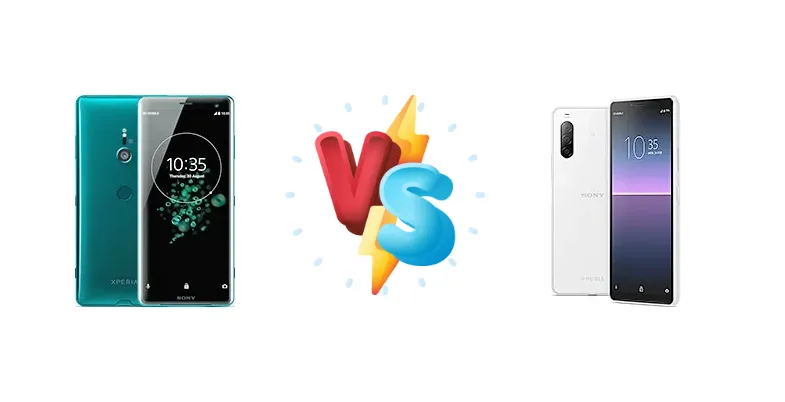
|
🏆 Quick Verdict
The Xperia XZ3 offers significantly better performance thanks to its Snapdragon 845 chipset. However, the Xperia 10 II provides slightly better battery life and a more budget-friendly price point. Ultimately, the XZ3 is for power users, while the 10 II is ideal for those prioritizing battery and value.
| PHONES | ||
|---|---|---|
| Phone Names | Sony Xperia XZ3 | Sony Xperia 10 II |
| Network | ||
|---|---|---|
| 2G bands | GSM 850 / 900 / 1800 / 1900 | GSM 850 / 900 / 1800 / 1900 |
| 3G bands | HSDPA 800 / 850 / 900 / 1700(AWS) / 1900 / 2100 - H8416, H9436, H9493 | HSDPA 850 / 900 / 1700(AWS) / 2100 |
| 4G bands | 1, 2, 3, 4, 5, 7, 8, 12, 13, 17, 19, 20, 26, 28, 29, 32, 38, 39, 40, 41, 46, 66 - H8416, H9436, H9493 | 1, 3, 4, 5, 7, 8, 12, 20, 28, 38, 39, 40, 41 |
| Speed | HSPA 42.2/5.76 Mbps, LTE (5CA) Cat18 1200/200 Mbps | HSPA 42.2/5.76 Mbps, LTE Cat11 600/75 Mbps |
| Technology | GSM / HSPA / LTE | GSM / HSPA / LTE |
| Launch | ||
|---|---|---|
| Announced | 2018, August 30. Released 2018, October 05 | 2020, February 24 |
| Status | Discontinued | Available. Released 2020, May 05 |
| Body | ||
|---|---|---|
| Build | Glass front (Gorilla Glass 5), glass back (Gorilla Glass 5), aluminum frame | Glass front (Gorilla Glass 6), glass back (Gorilla Glass 6), plastic frame |
| Dimensions | 158 x 73 x 9.9 mm (6.22 x 2.87 x 0.39 in) | 157 x 69 x 8.2 mm (6.18 x 2.72 x 0.32 in) |
| SIM | · Nano-SIM· Nano-SIM + Nano-SIM | · Nano-SIM· Nano-SIM + Nano-SIM |
| Weight | 193 g (6.81 oz) | 151 g (5.33 oz) |
| IP65/IP68 dust/water resistant (up to 1.5m for 30 mins) | IP65/IP68 dust/water resistant (up to 1.5m for 30 mins) | |
| Display | ||
|---|---|---|
| Protection | Corning Gorilla Glass 5 | Corning Gorilla Glass 6 |
| Resolution | 1440 x 2880 pixels, 18:9 ratio (~537 ppi density) | 1080 x 2520 pixels, 21:9 ratio (~457 ppi density) |
| Size | 6.0 inches, 92.9 cm2 (~80.5% screen-to-body ratio) | 6.0 inches, 84.1 cm2 (~77.6% screen-to-body ratio) |
| Type | P-OLED, HDR BT.2020 | OLED |
| Triluminos display X-Reality Engine | - | |
| Platform | ||
|---|---|---|
| CPU | Octa-core (4x2.7 GHz Kryo 385 Gold & 4x1.7 GHz Kryo 385 Silver) | Octa-core (4x2.0 GHz Kryo 260 Gold & 4x1.8 GHz Kryo 260 Silver) |
| Chipset | Qualcomm SDM845 Snapdragon 845 (10 nm) | Qualcomm SDM665 Snapdragon 665 (11 nm) |
| GPU | Adreno 630 | Adreno 610 |
| OS | Android 9.0 (Pie), upgradable to Android 10 | Android 10, upgradable to Android 12 |
| Memory | ||
|---|---|---|
| Card slot | microSDXC (uses shared SIM slot) - dual SIM model only | microSDXC (uses shared SIM slot) |
| Internal | 64GB 4GB RAM, 64GB 6GB RAM | 64GB 4GB RAM, 128GB 4GB RAM |
| UFS 2.1 | - | |
| Main Camera | ||
|---|---|---|
| Features | Laser AF, color spectrum sensor, LED flash, panorama, HDR | LED flash, HDR, panorama |
| Single | 19 MP, f/2.0, 25mm (wide), 1/2.3", 1.22µm, predictive PDAF | - |
| Triple | - | 12 MP, f/2.0, 26mm (wide), 1/2.8", PDAF 8 MP, f/2.4, 52mm (telephoto), 1/4.0", PDAF, 2x optical zoom 8 MP, f/2.2, 120˚, 16mm (ultrawide), 1/4.0" |
| Video | 4K@30fps, 1080p@60fps, 1080p@30fps (5-axis gyro-EIS), 1080p@960fps, HDR | 4K@30fps, 1080p@30fps |
| Selfie camera | ||
|---|---|---|
| Features | HDR | HDR |
| Single | 13 MP, f/1.9, 23mm (wide), 1/3.1", 1.12µm | 8 MP, f/2.0, 24mm (wide), 1/4.0" |
| Video | 1080p@30fps (5-axis gyro-EIS) | 1080p@30fps |
| Sound | ||
|---|---|---|
| 3.5mm jack | No | Yes |
| 35mm jack | No | Yes |
| Loudspeaker | Yes, with stereo speakers | Yes |
| 24-bit/192kHz audio Dynamic vibration system | 24-bit/192kHz audio | |
| Comms | ||
|---|---|---|
| Bluetooth | 5.0, A2DP, aptX HD, LE | 5.0, A2DP, LE, aptX HD |
| NFC | Yes | Yes |
| Positioning | GPS, GLONASS, BDS, GALILEO | GPS, GLONASS |
| Radio | No | No |
| USB | USB Type-C 3.1, OTG | USB Type-C 2.0, OTG |
| WLAN | Wi-Fi 802.11 a/b/g/n/ac, dual-band, Wi-Fi Direct, DLNA | Wi-Fi 802.11 a/b/g/n/ac, dual-band, Wi-Fi Direct |
| Features | ||
|---|---|---|
| Sensors | Fingerprint (rear-mounted), accelerometer, gyro, proximity, barometer, compass | Fingerprint (side-mounted), accelerometer, proximity, compass |
| Battery | ||
|---|---|---|
| Charging | 18W wired, PD2.0 Wireless (Qi) | 18W wired, PD, QC3 |
| Type | Li-Ion 3300 mAh, non-removable | Li-Po 3600 mAh |
| Misc | ||
|---|---|---|
| Colors | Black, Silver White, Forest Green, Bordeaux Red | Black, White, Mint Green, Berry Blue |
| Models | H9436, H8416, H9493 | XQ-AU51, XQ-AU52, SO-41A |
| Price | About 510 EUR | About 700 EUR |
| Tests | ||
|---|---|---|
| Audio quality | Noise -91.2dB / Crosstalk -88.7dB | - |
| Battery life | Endurance rating 90h | Endurance rating 92h |
| Camera | Photo / Video | Photo / Video |
| Display | Contrast ratio: Infinite (nominal), 4.502 (sunlight) | Contrast ratio: Infinite (nominal) |
| Loudspeaker | Voice 71dB / Noise 75dB / Ring 82dB | -28.8 LUFS (Average) |
| Performance | AnTuTu: 284555 (v7), 295468 (v8) GeekBench: 8607 (v4.4), 2137 (v5.1) GFXBench: 19fps (ES 3.1 onscreen) | AnTuTu: 196545 (v8) GeekBench: 5679 (v4.4), 1413 (v5.1) GFXBench: 5.6fps (ES 3.1 onscreen) |
Sony Xperia XZ3
- Superior Performance (Snapdragon 845)
- Vibrant OLED Display
- Premium Build Quality
- Faster Charging (PD 2.0)
- Older Model (Limited Software Updates)
- Potentially Higher Price on the Used Market
- Slightly Shorter Battery Life than 10 II
Sony Xperia 10 II
- Longer Battery Life
- Larger Display (6.0 inches)
- More Affordable
- QC3 Charging Support
- Lower Performance (Snapdragon 665)
- LCD Display (Less Vibrant)
- Less Refined Camera
Display Comparison
The Xperia XZ3 boasts a stunning OLED display with an impressive contrast ratio (nominally infinite, 4.502 in sunlight). While the Xperia 10 II also claims an infinite contrast ratio, its LCD panel lacks the vibrancy and deep blacks of the OLED. The XZ3's display is noticeably brighter and more visually appealing, though the 10 II's 520 nits max brightness is respectable. The 10 II's larger screen size (6.0 inches vs 5.9 inches) is a plus for media consumption.
Camera Comparison
Both phones offer Photo/Video capabilities, but the XZ3 generally produces better image quality, especially in low light, due to its superior processing power. The XZ3's camera is known for its accurate colors and detail. The 10 II's camera is competent but lacks the same level of refinement. Specific camera specs (megapixels, aperture) are not provided, but the XZ3's hardware and processing generally give it an edge.
Performance
Here's where the XZ3 truly shines. Its Snapdragon 845 chipset is significantly more powerful than the Xperia 10 II's Snapdragon 665. This translates to faster app loading times, smoother multitasking, and a better gaming experience. The XZ3's octa-core CPU with Kryo 385 cores provides a substantial performance advantage over the 10 II's Kryo 260 cores.
Battery Life
The Xperia 10 II edges out the XZ3 with a slightly higher endurance rating (92h vs 90h). While the difference is minimal, it suggests the 10 II's more efficient chipset and potentially larger battery capacity contribute to slightly longer battery life. Both phones support 18W wired charging.
Buying Guide
Who should buy the Sony Xperia XZ3? Users who demand high performance for gaming, video editing, or multitasking. Those who appreciate a premium build and a vibrant display. Who should buy the Sony Xperia 10 II? Budget-conscious buyers seeking long battery life and a large screen for media consumption. Those who prioritize simplicity and reliability over raw power.