
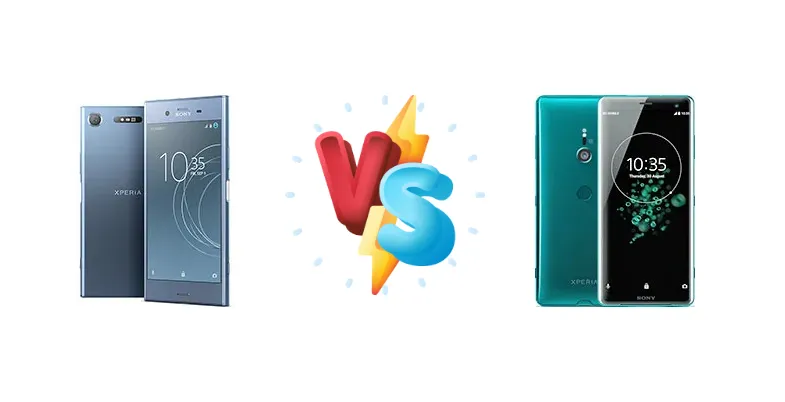
Sony Xperia XZ3 vs XZ1: A Detailed Comparison of Sony's Flagship Phones
| Phones Images | |||||
|---|---|---|---|---|---|
|
🏆 Quick Verdict
For most users, the Sony Xperia XZ3 is the superior choice. Its Snapdragon 845 chipset delivers a noticeable performance boost, and the improved display with its 'Infinite' contrast ratio offers a more immersive viewing experience. While the XZ1 offers excellent endurance, the XZ3’s added wireless charging and slightly better battery life make it the more well-rounded device.
| PHONES | ||
|---|---|---|
| Phone Names | Sony Xperia XZ1 | Sony Xperia XZ3 |
| Network | ||
|---|---|---|
| 2G bands | GSM 850 / 900 / 1800 / 1900 - SIM 1 & SIM 2 (dual-SIM model only) | GSM 850 / 900 / 1800 / 1900 |
| 3G bands | HSDPA 800 / 850 / 900 / 1700(AWS) / 1900 / 2100 - F8341, F8342 | HSDPA 800 / 850 / 900 / 1700(AWS) / 1900 / 2100 - H8416, H9436, H9493 |
| 4G bands | 1, 2, 3, 4, 5, 7, 8, 12, 13, 17, 19, 20, 25, 26, 28, 29, 32, 38, 39, 40, 41, 66 - G8341 | 1, 2, 3, 4, 5, 7, 8, 12, 13, 17, 19, 20, 26, 28, 29, 32, 38, 39, 40, 41, 46, 66 - H8416, H9436, H9493 |
| Speed | HSPA 42.2/5.76 Mbps, LTE (4CA) Cat16 1024/150 Mbps | HSPA 42.2/5.76 Mbps, LTE (5CA) Cat18 1200/200 Mbps |
| Technology | GSM / HSPA / LTE | GSM / HSPA / LTE |
| 1, 2, 3, 4, 5, 7, 8, 12, 13, 17, 20, 25, 29, 38, 40, 41, 66 - G8343 | - | |
| Launch | ||
|---|---|---|
| Announced | 2017, August 31. Released 2017, September 19 | 2018, August 30. Released 2018, October 05 |
| Status | Discontinued | Discontinued |
| Body | ||
|---|---|---|
| Build | Glass front (Gorilla Glass 5), aluminum back, aluminum frame | Glass front (Gorilla Glass 5), glass back (Gorilla Glass 5), aluminum frame |
| Dimensions | 148 x 73.4 x 7.4 mm (5.83 x 2.89 x 0.29 in) | 158 x 73 x 9.9 mm (6.22 x 2.87 x 0.39 in) |
| SIM | · Nano-SIM· Nano-SIM + Nano-SIM | · Nano-SIM· Nano-SIM + Nano-SIM |
| Weight | 155 g (5.47 oz) | 193 g (6.81 oz) |
| IP68 dust/water resistant (up to 1.5m for 30 min) | IP65/IP68 dust/water resistant (up to 1.5m for 30 mins) | |
| Display | ||
|---|---|---|
| Protection | Corning Gorilla Glass 5 | Corning Gorilla Glass 5 |
| Resolution | 1080 x 1920 pixels, 16:9 ratio (~424 ppi density) | 1440 x 2880 pixels, 18:9 ratio (~537 ppi density) |
| Size | 5.2 inches, 74.5 cm2 (~68.6% screen-to-body ratio) | 6.0 inches, 92.9 cm2 (~80.5% screen-to-body ratio) |
| Type | IPS LCD, HDR10 | P-OLED, HDR BT.2020 |
| Triluminos display X-Reality Engine | Triluminos display X-Reality Engine | |
| Platform | ||
|---|---|---|
| CPU | Octa-core (4x2.45 GHz Kryo & 4x1.9 GHz Kryo) | Octa-core (4x2.7 GHz Kryo 385 Gold & 4x1.7 GHz Kryo 385 Silver) |
| Chipset | Qualcomm MSM8998 Snapdragon 835 (10 nm) | Qualcomm SDM845 Snapdragon 845 (10 nm) |
| GPU | Adreno 540 | Adreno 630 |
| OS | Android 8.0 (Oreo), upgradable to Android 9.0 (Pie) | Android 9.0 (Pie), upgradable to Android 10 |
| Memory | ||
|---|---|---|
| Card slot | microSDXC (uses shared SIM slot) - dual SIM model only | microSDXC (uses shared SIM slot) - dual SIM model only |
| Internal | 64GB 4GB RAM | 64GB 4GB RAM, 64GB 6GB RAM |
| UFS 2.1 | UFS 2.1 | |
| Main Camera | ||
|---|---|---|
| Features | Laser AF, color spectrum sensor, LED flash, panorama, HDR | Laser AF, color spectrum sensor, LED flash, panorama, HDR |
| Single | 19 MP, f/2.0, 25mm (wide), 1/2.3", 1.22µm, predictive PDAF | 19 MP, f/2.0, 25mm (wide), 1/2.3", 1.22µm, predictive PDAF |
| Video | 4K@30fps, 1080p@60fps, 1080p@30fps (gyro-EIS), 720p@960fps | 4K@30fps, 1080p@60fps, 1080p@30fps (5-axis gyro-EIS), 1080p@960fps, HDR |
| Selfie camera | ||
|---|---|---|
| Features | - | HDR |
| Single | 13 MP, f/2.0, 22mm (wide), 1/3" | 13 MP, f/1.9, 23mm (wide), 1/3.1", 1.12µm |
| Video | 1080p@30fps (gyro-EIS) | 1080p@30fps (5-axis gyro-EIS) |
| Sound | ||
|---|---|---|
| 3.5mm jack | Yes | No |
| 35mm jack | Yes | No |
| Loudspeaker | Yes, with stereo speakers | Yes, with stereo speakers |
| 24-bit/192kHz audio | 24-bit/192kHz audio Dynamic vibration system | |
| Comms | ||
|---|---|---|
| Bluetooth | 5.0, A2DP, aptX HD, LE | 5.0, A2DP, aptX HD, LE |
| NFC | Yes | Yes |
| Positioning | GPS, GLONASS, BDS, GALILEO | GPS, GLONASS, BDS, GALILEO |
| Radio | No | No |
| USB | USB Type-C 3.1, OTG | USB Type-C 3.1, OTG |
| WLAN | Wi-Fi 802.11 a/b/g/n/ac, dual-band, Wi-Fi Direct, DLNA | Wi-Fi 802.11 a/b/g/n/ac, dual-band, Wi-Fi Direct, DLNA |
| Features | ||
|---|---|---|
| Sensors | Fingerprint (side-mounted), accelerometer, gyro, proximity, barometer, compass | Fingerprint (rear-mounted), accelerometer, gyro, proximity, barometer, compass |
| Battery | ||
|---|---|---|
| Charging | 18W wired, QC3 | 18W wired, PD2.0 Wireless (Qi) |
| Type | Li-Ion 2700 mAh, non-removable | Li-Ion 3300 mAh, non-removable |
| Misc | ||
|---|---|---|
| Colors | Black, Warm Silver, Venus Pink, Moonlit Blue | Black, Silver White, Forest Green, Bordeaux Red |
| Models | G8341, G8342, F8341, F8342, G8343, SOV36, SO-01K | H9436, H8416, H9493 |
| Price | About 260 EUR | About 510 EUR |
| Tests | ||
|---|---|---|
| Audio quality | Noise -93.3dB / Crosstalk -90.2dB | Noise -91.2dB / Crosstalk -88.7dB |
| Battery life | Endurance rating 82h | Endurance rating 90h |
| Camera | Photo / Video | Photo / Video |
| Display | Contrast ratio: 1406 (nominal), 3.765 (sunlight) | Contrast ratio: Infinite (nominal), 4.502 (sunlight) |
| Loudspeaker | Voice 65dB / Noise 68dB / Ring 69dB | Voice 71dB / Noise 75dB / Ring 82dB |
| Performance | GeekBench: 6541 (v4.4), 1527 (v5.1) GFXBench: 25fps (ES 3.1 onscreen) | AnTuTu: 284555 (v7), 295468 (v8) GeekBench: 8607 (v4.4), 2137 (v5.1) GFXBench: 19fps (ES 3.1 onscreen) |
Sony Xperia XZ1
- Excellent battery endurance (82h)
- More affordable price point (due to age)
- Still a capable performer for everyday tasks
- Older Snapdragon 835 chipset
- Inferior display contrast ratio
- Lacks wireless charging
Sony Xperia XZ3
- Faster Snapdragon 845 chipset
- Superior display with 'Infinite' contrast
- Wireless charging (Qi) and PD2.0 support
- Slightly higher price
- Battery life improvement is incremental, not massive
Display Comparison
The Xperia XZ3 boasts a significant display upgrade. While both phones share a similar aspect ratio, the XZ3’s ‘Infinite’ contrast ratio (compared to the XZ1’s 1406:1 nominal) indicates a superior panel, likely utilizing OLED technology, offering deeper blacks and more vibrant colors. The XZ3 also achieves a higher contrast ratio in sunlight (4.502 vs 3.765), improving outdoor visibility. While both displays are excellent, the XZ3’s offers a more premium and immersive visual experience. The XZ1's display, while still good, is likely an LCD panel and will not offer the same level of color accuracy or contrast.
Camera Comparison
Both the XZ1 and XZ3 feature capable photo and video cameras, but detailed specifications beyond 'Photo / Video' are missing. Given Sony’s expertise in imaging sensors, it’s reasonable to assume both phones utilize high-quality sensors. However, the XZ3 likely benefits from improved image processing algorithms and potentially a larger sensor size, resulting in better low-light performance and dynamic range. Without specific sensor details, it’s difficult to definitively declare a winner, but the XZ3’s newer processor allows for more sophisticated image processing.
Performance
The core performance difference lies in the chipsets. The XZ3’s Snapdragon 845 (10nm) represents a generational leap over the XZ1’s Snapdragon 835 (10nm). The XZ3’s CPU features faster Kryo 385 Gold cores (2.7 GHz vs 2.45 GHz) and Silver cores (1.7 GHz vs 1.9 GHz), resulting in quicker app launches, smoother multitasking, and improved gaming performance. While both chips are built on a 10nm process, the 845’s architectural improvements translate to a tangible performance advantage. The XZ3’s GPU also benefits from the upgrade, offering better graphics rendering capabilities.
Battery Life
The Xperia XZ3 edges out the XZ1 in battery endurance, achieving a rating of 90 hours compared to the XZ1’s 82 hours. This improvement, despite both phones featuring similar battery capacities (not specified in the data), is likely due to the more efficient Snapdragon 845 chipset. The XZ3 also introduces wireless charging (Qi standard) and supports Power Delivery 2.0 for faster wired charging, adding convenience and flexibility. While the XZ1 supports Quick Charge 3.0, the XZ3’s wireless charging and PD2.0 support provide a more modern charging experience.
Buying Guide
Buy the Sony Xperia XZ1 if you prioritize maximizing battery life and are seeking a flagship experience at a significantly lower price point. It remains a capable device for everyday tasks and photography. Buy the Sony Xperia XZ3 if you demand faster performance for demanding applications, appreciate a more modern design with wireless charging, and value a superior display experience with better contrast and viewing angles.