
Sony Xperia XZ1 vs. XZ1 Compact: A Deep Dive into Sony's 2017 Flagships
| Phones Images | |||||
|---|---|---|---|---|---|
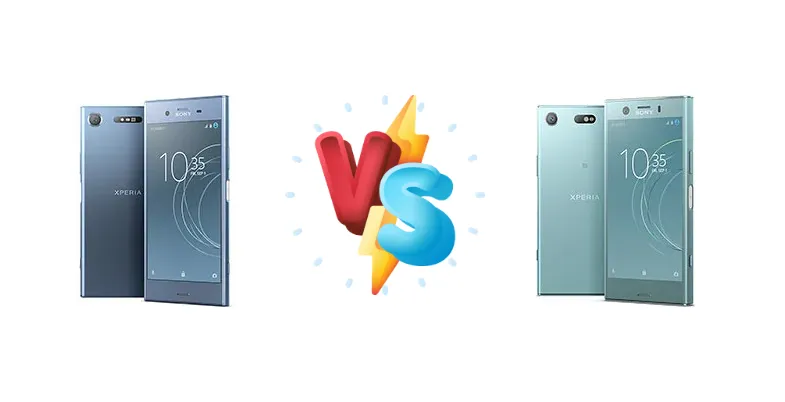
|
🏆 Quick Verdict
For most users, the Sony Xperia XZ1 Compact is the superior choice. Its significantly longer endurance rating of 108 hours, compared to the XZ1’s 82 hours, provides a tangible benefit in real-world usage. While the XZ1 boasts a slightly higher nominal display contrast ratio, the difference is minimal and doesn't outweigh the battery advantage.
| PHONES | ||
|---|---|---|
| Phone Names | Sony Xperia XZ1 | Sony Xperia XZ1 Compact |
| Network | ||
|---|---|---|
| 2G bands | GSM 850 / 900 / 1800 / 1900 - SIM 1 & SIM 2 (dual-SIM model only) | GSM 850 / 900 / 1800 / 1900 |
| 3G bands | HSDPA 800 / 850 / 900 / 1700(AWS) / 1900 / 2100 - F8341, F8342 | HSDPA 800 / 850 / 900 / 1700(AWS) / 1900 / 2100 |
| 4G bands | 1, 2, 3, 4, 5, 7, 8, 12, 13, 17, 19, 20, 25, 26, 28, 29, 32, 38, 39, 40, 41, 66 - G8341 | 1, 2, 3, 4, 5, 7, 8, 12, 13, 17, 19, 20, 25, 26, 28, 29, 32, 38, 39, 40, 41, 66 |
| Speed | HSPA 42.2/5.76 Mbps, LTE (4CA) Cat16 1024/150 Mbps | HSPA 42.2/5.76 Mbps, LTE (4CA) Cat15 800/75 Mbps |
| Technology | GSM / HSPA / LTE | GSM / HSPA / LTE |
| 1, 2, 3, 4, 5, 7, 8, 12, 13, 17, 20, 25, 29, 38, 40, 41, 66 - G8343 | - | |
| Launch | ||
|---|---|---|
| Announced | 2017, August 31. Released 2017, September 19 | 2017, August. Released 2017, October |
| Status | Discontinued | Discontinued |
| Body | ||
|---|---|---|
| Build | Glass front (Gorilla Glass 5), aluminum back, aluminum frame | Glass front (Gorilla Glass 4), plastic back, plastic frame |
| Dimensions | 148 x 73.4 x 7.4 mm (5.83 x 2.89 x 0.29 in) | 129 x 65 x 9.3 mm (5.08 x 2.56 x 0.37 in) |
| SIM | · Nano-SIM· Nano-SIM + Nano-SIM | Nano-SIM |
| Weight | 155 g (5.47 oz) | 140 g (4.94 oz) |
| IP68 dust/water resistant (up to 1.5m for 30 min) | IP68 dust/water resistant (up to 1.5m for 30 mins) | |
| Display | ||
|---|---|---|
| Protection | Corning Gorilla Glass 5 | Corning Gorilla Glass 5 |
| Resolution | 1080 x 1920 pixels, 16:9 ratio (~424 ppi density) | 720 x 1280 pixels, 16:9 ratio (~319 ppi density) |
| Size | 5.2 inches, 74.5 cm2 (~68.6% screen-to-body ratio) | 4.6 inches, 58.3 cm2 (~69.6% screen-to-body ratio) |
| Type | IPS LCD, HDR10 | IPS LCD |
| Triluminos display X-Reality Engine | Triluminos display X-Reality Engine | |
| Platform | ||
|---|---|---|
| CPU | Octa-core (4x2.45 GHz Kryo & 4x1.9 GHz Kryo) | Octa-core (4x2.45 GHz Kryo & 4x1.9 GHz Kryo) |
| Chipset | Qualcomm MSM8998 Snapdragon 835 (10 nm) | Qualcomm MSM8998 Snapdragon 835 (10 nm) |
| GPU | Adreno 540 | Adreno 540 |
| OS | Android 8.0 (Oreo), upgradable to Android 9.0 (Pie) | Android 8.0 (Oreo), upgradable to Android 9.0 (Pie) |
| Memory | ||
|---|---|---|
| Card slot | microSDXC (uses shared SIM slot) - dual SIM model only | microSDXC (dedicated slot) |
| Internal | 64GB 4GB RAM | 32GB 4GB RAM |
| UFS 2.1 | UFS 2.0 | |
| Main Camera | ||
|---|---|---|
| Features | Laser AF, color spectrum sensor, LED flash, panorama, HDR | Laser AF, color spectrum sensor, LED flash, panorama, HDR |
| Single | 19 MP, f/2.0, 25mm (wide), 1/2.3", 1.22µm, predictive PDAF | 19 MP, f/2.0, 25mm (wide), 1/2.3", 1.22µm, predictive PDAF |
| Video | 4K@30fps, 1080p@60fps, 1080p@30fps (gyro-EIS), 720p@960fps | 4K@30fps, 1080p@60fps, 1080p@30fps (gyro-EIS), 720p@960fps |
| Selfie camera | ||
|---|---|---|
| Single | 13 MP, f/2.0, 22mm (wide), 1/3" | 8 MP, f/2.4, 18mm, 1/4.0" |
| Video | 1080p@30fps (gyro-EIS) | 1080p@30fps (gyro-EIS) |
| Sound | ||
|---|---|---|
| 3.5mm jack | Yes | Yes |
| 35mm jack | Yes | Yes |
| Loudspeaker | Yes, with stereo speakers | Yes, with stereo speakers |
| 24-bit/192kHz audio | 24-bit/192kHz audio | |
| Comms | ||
|---|---|---|
| Bluetooth | 5.0, A2DP, aptX HD, LE | 5.0, A2DP, aptX HD, LE |
| NFC | Yes | Yes |
| Positioning | GPS, GLONASS, BDS, GALILEO | GPS, GLONASS, BDS, GALILEO |
| Radio | No | No |
| USB | USB Type-C 3.1, OTG | USB Type-C 2.0, OTG |
| WLAN | Wi-Fi 802.11 a/b/g/n/ac, dual-band, Wi-Fi Direct, DLNA | Wi-Fi 802.11 a/b/g/n/ac, dual-band, Wi-Fi Direct, DLNA |
| Features | ||
|---|---|---|
| Sensors | Fingerprint (side-mounted), accelerometer, gyro, proximity, barometer, compass | Fingerprint (side-mounted), accelerometer, gyro, proximity, barometer, compass |
| Battery | ||
|---|---|---|
| Charging | 18W wired, QC3 | 18W wired, QC3 |
| Type | Li-Ion 2700 mAh, non-removable | Li-Ion 2700 mAh, non-removable |
| Misc | ||
|---|---|---|
| Colors | Black, Warm Silver, Venus Pink, Moonlit Blue | Black, White Silver, Horizon Blue, Twilight Pink |
| Models | G8341, G8342, F8341, F8342, G8343, SOV36, SO-01K | G8441, SO-02K |
| Price | About 260 EUR | About 300 EUR |
| Tests | ||
|---|---|---|
| Audio quality | Noise -93.3dB / Crosstalk -90.2dB | Noise -93.7dB / Crosstalk -85.5dB |
| Battery life | Endurance rating 82h | Endurance rating 108h |
| Camera | Photo / Video | Photo / Video |
| Display | Contrast ratio: 1406 (nominal), 3.765 (sunlight) | Contrast ratio: 1243:1 (nominal), 3.729 (sunlight) |
| Loudspeaker | Voice 65dB / Noise 68dB / Ring 69dB | Voice 65dB / Noise 70dB / Ring 76dB |
| Performance | GeekBench: 6541 (v4.4), 1527 (v5.1) GFXBench: 25fps (ES 3.1 onscreen) | AnTuTu: 204581 (v7), 255140 (v8) GeekBench: 5596 (v4.4), 1681 (v5.1) GFXBench: 50fps (ES 3.1 onscreen) |
Sony Xperia XZ1
- Larger display for enhanced media consumption.
- Slightly higher nominal display contrast ratio.
- More conventional form factor for some users.
- Significantly shorter battery life compared to the Compact.
- Less portable due to larger size.
Sony Xperia XZ1 Compact
- Exceptional battery life with an endurance rating of 108 hours.
- Highly portable and comfortable to use one-handed.
- Higher pixel density for potentially sharper visuals.
- Smaller display may not be ideal for all users.
- Slightly lower nominal display contrast ratio.
Display Comparison
Both the XZ1 and XZ1 Compact utilize displays with excellent sunlight readability, achieving a contrast ratio of approximately 3.765 under direct sunlight. However, the XZ1’s nominal contrast ratio of 1406 is marginally better than the Compact’s 1243:1. This difference, while measurable, is unlikely to be noticeable in everyday use. Both displays share the same resolution, meaning pixel density is higher on the smaller XZ1 Compact, potentially resulting in a slightly sharper image, though the overall impact is minimal. Sony’s display calibration is consistent across both models, delivering accurate colors.
Camera Comparison
Both the XZ1 and XZ1 Compact feature the same camera hardware, offering comparable photo and video capabilities. While detailed sensor specifications aren’t provided, the shared chipset and image processing pipeline suggest similar image quality. The absence of information regarding sensor size or aperture makes a definitive comparison impossible, but users can expect consistent performance in various lighting conditions. Sony’s expertise in image processing ensures vibrant colors and good dynamic range on both devices. The inclusion of video recording capabilities is standard for flagship phones of this era.
Performance
The core performance of both devices is identical, powered by the Qualcomm MSM8998 Snapdragon 835 (10 nm) chipset with an octa-core CPU configuration (4x2.45 GHz Kryo & 4x1.9 GHz Kryo). This means identical processing power for demanding tasks like gaming and video editing. Thermal management is likely similar, given the shared chipset and cooling solutions, though the Compact’s smaller chassis *could* lead to slightly higher sustained temperatures under extreme load. Both devices benefit from the efficiency of the 10nm manufacturing process, minimizing power consumption during performance-intensive operations.
Battery Life
The most significant difference between these two devices lies in their battery performance. The XZ1 Compact boasts an impressive endurance rating of 108 hours, significantly exceeding the XZ1’s 82 hours. This translates to a substantial advantage in real-world usage, allowing the Compact to easily last a full day, even with heavy use. Both devices support 18W wired charging with Quick Charge 3.0 (QC3), offering relatively fast charging speeds. However, the Compact’s larger effective battery life mitigates the need for frequent charging, making it the more convenient option for users who prioritize longevity.
Buying Guide
Buy the Sony Xperia XZ1 if you prioritize a larger screen and are willing to compromise on battery life. This device is ideal for media consumption and users who frequently use power-intensive applications. Buy the Sony Xperia XZ1 Compact if you value portability and exceptional battery endurance. It’s the perfect phone for users who are constantly on the go and need a reliable device that can last through a full day – and beyond – on a single charge.