
Sony Xperia XA2 Ultra vs. Xperia XZ1: A Detailed Comparison
| Phones Images | |||||
|---|---|---|---|---|---|
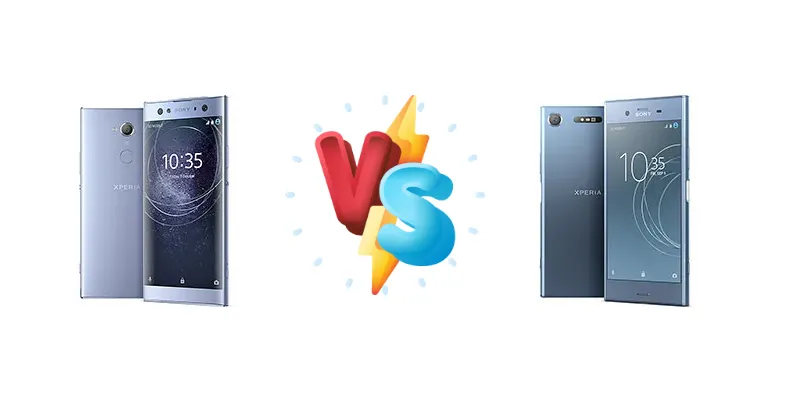
|
🏆 Quick Verdict
The Xperia XZ1 is the clear winner for most users. While the XA2 Ultra boasts exceptional battery life, the XZ1's superior performance, more modern chipset, and slightly better display make it the more compelling choice overall. However, budget-conscious buyers prioritizing battery endurance might still find value in the XA2 Ultra.
| PHONES | ||
|---|---|---|
| Phone Names | Sony Xperia XA2 Ultra | Sony Xperia XZ1 |
| Network | ||
|---|---|---|
| 2G bands | GSM 850 / 900 / 1800 / 1900 - SIM 1 & SIM 2 (dual-SIM model only) | GSM 850 / 900 / 1800 / 1900 - SIM 1 & SIM 2 (dual-SIM model only) |
| 3G bands | HSDPA 850 / 900 / 1900 / 2100 - H3213, H4213, H4233 | HSDPA 800 / 850 / 900 / 1700(AWS) / 1900 / 2100 - F8341, F8342 |
| 4G bands | 1, 2, 3, 5, 7, 8, 20, 38 - H3213, H4213 | 1, 2, 3, 4, 5, 7, 8, 12, 13, 17, 19, 20, 25, 26, 28, 29, 32, 38, 39, 40, 41, 66 - G8341 |
| Speed | HSPA 42.2/5.76 Mbps, LTE (3CA) Cat13 600/150 Mbps | HSPA 42.2/5.76 Mbps, LTE (4CA) Cat16 1024/150 Mbps |
| Technology | GSM / HSPA / LTE | GSM / HSPA / LTE |
| - | 1, 2, 3, 4, 5, 7, 8, 12, 13, 17, 20, 25, 29, 38, 40, 41, 66 - G8343 | |
| Launch | ||
|---|---|---|
| Announced | 2018, January. Released 2018, February | 2017, August 31. Released 2017, September 19 |
| Status | Discontinued | Discontinued |
| Body | ||
|---|---|---|
| Build | Glass front (Gorilla Glass 4), plastic back, aluminum frame | Glass front (Gorilla Glass 5), aluminum back, aluminum frame |
| Dimensions | 163 x 80 x 9.5 mm (6.42 x 3.15 x 0.37 in) | 148 x 73.4 x 7.4 mm (5.83 x 2.89 x 0.29 in) |
| SIM | · Nano-SIM· Nano-SIM + Nano-SIM | · Nano-SIM· Nano-SIM + Nano-SIM |
| Weight | 221 g (7.80 oz) | 155 g (5.47 oz) |
| - | IP68 dust/water resistant (up to 1.5m for 30 min) | |
| Display | ||
|---|---|---|
| Protection | Corning Gorilla Glass 4 | Corning Gorilla Glass 5 |
| Resolution | 1080 x 1920 pixels, 16:9 ratio (~367 ppi density) | 1080 x 1920 pixels, 16:9 ratio (~424 ppi density) |
| Size | 6.0 inches, 99.2 cm2 (~76.1% screen-to-body ratio) | 5.2 inches, 74.5 cm2 (~68.6% screen-to-body ratio) |
| Type | IPS LCD | IPS LCD, HDR10 |
| - | Triluminos display X-Reality Engine | |
| Platform | ||
|---|---|---|
| CPU | Octa-core 2.2 GHz Cortex-A53 | Octa-core (4x2.45 GHz Kryo & 4x1.9 GHz Kryo) |
| Chipset | Qualcomm SDM630 Snapdragon 630 (14 nm) | Qualcomm MSM8998 Snapdragon 835 (10 nm) |
| GPU | Adreno 508 | Adreno 540 |
| OS | Android 8.0 (Oreo), upgradable to Android 9.0 (Pie) | Android 8.0 (Oreo), upgradable to Android 9.0 (Pie) |
| Memory | ||
|---|---|---|
| Card slot | microSDXC (dedicated slot) | microSDXC (uses shared SIM slot) - dual SIM model only |
| Internal | 32GB 4GB RAM, 64GB 4GB RAM | 64GB 4GB RAM |
| - | UFS 2.1 | |
| Main Camera | ||
|---|---|---|
| Features | LED flash, HDR, panorama | Laser AF, color spectrum sensor, LED flash, panorama, HDR |
| Single | 23 MP, f/2.0, 24mm (wide), 1/2.3", PDAF | 19 MP, f/2.0, 25mm (wide), 1/2.3", 1.22µm, predictive PDAF |
| Video | 4K@30fps, 1080p@30fps, stereo sound rec., HDR | 4K@30fps, 1080p@60fps, 1080p@30fps (gyro-EIS), 720p@960fps |
| Selfie camera | ||
|---|---|---|
| Dual | 16 MP, f/2.0, 23mm (wide), 1/2.6", OIS, AF 8 MP, f/2.4, 1/4.0" | - |
| Single | - | 13 MP, f/2.0, 22mm (wide), 1/3" |
| Video | 1080p@30ps | 1080p@30fps (gyro-EIS) |
| Sound | ||
|---|---|---|
| 3.5mm jack | Yes | Yes |
| 35mm jack | Yes | Yes |
| Loudspeaker | Yes | Yes, with stereo speakers |
| - | 24-bit/192kHz audio | |
| Comms | ||
|---|---|---|
| Bluetooth | 5.0, A2DP, aptX HD, LE | 5.0, A2DP, aptX HD, LE |
| NFC | Yes | Yes |
| Positioning | GPS, GLONASS | GPS, GLONASS, BDS, GALILEO |
| Radio | FM radio | No |
| USB | USB Type-C 2.0, OTG | USB Type-C 3.1, OTG |
| WLAN | Wi-Fi 802.11 a/b/g/n/ac, dual-band, Wi-Fi Direct | Wi-Fi 802.11 a/b/g/n/ac, dual-band, Wi-Fi Direct, DLNA |
| Features | ||
|---|---|---|
| Sensors | Fingerprint (rear-mounted), accelerometer, proximity, compass | Fingerprint (side-mounted), accelerometer, gyro, proximity, barometer, compass |
| Battery | ||
|---|---|---|
| Charging | 18W wired, QC3 | 18W wired, QC3 |
| Type | Li-Ion 3580 mAh, non-removable | Li-Ion 2700 mAh, non-removable |
| Misc | ||
|---|---|---|
| Colors | Silver, Black, Blue, Gold | Black, Warm Silver, Venus Pink, Moonlit Blue |
| Models | H4213, H4233, H3213, H3223 | G8341, G8342, F8341, F8342, G8343, SOV36, SO-01K |
| Price | About 260 EUR | About 260 EUR |
| Tests | ||
|---|---|---|
| Audio quality | Noise -67.7dB / Crosstalk -92.7dB | Noise -93.3dB / Crosstalk -90.2dB |
| Battery life | Endurance rating 100h | Endurance rating 82h |
| Camera | Photo / Video | Photo / Video |
| Display | Contrast ratio: 1562:1 (nominal), 3.445 (sunlight) | Contrast ratio: 1406 (nominal), 3.765 (sunlight) |
| Loudspeaker | Voice 68dB / Noise 73dB / Ring 80dB | Voice 65dB / Noise 68dB / Ring 69dB |
| Performance | AnTuTu: 89110 (v7) GeekBench: 4198 (v4.4) GFXBench: 6fps (ES 3.1 onscreen) | GeekBench: 6541 (v4.4), 1527 (v5.1) GFXBench: 25fps (ES 3.1 onscreen) |
Sony Xperia XA2 Ultra
- Exceptional battery life (100h)
- Dual front-facing cameras
- Large display
- Affordable price
- Slower processor
- Older chipset
- Less premium design
- Camera not as good as XZ1
Sony Xperia XZ1
- Powerful Snapdragon 835 processor
- Better camera performance
- More modern design
- Slightly better display
- Shorter battery life than XA2 Ultra
- Higher price
- LCD display (no OLED)
Display Comparison
Both phones feature LCD displays, but the XZ1 edges out the XA2 Ultra slightly. The XA2 Ultra has a contrast ratio of 1562:1 (nominal) and 3.445 (sunlight), while the XZ1 offers 1406:1 (nominal) and 3.765 (sunlight). The XZ1's higher sunlight readability is a notable advantage for outdoor use. Both displays are sharp and vibrant, but the XZ1's slightly better brightness and contrast contribute to a more immersive viewing experience.
Camera Comparison
Both phones offer capable cameras, but the XZ1 generally produces better results. The XA2 Ultra's dual front-facing cameras are a unique selling point for selfies, while the XZ1's single rear camera benefits from Sony's image processing expertise. The XZ1's camera is faster to focus and captures more detail in various lighting conditions. While the XA2 Ultra's camera is decent, the XZ1's is the clear winner.
Performance
The XZ1's Snapdragon 835 chipset is significantly more powerful than the XA2 Ultra's Snapdragon 630. This translates to noticeably faster app loading times, smoother multitasking, and better performance in demanding games. The XZ1's Kryo CPU architecture provides a substantial performance boost over the XA2 Ultra's Cortex-A53 cores. The XA2 Ultra is perfectly adequate for everyday tasks, but the XZ1 offers a much more premium and responsive experience.
Battery Life
The XA2 Ultra's standout feature is its exceptional battery life, boasting an endurance rating of 100 hours. The XZ1, while still offering good battery life, has an endurance rating of 82 hours. This difference is significant, and the XA2 Ultra can easily last for two full days on a single charge with moderate usage.
Buying Guide
Who should buy the Sony Xperia XA2 Ultra? Users prioritizing long battery life above all else, those on a tighter budget, and those who appreciate a large display and dual front-facing cameras. Who should buy the Sony Xperia XZ1? Users seeking a faster processor for gaming and demanding apps, a more modern design, and a slightly better overall camera experience.