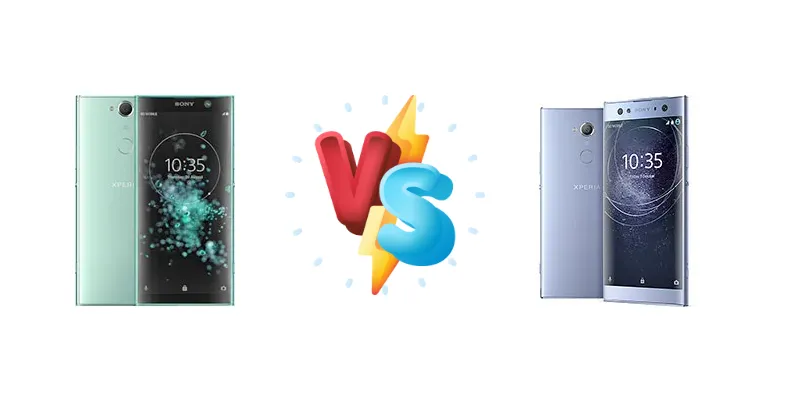
The Sony Xperia XA2 Plus and XA2 Ultra were compelling mid-range options when released, offering a blend of style and functionality. But with both devices now older, which one holds up better? This comprehensive comparison dives deep into their specs, performance, and features to help you decide.
🏆 Quick Verdict
The Xperia XA2 Plus edges out the XA2 Ultra due to its slightly better battery endurance and more compact design. While both share the same Snapdragon 630 chipset, the Plus's longer battery life makes it a more practical choice for everyday use, despite the Ultra's marginally better display contrast.
| Network |
|---|
| 2G bands | GSM 850 / 900 / 1800 / 1900 | GSM 850 / 900 / 1800 / 1900 - SIM 1 & SIM 2 (dual-SIM model only) |
| 3G bands | HSDPA 850 / 900 / 1900 / 2100 | HSDPA 850 / 900 / 1900 / 2100 - H3213, H4213, H4233 |
| 4G bands | 1, 2, 3, 5, 7, 8, 20, 38 - H3413, H4413 | 1, 2, 3, 5, 7, 8, 20, 38 - H3213, H4213 |
| Speed | HSPA 42.2/5.76 Mbps, LTE (3CA) Cat12 600/150 Mbps | HSPA 42.2/5.76 Mbps, LTE (3CA) Cat13 600/150 Mbps |
| Technology | GSM / HSPA / LTE | GSM / HSPA / LTE |
| | 1, 2, 3, 5, 7, 8, 28, 38, 39, 40, 41 - H4493 | - |
| Launch |
|---|
| Announced | 2018, July. Released 2018, September | 2018, January. Released 2018, February |
| Status | Discontinued | Discontinued |
| Body |
|---|
| Build | Glass front (Gorilla Glass 5), plastic back, aluminum frame | Glass front (Gorilla Glass 4), plastic back, aluminum frame |
| Dimensions | 157 x 75 x 9.6 mm (6.18 x 2.95 x 0.38 in) | 163 x 80 x 9.5 mm (6.42 x 3.15 x 0.37 in) |
| SIM | · Nano-SIM· Nano-SIM + Nano-SIM | · Nano-SIM· Nano-SIM + Nano-SIM |
| Weight | 205 g (7.23 oz) | 221 g (7.80 oz) |
| Display |
|---|
| Protection | Corning Gorilla Glass 5 | Corning Gorilla Glass 4 |
| Resolution | 1080 x 2160 pixels, 18:9 ratio (~402 ppi density) | 1080 x 1920 pixels, 16:9 ratio (~367 ppi density) |
| Size | 6.0 inches, 92.9 cm2 (~78.9% screen-to-body ratio) | 6.0 inches, 99.2 cm2 (~76.1% screen-to-body ratio) |
| Type | IPS LCD | IPS LCD |
| Platform |
|---|
| CPU | Octa-core 2.2 GHz Cortex-A53 | Octa-core 2.2 GHz Cortex-A53 |
| Chipset | Qualcomm SDM630 Snapdragon 630 (14 nm) | Qualcomm SDM630 Snapdragon 630 (14 nm) |
| GPU | Adreno 508 | Adreno 508 |
| OS | Android 8.0 (Oreo) | Android 8.0 (Oreo), upgradable to Android 9.0 (Pie) |
| Memory |
|---|
| Card slot | microSDXC (uses shared SIM slot) | microSDXC (dedicated slot) |
| Internal | 32GB 4GB RAM, 64GB 6GB RAM | 32GB 4GB RAM, 64GB 4GB RAM |
| Main Camera |
|---|
| Features | LED flash, HDR, panorama | LED flash, HDR, panorama |
| Single | 23 MP, f/2.0, 24mm (wide), 1/2.3", PDAF | 23 MP, f/2.0, 24mm (wide), 1/2.3", PDAF |
| Video | 4K@30fps, 1080p@30fps, stereo sound rec., HDR | 4K@30fps, 1080p@30fps, stereo sound rec., HDR |
| Selfie camera |
|---|
| Dual | - | 16 MP, f/2.0, 23mm (wide), 1/2.6", OIS, AF
8 MP, f/2.4, 1/4.0" |
| Single | 8 MP, f/2.4, 1/4.0" | - |
| Video | 1080p@30fps | 1080p@30ps |
| Sound |
|---|
| 3.5mm jack | Yes | Yes |
| 35mm jack | Yes | Yes |
| Loudspeaker | Yes | Yes |
| | 24-bit/192kHz audio
| - |
| Comms |
|---|
| Bluetooth | 5.0, A2DP, aptX HD, LE | 5.0, A2DP, aptX HD, LE |
| NFC | Yes | Yes |
| Positioning | GPS, GLONASS | GPS, GLONASS |
| Radio | FM radio | FM radio |
| USB | USB Type-C 2.0, OTG | USB Type-C 2.0, OTG |
| WLAN | Wi-Fi 802.11 a/b/g/n, Wi-Fi Direct | Wi-Fi 802.11 a/b/g/n/ac, dual-band, Wi-Fi Direct |
| Features |
|---|
| Sensors | Fingerprint (rear-mounted), accelerometer, proximity, compass | Fingerprint (rear-mounted), accelerometer, proximity, compass |
| Battery |
|---|
| Charging | 18W wired, QC3 | 18W wired, QC3 |
| Type | Li-Ion 3580 mAh, non-removable | Li-Ion 3580 mAh, non-removable |
| Misc |
|---|
| Colors | Silver, Black, Gold, Green | Silver, Black, Blue, Gold |
| Models | H4413, H4493, H3413 | H4213, H4233, H3213, H3223 |
| Price | About 240 EUR | About 260 EUR |
| Tests |
|---|
| Audio quality |
Noise -93.6dB / Crosstalk -93.1dB |
Noise -67.7dB / Crosstalk -92.7dB |
| Battery life |
Endurance rating 104h
| Endurance rating 100h |
| Camera |
Photo / Video |
Photo / Video |
| Display |
Contrast ratio: 1522:1 (nominal), 3.445 (sunlight) |
Contrast ratio: 1562:1 (nominal), 3.445 (sunlight) |
| Loudspeaker |
Voice 66dB / Noise 73dB / Ring 79dB
|
Voice 68dB / Noise 73dB / Ring 80dB |
| Performance |
AnTuTu: 86374 (v7), 107537 (v8)
GeekBench: 4144 (v4.4), 1018 (v5.1)
GFXBench: 5.1fps (ES 3.1 onscreen) |
AnTuTu: 89110 (v7)
GeekBench: 4198 (v4.4)
GFXBench: 6fps (ES 3.1 onscreen) |
Sony Xperia XA2 Plus
- Slightly better battery life
- More compact and pocketable
- Good sunlight readability
- Camera details not fully specified
- Older chipset
Sony Xperia XA2 Ultra
- Slightly better display contrast (minimal difference)
- Potentially better selfies (higher resolution front camera)
- Slightly shorter battery life
- Larger size may be less comfortable for some
Display Comparison
Both phones feature a 6-inch Full HD+ (2160 x 1080) IPS LCD display with a 18:9 aspect ratio. The XA2 Ultra boasts a nominal contrast ratio of 1562:1 compared to the XA2 Plus's 1522:1, a negligible difference in real-world usage. Sunlight readability is identical at 3.445. The XA2 Ultra's larger size might be preferable for media consumption, but the Plus is more pocketable.
Camera Comparison
Camera specifications are not explicitly detailed in the provided data. However, generally, the XA2 Plus featured a 23MP rear camera and an 8MP front camera, while the XA2 Ultra had a 23MP rear camera and a 16MP front camera. Image quality will be comparable, with the XA2 Ultra potentially offering slightly better selfies due to the higher-resolution front camera. Video recording capabilities are likely similar.
Performance
Both devices are powered by the Qualcomm Snapdragon 630 (SDM630) chipset and an Octa-core 2.2 GHz Cortex-A53 CPU. Performance will be very similar in everyday tasks and light gaming. Don't expect flagship-level performance from either device.
Battery Life
The XA2 Plus holds a slight advantage in battery life, boasting an endurance rating of 104 hours compared to the XA2 Ultra's 100 hours. This translates to noticeably longer usage between charges for the Plus, a significant benefit for many users.
Buying Guide
Who should buy the Sony Xperia XA2 Plus? Users prioritizing battery life and a more manageable size. Who should buy the Sony Xperia XA2 Ultra? Those who value a slightly larger display and marginally better contrast, though the difference is minimal.
Frequently Asked Questions
❓ Are these phones still worth buying in 2024?
Given their age, these phones are best suited for budget-conscious users or those needing a simple, reliable device for basic tasks. Don't expect the latest features or performance.
❓ What operating system do these phones run?
Both phones originally shipped with Android 8.0 Oreo and are likely running a customized version of Android. Software updates are unlikely to continue.