
Sony Xperia XA2 Plus vs. Motorola Defy (2021): A Budget Showdown
| Phones Images | |||||
|---|---|---|---|---|---|
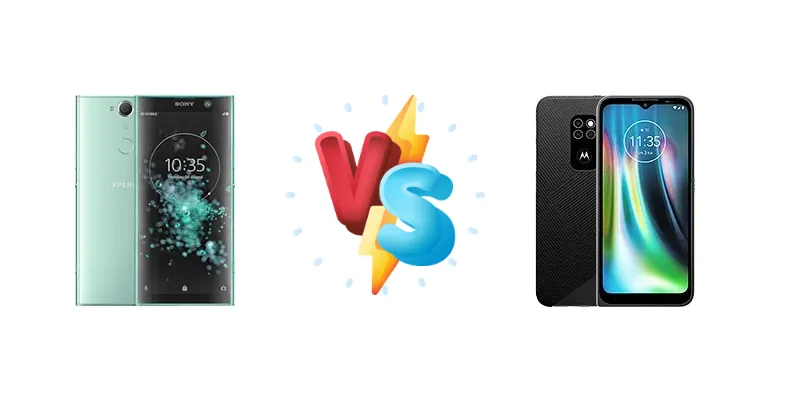
|
🏆 Quick Verdict
The Motorola Defy (2021) edges out the Xperia XA2 Plus thanks to its superior battery life, brighter display, and slightly more modern chipset. While the XA2 Plus boasts impressive contrast, the Defy's durability and overall package make it the better choice for most users.
| PHONES | ||
|---|---|---|
| Phone Names | Sony Xperia XA2 Plus | Motorola Defy (2021) |
| Network | ||
|---|---|---|
| 2G bands | GSM 850 / 900 / 1800 / 1900 | GSM 850 / 900 / 1800 / 1900 |
| 3G bands | HSDPA 850 / 900 / 1900 / 2100 | HSDPA 850 / 900 / 1700(AWS) / 1900 / 2100 - LATAM |
| 4G bands | 1, 2, 3, 5, 7, 8, 20, 38 - H3413, H4413 | 1, 2, 3, 5, 7, 8, 18, 19, 20, 26, 28, 38, 40, 41 - EMEA |
| Speed | HSPA 42.2/5.76 Mbps, LTE (3CA) Cat12 600/150 Mbps | HSPA 42.2/5.76 Mbps, LTE Cat4 150/50 Mbps |
| Technology | GSM / HSPA / LTE | GSM / HSPA / LTE |
| 1, 2, 3, 5, 7, 8, 28, 38, 39, 40, 41 - H4493 | 1, 2, 3, 4, 5, 7, 8, 19, 28, 66 - LATAM | |
| Launch | ||
|---|---|---|
| Announced | 2018, July. Released 2018, September | 2021, June 17 |
| Status | Discontinued | Available. Released 2021, July 25 |
| Body | ||
|---|---|---|
| Build | Glass front (Gorilla Glass 5), plastic back, aluminum frame | Glass front (Gorilla Glass Victus), plastic frame, plastic back |
| Dimensions | 157 x 75 x 9.6 mm (6.18 x 2.95 x 0.38 in) | 169.8 x 78.2 x 10.9 mm (6.69 x 3.08 x 0.43 in) |
| SIM | · Nano-SIM· Nano-SIM + Nano-SIM | · Nano-SIM· Nano-SIM + Nano-SIM |
| Weight | 205 g (7.23 oz) | 232 g (8.18 oz) |
| - | IP68 dust/water resistant (up to 1.5m for 35 min) Drop-to-concrete resistance from up to 1.8m MIL-SPEC 810H compliant | |
| Display | ||
|---|---|---|
| Protection | Corning Gorilla Glass 5 | Corning Gorilla Glass Victus |
| Resolution | 1080 x 2160 pixels, 18:9 ratio (~402 ppi density) | 720 x 1600 pixels, 20:9 ratio (~270 ppi density) |
| Size | 6.0 inches, 92.9 cm2 (~78.9% screen-to-body ratio) | 6.5 inches, 102.0 cm2 (~76.8% screen-to-body ratio) |
| Type | IPS LCD | IPS LCD |
| Platform | ||
|---|---|---|
| CPU | Octa-core 2.2 GHz Cortex-A53 | Octa-core (4x2.0 GHz Kryo 260 Gold & 4x1.8 GHz Kryo 260 Silver) |
| Chipset | Qualcomm SDM630 Snapdragon 630 (14 nm) | Qualcomm SM6115 Snapdragon 662 (11 nm) |
| GPU | Adreno 508 | Adreno 610 |
| OS | Android 8.0 (Oreo) | Android 10 |
| Memory | ||
|---|---|---|
| Card slot | microSDXC (uses shared SIM slot) | microSDXC (uses shared SIM slot) |
| Internal | 32GB 4GB RAM, 64GB 6GB RAM | 64GB 4GB RAM |
| Main Camera | ||
|---|---|---|
| Features | LED flash, HDR, panorama | LED flash, HDR, panorama |
| Single | 23 MP, f/2.0, 24mm (wide), 1/2.3", PDAF | - |
| Triple | - | 48 MP, f/1.8, (wide), PDAF 2 MP (macro) Auxiliary lens |
| Video | 4K@30fps, 1080p@30fps, stereo sound rec., HDR | 1080p@30fps |
| Selfie camera | ||
|---|---|---|
| Single | 8 MP, f/2.4, 1/4.0" | 8 MP, f/2.2, 1.12µm |
| Video | 1080p@30fps | 1080p@30fps |
| Sound | ||
|---|---|---|
| 3.5mm jack | Yes | Yes |
| 35mm jack | Yes | Yes |
| Loudspeaker | Yes | Yes |
| 24-bit/192kHz audio | - | |
| Comms | ||
|---|---|---|
| Bluetooth | 5.0, A2DP, aptX HD, LE | 5.0, A2DP, LE |
| NFC | Yes | Yes |
| Positioning | GPS, GLONASS | GPS |
| Radio | FM radio | FM radio |
| USB | USB Type-C 2.0, OTG | USB Type-C 2.0 |
| WLAN | Wi-Fi 802.11 a/b/g/n, Wi-Fi Direct | Wi-Fi 802.11 a/b/g/n/ac, dual-band, Wi-Fi Direct |
| Features | ||
|---|---|---|
| Sensors | Fingerprint (rear-mounted), accelerometer, proximity, compass | Fingerprint (rear-mounted), accelerometer, gyro, proximity, compass |
| Battery | ||
|---|---|---|
| Charging | 18W wired, QC3 | 20W wired |
| Type | Li-Ion 3580 mAh, non-removable | Li-Po 5000 mAh |
| Misc | ||
|---|---|---|
| Colors | Silver, Black, Gold, Green | Black, Green |
| Models | H4413, H4493, H3413 | XT2083-9 |
| Price | About 240 EUR | About 280 EUR |
| Tests | ||
|---|---|---|
| Audio quality | Noise -93.6dB / Crosstalk -93.1dB | - |
| Battery life | Endurance rating 104h | Endurance rating 129h |
| Camera | Photo / Video | Photo / Video |
| Display | Contrast ratio: 1522:1 (nominal), 3.445 (sunlight) | Contrast ratio: 1896:1 (nominal) |
| Loudspeaker | Voice 66dB / Noise 73dB / Ring 79dB | -29.7 LUFS (Average) |
| Performance | AnTuTu: 86374 (v7), 107537 (v8) GeekBench: 4144 (v4.4), 1018 (v5.1) GFXBench: 5.1fps (ES 3.1 onscreen) | AnTuTu: 177314 (v8), 164592 (v9) GeekBench: 5403 (v4.4), 1511 (v5.1) GFXBench: 13fps (ES 3.1 onscreen) |
Sony Xperia XA2 Plus
- Excellent contrast ratio
- Compact size
- Good value (when available)
- Older chipset
- Lower brightness
- Shorter battery life
Motorola Defy (2021)
- Long battery life
- Rugged design
- Brighter display
- More modern chipset
- Design may not appeal to everyone
- Camera details are limited
Display Comparison
The Motorola Defy (2021) takes the display crown with a measured brightness of 436 nits, significantly brighter than the XA2 Plus. While the XA2 Plus has a fantastic contrast ratio of 1522:1, the Defy's 1896:1 is also excellent. The Defy's improved brightness makes it more usable outdoors.
Camera Comparison
Both phones feature 'Photo / Video' capabilities, but detailed camera specs are lacking. Generally, the Defy's newer chipset and image processing algorithms likely result in slightly better image quality, particularly in low-light conditions. However, both are likely to produce acceptable results for casual photography.
Performance
The Motorola Defy (2021)'s Snapdragon 662 offers a noticeable performance boost over the XA2 Plus's Snapdragon 630. The Kryo 260 cores in the Defy provide smoother multitasking and better responsiveness, especially in demanding apps. The XA2 Plus is still capable for everyday tasks, but the Defy feels more modern.
Battery Life
The Motorola Defy (2021) dominates in battery life, boasting an endurance rating of 129 hours compared to the XA2 Plus's 104 hours. This translates to significantly longer usage between charges, a major advantage for the Defy.
Buying Guide
Who should buy the Sony Xperia XA2 Plus? Users prioritizing exceptional contrast ratios and a compact form factor might find value. Who should buy the Motorola Defy (2021)? Those seeking ruggedness, long battery life, and a more modern processor will appreciate the Defy's features.