
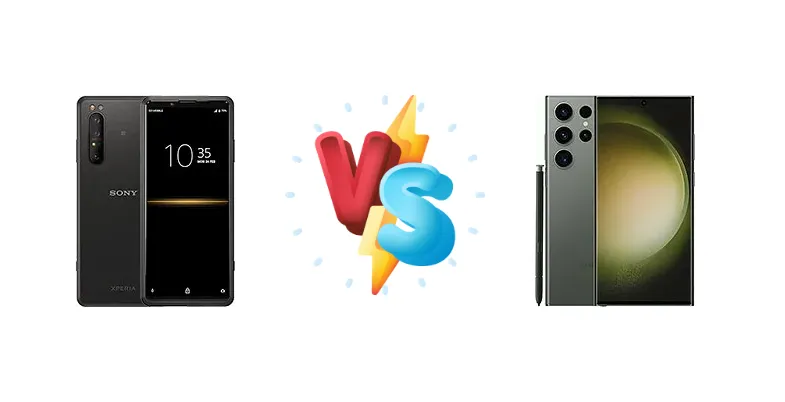
Sony Xperia Pro vs. Samsung Galaxy S23 Ultra: A Deep Dive for Professionals and Power Users
| Phones Images | |||||
|---|---|---|---|---|---|
|
🏆 Quick Verdict
For the average user, the Samsung Galaxy S23 Ultra is the clear winner. Its superior processing power, exceptional camera system, and longer battery life offer a more well-rounded experience. However, professionals needing dedicated HDMI input and external monitor support will find the Xperia Pro invaluable.
| PHONES | ||
|---|---|---|
| Phone Names | Sony Xperia Pro | Samsung Galaxy S23 Ultra |
| Network | ||
|---|---|---|
| 2G bands | GSM 850 / 900 / 1800 / 1900 | GSM 850 / 900 / 1800 / 1900 |
| 3G bands | HSDPA 850 / 900 / 1700(AWS) / 1900 / 2100 | HSDPA 850 / 900 / 1700(AWS) / 1900 / 2100 |
| 4G bands | 1, 2, 3, 4, 5, 7, 8, 11, 12, 13, 17, 18, 19, 20, 21, 25, 26, 28, 29, 32, 34, 38, 39, 40, 41, 42, 46, 48, 66 | 1, 2, 3, 4, 5, 7, 8, 12, 13, 17, 18, 19, 20, 25, 26, 28, 32, 38, 39, 40, 41, 66 - International |
| 5G bands | 2, 5, 66, 260, 261 Sub6, mmWave | 1, 2, 3, 5, 7, 8, 12, 20, 25, 28, 38, 40, 41, 66, 75, 77, 78 SA/NSA/Sub6 - International |
| Speed | HSPA, LTE, 5G | HSPA, LTE (up to 7CA), 5G |
| Technology | GSM / HSPA / LTE / 5G | GSM / CDMA / HSPA / EVDO / LTE / 5G |
| - | 1, 7, 28, 41, 66, 71, 78, 258, 260, 261 SA/NSA/Sub6/mmWave - USA | |
| Launch | ||
|---|---|---|
| Announced | 2020, February 24. Released 2021, January 27 | 2023, February 01 |
| Status | Discontinued | Available. Released 2023, February 17 |
| Body | ||
|---|---|---|
| Build | Glass front (Gorilla Glass 6), plastic back, plastic frame | Glass front (Gorilla Glass Victus 2), glass back (Gorilla Glass Victus 2), aluminum frame |
| Dimensions | 170.2 x 76.2 x 10.2 mm (6.70 x 3.00 x 0.40 in) | 163.4 x 78.1 x 8.9 mm (6.43 x 3.07 x 0.35 in) |
| SIM | Nano-SIM + Nano-SIM | · Nano-SIM + eSIM· Nano-SIM + Nano-SIM + eSIM (max 2 at a time) |
| Weight | 225.1 g (7.94 oz) | 234 g (8.25 oz) |
| IP65/IP68 dust/water resistant (up to 1.5m for 30 mins) | IP68 dust/water resistant (up to 1.5m for 30 min) Armor aluminum frame with tougher drop and scratch resistance (advertised) Stylus (Bluetooth integration, accelerometer, gyro) | |
| Display | ||
|---|---|---|
| Protection | Corning Gorilla Glass 6 | Corning Gorilla Glass Victus 2 |
| Resolution | 1644 x 3840 pixels, 21:9 ratio (~643 ppi density) | 1440 x 3088 pixels, 19.3:9 ratio (~500 ppi density) |
| Size | 6.5 inches, 98.6 cm2 (~76.0% screen-to-body ratio) | 6.8 inches, 114.7 cm2 (~89.9% screen-to-body ratio) |
| Type | OLED, 1B colors, HDR BT.2020 | Dynamic AMOLED 2X, 120Hz, HDR10+, 1200 nits (HBM), 1750 nits (peak) |
| Runs at 1096 x 2560 pixels except for select use cases | Always-on display | |
| Platform | ||
|---|---|---|
| CPU | Octa-core (1x2.84 GHz Cortex-A77 & 3x2.42 GHz Cortex-A77 & 4x1.80 GHz Cortex-A55) | Octa-core (1x3.36 GHz Cortex-X3 & 2x2.8 GHz Cortex-A715 & 2x2.8 GHz Cortex-A710 & 3x2.0 GHz Cortex-A510) |
| Chipset | Qualcomm SM8250 Snapdragon 865 5G (7 nm+) | Qualcomm SM8550-AC Snapdragon 8 Gen 2 (4 nm) |
| GPU | Adreno 650 | Adreno 740 |
| OS | Android 10, upgradable to Android 12 | Android 13, up to 4 major Android upgrades, One UI 8 |
| Memory | ||
|---|---|---|
| Card slot | microSDXC (uses shared SIM slot) | No |
| Internal | 512GB 12GB RAM | 256GB 8GB RAM, 256GB 12GB RAM, 512GB 12GB RAM, 1TB 12GB RAM |
| UFS 3.X | UFS 4.0 | |
| Main Camera | ||
|---|---|---|
| Features | Zeiss optics, color spectrum sensor, LED flash, panorama, HDR, eye tracking | Laser AF, LED flash, auto-HDR, panorama |
| Quad | - | 200 MP, f/1.7, 24mm (wide), 1/1.3", 0.6µm, multi-directional PDAF, OIS 10 MP, f/2.4, 70mm (telephoto), 1/3.52", 1.12µm, PDAF, OIS, 3x optical zoom 10 MP, f/4.9, 230mm (periscope telephoto), 1/3.52", 1.12µm, PDAF, OIS, 10x optical zoom 12 MP, f/2.2, 13mm, 120˚ (ultrawide), 1/2.55", 1.4µm, dual pixel PDAF, Super Steady video |
| Single | - | 12 MP, f/2.2, 26mm (wide), Dual Pixel PDAF |
| Triple | 12 MP, f/1.7, 24mm (wide), 1/1.7", 1.8µm, dual pixel PDAF, OIS 12 MP, f/2.4, 70mm (telephoto), 1/3.4", 1.0µm, PDAF, 3x optical zoom, OIS 12 MP, f/2.2, 124˚, 16mm (ultrawide), 1/2.55", dual pixel PDAF 0.3 MP, TOF 3D, (depth) | - |
| Video | 4K@24/25/30/60fps HDR, 1080p@30/60/120fps; 5-axis gyro-EIS, OIS | 8K@24/30fps, 4K@30/60fps, 1080p@30/60/120/240fps, HDR10+, stereo sound rec., gyro-EIS |
| Selfie camera | ||
|---|---|---|
| Features | HDR | HDR, HDR10+ |
| Single | 8 MP, f/2.0, 24mm (wide), 1/4.0", 1.12µm | 12 MP, f/2.2, 26mm (wide), 1/3.2", 1.12µm, dual pixel PDAF |
| Video | 1080p@30fps, 5-axis gyro-EIS | 4K@30/60fps, 1080p@30fps |
| Sound | ||
|---|---|---|
| 3.5mm jack | Yes | No |
| 35mm jack | Yes | No |
| Loudspeaker | Yes, with stereo speakers | Yes, with stereo speakers |
| 24-bit/192kHz audio | 32-bit/384kHz audio Tuned by AKG | |
| Comms | ||
|---|---|---|
| Bluetooth | 5.1, A2DP, aptX HD, LE | 5.3, A2DP, LE |
| NFC | Yes | Yes |
| Positioning | GPS, GLONASS | GPS, GALILEO, GLONASS, BDS, QZSS |
| Radio | No | No |
| USB | USB Type-C 3.1, OTG, micro HDMI | USB Type-C 3.2, OTG |
| WLAN | Wi-Fi 802.11 a/b/g/n/ac/6, dual-band, Wi-Fi Direct, DLNA | Wi-Fi 802.11 a/b/g/n/ac/6e, tri-band, Wi-Fi Direct |
| Features | ||
|---|---|---|
| Sensors | Fingerprint (side-mounted), accelerometer, gyro, proximity, barometer, compass | Fingerprint (under display, ultrasonic), accelerometer, gyro, proximity, compass, barometer |
| Native Sony Alpha camera support | Samsung DeX, Samsung Wireless DeX (desktop experience support) Bixby natural language commands and dictation Samsung Pay (Visa, MasterCard certified) Ultra Wideband (UWB) support | |
| Battery | ||
|---|---|---|
| Charging | 21W wired, PD | 45W wired, PD3.0, 65% in 30 min 15W wireless (Qi) 4.5W reverse wireless |
| Type | Li-Po 4000 mAh | Li-Ion 5000 mAh |
| Misc | ||
|---|---|---|
| Colors | Black | Phantom Black, Green, Cream, Lavender, Graphite, Sky Blue, Lime, Red, BMW M Edition |
| Models | - | SM-S918B, SM-S918B/DS, SM-S918U, SM-S918U1, SM-S918W, SM-S918N, SM-S9180, SM-S918E, SM-S918E/DS |
| Price | About 2000 EUR | € 549.90 / $ 454.99 / £ 433.00 |
| SAR | - | 1.12 W/kg (head) 0.92 W/kg (body) |
| SAR EU | - | 0.96 W/kg (head) 1.40 W/kg (body) |
| Tests | ||
|---|---|---|
| Battery life | - | Endurance rating 126h |
| Camera | - | Photo / Video |
| Display | - | Contrast ratio: Infinite (nominal) |
| Loudspeaker | - | -25.6 LUFS (Very good) |
| Performance | - | AnTuTu: 1241531 (v9) GeekBench: 4927 (v5.1) GFXBench: 67fps (ES 3.1 onscreen) |
Sony Xperia Pro
- Dedicated HDMI input for professional workflows
- 5G mmWave support for faster connectivity
- Robust build quality for demanding environments
- Outdated Snapdragon 865 chipset
- Slow 21W charging
- Limited battery information
Samsung Galaxy S23 Ultra
- Powerful Snapdragon 8 Gen 2 processor
- Exceptional camera system with versatile features
- Long-lasting battery life with fast charging
- Higher price point
- Large size may not suit all users
- Software bloat (subjective)
Display Comparison
The Samsung Galaxy S23 Ultra boasts a significantly brighter display, peaking at 1274 nits measured, compared to an unspecified brightness for the Xperia Pro. While the Xperia Pro’s display quality is likely good, the S23 Ultra’s higher peak brightness ensures excellent visibility in direct sunlight. The S23 Ultra’s infinite contrast ratio (nominal) suggests a superior OLED panel, offering deeper blacks and more vibrant colors. The lack of detailed display specs for the Xperia Pro makes a direct comparison difficult, but Samsung clearly leads in this category.
Camera Comparison
Both devices offer capable camera systems, but approach photography differently. The S23 Ultra’s camera is renowned for its versatility and image processing. While specific sensor details are missing, the S23 Ultra’s reputation suggests a larger main sensor and more advanced computational photography. The Xperia Pro, while capable, is likely focused on delivering a more neutral image profile for professional editing. The absence of details on the Xperia Pro’s camera specs makes a detailed comparison challenging, but the S23 Ultra’s established excellence gives it a clear advantage.
Performance
The performance gap between these devices is substantial. The Galaxy S23 Ultra’s Snapdragon 8 Gen 2 (4nm) is a generational leap ahead of the Xperia Pro’s Snapdragon 865 (7nm+). The 8 Gen 2 features a new CPU architecture – Cortex-X3, A715, and A710 cores – offering significant improvements in both single-core and multi-core performance. The 4nm process node also provides better thermal efficiency, reducing throttling during sustained workloads. The Xperia Pro’s older chipset will struggle with demanding tasks and future software updates compared to the S23 Ultra.
Battery Life
The Samsung Galaxy S23 Ultra delivers an impressive 13:24h of active use and an endurance rating of 126h, indicating excellent battery life. The Xperia Pro’s battery capacity and performance are not specified, but its older chipset and 21W charging are likely to result in shorter runtimes and slower charging speeds. The S23 Ultra’s 45W wired charging, capable of reaching 65% in 30 minutes, is significantly faster than the Xperia Pro’s 21W charging. The addition of 15W wireless and 4.5W reverse wireless charging on the S23 Ultra further enhances its convenience.
Buying Guide
Buy the Sony Xperia Pro if you require a direct HDMI input for live streaming or professional video monitoring, prioritize 5G mmWave connectivity, and need a device that integrates seamlessly with professional broadcast workflows. Buy the Samsung Galaxy S23 Ultra if you prioritize a best-in-class camera, long-lasting battery life, blazing-fast performance for gaming and demanding apps, and a vibrant, high-brightness display for everyday use.