
Sony Xperia Pro-I vs Huawei P30 Pro: A Detailed Showdown
| Phones Images | |||||
|---|---|---|---|---|---|
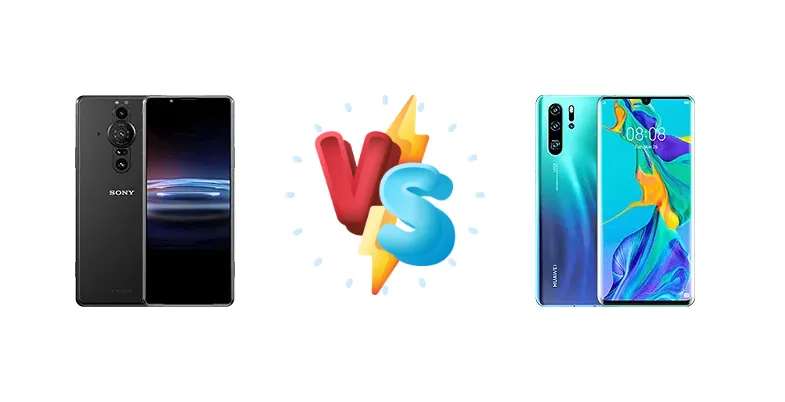
|
🏆 Quick Verdict
The Huawei P30 Pro edges out the Xperia Pro-I thanks to its superior battery life and excellent sunlight display performance. While the Xperia Pro-I offers a more modern chipset and potentially better video capabilities, the P30 Pro's longevity and overall value make it a compelling choice.
| PHONES | ||
|---|---|---|
| Phone Names | Sony Xperia Pro-I | Huawei P30 Pro |
| Network | ||
|---|---|---|
| 2G bands | GSM 850 / 900 / 1800 / 1900 | GSM 850 / 900 / 1800 / 1900 |
| 3G bands | HSDPA 800 / 850 / 900 / 1700(AWS) / 1900 / 2100 | HSDPA 800 / 850 / 900 / 1700(AWS) / 1900 / 2100 |
| 4G bands | 1, 2, 3, 4, 5, 7, 8, 12, 13, 17, 19, 20, 25, 26, 28, 29, 32, 34, 38, 39, 40, 41, 46, 48, 66, 71 | 1, 2, 3, 4, 5, 6, 7, 8, 9, 12, 17, 18, 19, 20, 26, 28, 32, 34, 38, 39, 40 |
| 5G bands | 1, 2, 3, 5, 7, 8, 20, 28, 38, 40, 41, 66, 71, 77, 78 SA/NSA/Sub6 | - |
| Speed | HSPA, LTE, 5G | HSPA 42.2/5.76 Mbps, LTE Cat21 1400/200 Mbps |
| Technology | GSM / HSPA / LTE / 5G | GSM / HSPA / LTE |
| 1, 3, 5, 7, 8, 28, 38, 40, 41, 77, 78, 79 SA/NSA/Sub6 | 1, 2, 3, 4, 5, 6, 7, 8, 9, 12, 17, 18, 19, 20, 26, 28, 34, 38, 39, 40, 66 | |
| Launch | ||
|---|---|---|
| Announced | 2021, October 26 | 2019, March 26. Released 2019, March 26 |
| Status | Available. Released 2021, December 02 | Discontinued |
| Body | ||
|---|---|---|
| Build | Glass front (Gorilla Glass Victus), glass back (Gorilla Glass 6), aluminum frame | Glass front (Aluminosilicate glass), glass back (Aluminosilicate glass), aluminum frame |
| Dimensions | 166 x 72 x 8.9 mm (6.54 x 2.83 x 0.35 in) | 158 x 73.4 x 8.4 mm (6.22 x 2.89 x 0.33 in) |
| SIM | Nano-SIM + Nano-SIM | · Nano-SIM· Nano-SIM + Nano-SIM |
| Weight | 211 g (7.44 oz) | 192 g (6.77 oz) |
| IP65/IP68 dust/water resistant (up to 1.5m for 30 min) Built-in strap-hole | IP68 dust/water resistant (up to 2m for 30 min) | |
| Display | ||
|---|---|---|
| Protection | Corning Gorilla Glass Victus | - |
| Resolution | 1644 x 3840 pixels, 21:9 ratio (~643 ppi density) | 1080 x 2340 pixels, 19.5:9 ratio (~398 ppi density) |
| Size | 6.5 inches, 98.6 cm2 (~82.5% screen-to-body ratio) | 6.47 inches, 102.8 cm2 (~88.6% screen-to-body ratio) |
| Type | OLED, 1B colors, 120Hz, HDR BT.2020 | OLED, HDR10 |
| Runs at 1096 x 2560 pixels except for select use cases | - | |
| Platform | ||
|---|---|---|
| CPU | Octa-core (1x2.84 GHz Cortex-X1 & 3x2.42 GHz Cortex-A78 & 4x1.80 GHz Cortex-A55) | Octa-core (2x2.6 GHz Cortex-A76 & 2x1.92 GHz Cortex-A76 & 4x1.8 GHz Cortex-A55) |
| Chipset | Qualcomm SM8350 Snapdragon 888 5G (5 nm) | Kirin 980 (7 nm) |
| GPU | Adreno 660 | Mali-G76 MP10 |
| OS | Android 11, upgradable to Android 13 | Android 9.0 (Pie), upgradable to Android 10, EMUI 10 |
| Memory | ||
|---|---|---|
| Card slot | microSDXC (uses shared SIM slot) | Nano Memory (uses shared SIM slot) |
| Internal | 512GB 12GB RAM | 128GB 6GB RAM, 128GB 8GB RAM, 256GB 8GB RAM, 512GB 8GB RAM |
| UFS 3.X | UFS 2.1 | |
| Main Camera | ||
|---|---|---|
| Features | Zeiss optics, Zeiss T* lens coating, color spectrum sensor, LED flash, panorama, 12-bit RAW, HDR, eye tracking | Leica optics, color spectrum sensor, dual-LED dual-tone flash, panorama, HDR |
| Single | 8 MP, f/2.0, 24mm (wide), 1/4", 1.12µm | - |
| Triple | 12 MP, f/2.0-4.0, 24mm (wide), 1.0"-type, 2.4µm, dual pixel PDAF, OIS (315 PDAF points, 90% frame coverage) 12 MP, f/2.4, 50mm (telephoto), 1/2.9", PDAF, 2x optical zoom, OIS 12 MP, f/2.2, 124˚, 16mm (ultrawide), 1/2.55", dual pixel PDAF 0.3 MP, TOF 3D, (depth) | 40 MP, f/1.6, 27mm (wide), 1/1.7", PDAF, OIS 8 MP, f/3.4, 125mm (periscope telephoto), 1/4.0", PDAF, OIS, 5x optical zoom 20 MP, f/2.2, 16mm (ultrawide), 1/2.7", PDAF TOF 3D, (depth) |
| Video | 4K@24/25/30/60/120fps HDR, 1080p@30/60/120fps; 5-axis gyro-EIS, OIS | 4K@30fps, 1080p@60fps, 1080p@30fps (gyro-EIS), 720p@960fps |
| Selfie camera | ||
|---|---|---|
| Features | HDR | HDR |
| Single | 8 MP, f/2.0, 24mm (wide), 1/4.0", 1.12µm | 32 MP, f/2.0, 26mm (wide), 1/2.8", 0.8µm |
| Video | 1080p@30fps, 5-axis gyro-EIS | 1080p@30fps |
| Sound | ||
|---|---|---|
| 3.5mm jack | Yes | No |
| 35mm jack | Yes | No |
| Loudspeaker | Yes, with stereo speakers | Yes |
| 24-bit/192kHz audio Dynamic vibration system | 32-bit/384kHz audio | |
| Comms | ||
|---|---|---|
| Bluetooth | 5.2, A2DP, LE, aptX HD, aptX Adaptive | 5.0, A2DP, aptX HD, LE |
| Infrared port | - | Yes |
| NFC | Yes | Yes |
| Positioning | GPS, GLONASS, BDS, GALILEO, QZSS | GPS (L1+L5), GLONASS (L1), BDS (B1), GALILEO (E1+E5a), QZSS (L1+L5) |
| Radio | No | No |
| USB | USB Type-C 3.2, OTG, DisplayPort | USB Type-C 3.1 |
| WLAN | Wi-Fi 802.11 a/b/g/n/ac/6, dual-band, Wi-Fi Direct, DLNA | Wi-Fi 802.11 a/b/g/n/ac, dual-band, Wi-Fi Direct |
| Features | ||
|---|---|---|
| Sensors | Fingerprint (side-mounted), accelerometer, gyro, proximity, barometer, compass | Fingerprint (under display, optical), accelerometer, gyro, proximity, compass |
| Native Sony Alpha camera support | - | |
| Battery | ||
|---|---|---|
| Charging | 30W wired, PD, 50% in 30 min | 40W wired, 70% in 30 min 15W wireless 2.5W reverse wireless |
| Type | Li-Po 4500 mAh | Li-Po 4200 mAh, non-removable |
| Misc | ||
|---|---|---|
| Colors | Frosted Black | Aurora, Amber Sunrise, Breathing Crystal, Black, Pearl White, Misty Lavender, Mystic Blue |
| Models | XQ-BE62, XQBE62-B, XQ-BE62-B, XQ-BE62/B, XQ-BE42, XQ-BE42-B, XQ-BE42/B, XQ-BE72, XQ-BE52 | VOG-L29, VOG-L09, VOG-AL00, VOG-TL00, VOG-L04, VOG-AL10, HW-02L |
| Price | About 930 EUR | About 670 EUR |
| Tests | ||
|---|---|---|
| Audio quality | - | Noise -90.5dB / Crosstalk -93.0dB |
| Battery life | Endurance rating 87h | Endurance rating 100h |
| Camera | Photo / Video | Photo / Video |
| Display | - | Contrast ratio: Infinite (nominal), 5.119 (sunlight) |
| Loudspeaker | -28.6 LUFS (Average) | -28.1 LUFS (Average) |
| Performance | AnTuTu: 725839 (v9) GeekBench: 3540 (v5.1) GFXBench: 51fps (ES 3.1 onscreen) | AnTuTu: 316156 (v7), 401208 (v8) GeekBench: 10014 (v4.4), 2521 (v5.1) GFXBench: 29fps (ES 3.1 onscreen) |
Sony Xperia Pro-I
- Modern Snapdragon 888 chipset
- Excellent video recording capabilities
- External monitor connectivity
- High peak brightness display
- Shorter battery life
- Higher price (originally)
- Less impressive zoom compared to P30 Pro
Huawei P30 Pro
- Exceptional battery life
- Outstanding sunlight display readability
- Versatile triple-lens camera system with excellent zoom
- Wireless and reverse wireless charging
- Older Kirin 980 chipset
- Software support concerns (Huawei)
- Less focus on professional video features
Display Comparison
Both phones feature excellent displays, but with different strengths. The Xperia Pro-I boasts a measured peak brightness of 644 nits, offering good visibility in most conditions. The P30 Pro, while lacking specific brightness figures, excels in sunlight readability with a reported 5.119 rating and an 'infinite' contrast ratio (nominal), suggesting deep blacks and vibrant colors. The P30 Pro's display is arguably more visually striking.
Camera Comparison
This is where things get interesting. The Xperia Pro-I's primary focus is professional video recording, with features like external monitor connectivity and 4K 120fps recording. The P30 Pro, however, is renowned for its versatile triple-lens camera system, particularly its groundbreaking periscope zoom lens. Both offer excellent photo quality, but the P30 Pro's zoom capabilities are unmatched, while the Xperia Pro-I shines in video.
Performance
The Xperia Pro-I's Snapdragon 888 5G provides a noticeable performance advantage over the P30 Pro's Kirin 980. While the Kirin 980 was a strong performer in its day, the 888 offers faster processing speeds and better graphics capabilities, making the Xperia Pro-I smoother for demanding tasks and gaming. However, real-world usage differences might be subtle for average users.
Battery Life
The Huawei P30 Pro takes a clear victory in battery life, boasting an endurance rating of 100 hours compared to the Xperia Pro-I's 87 hours. This translates to significantly longer usage times between charges, a major advantage for many users. The P30 Pro also offers wireless and reverse wireless charging, adding to its convenience.
Buying Guide
The Sony Xperia Pro-I is ideal for professional photographers and videographers who prioritize a high-end camera system and external monitor connectivity. The Huawei P30 Pro is a great option for users seeking exceptional battery life, a stunning display, and a versatile camera at a more accessible price point (especially now that it's older).