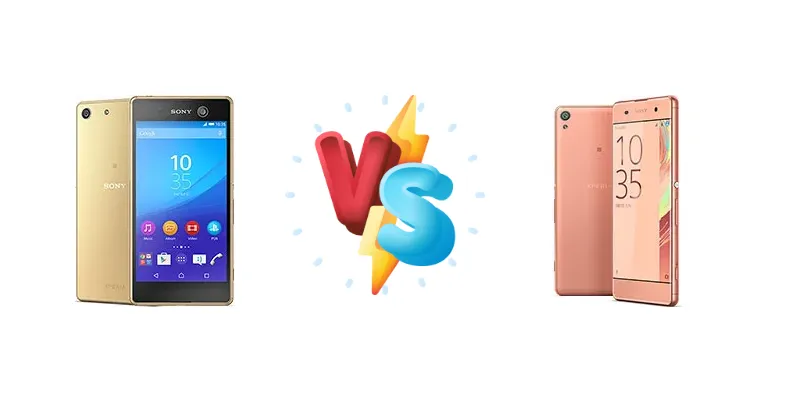
Choosing between two mid-range Sony smartphones can be tricky. The Xperia M5 Dual and Xperia XA Dual both offer a distinct Sony experience, but cater to slightly different needs. This comprehensive comparison will break down their strengths and weaknesses to help you decide which is right for you.
🏆 Quick Verdict
The Xperia M5 Dual boasts a superior camera and brighter display, while the Xperia XA Dual offers smoother performance thanks to its more efficient chipset and slightly better battery life. For photography enthusiasts, the M5 wins; for everyday users prioritizing efficiency, the XA Dual is a solid choice.
| Network |
|---|
| 2G bands | GSM 850 / 900 / 1800 / 1900 - SIM 1 & SIM 2 | GSM 850 / 900 / 1800 / 1900 - SIM 1 & SIM 2 |
| 3G bands | HSDPA 850 / 900 / 1900 / 2100 - E5633, E5643, E5663 | HSDPA 850 / 900 / 1900 / 2100 - F3112, |
| 4G bands | 1, 3, 5, 7, 8, 20 - E5633 | 1, 2, 3, 5, 7, 8, 20 - F3112 |
| Speed | HSPA 42.2/5.76 Mbps, LTE Cat4 150/50 Mbps | HSPA 42.2/5.76 Mbps, LTE Cat4 150/50 Mbps |
| Technology | GSM / HSPA / LTE | GSM / HSPA / LTE |
| | 1, 3, 5, 7, 8, 28, 40 - E5663 | 1, 3, 5, 7, 8, 28, 38, 39, 40, 41 - F3116 |
| Launch |
|---|
| Announced | 2015, August. Released 2015, September | 2016, February. Released 2016, June |
| Status | Discontinued | Discontinued |
| Body |
|---|
| Dimensions | 145 x 72 x 7.6 mm (5.71 x 2.83 x 0.30 in) | 143.6 x 66.8 x 7.9 mm (5.65 x 2.63 x 0.31 in) |
| SIM | Nano-SIM + Nano-SIM | Nano-SIM + Nano-SIM |
| Weight | 142.6 g (5.04 oz) | 137.4 g (4.83 oz) |
| | IP68 dust/water resistant (up to 1.5m for 30 min) | - |
| Display |
|---|
| Protection | Scratch-resistant glass | Scratch-resistant glass |
| Resolution | 1080 x 1920 pixels, 16:9 ratio (~441 ppi density) | 720 x 1280 pixels, 16:9 ratio (~294 ppi density) |
| Size | 5.0 inches, 68.9 cm2 (~66.0% screen-to-body ratio) | 5.0 inches, 68.9 cm2 (~71.8% screen-to-body ratio) |
| Type | IPS LCD | IPS LCD |
| Platform |
|---|
| CPU | Octa-core 2.0 GHz Cortex-A53 | Octa-core (4x2.0 GHz Cortex-A53 & 4x1.0 GHz Cortex-A53) |
| Chipset | Mediatek MT6795 Helio X10 (28 nm) | Mediatek MT6755 Helio P10 (28 nm) |
| GPU | PowerVR G6200 | Mali-T860MP2 |
| OS | Android 5.0 (Lollipop), upgradable to 5.1 (Lollipop) | Android 6.0.1 (Marshmallow), upgradable to 7.0 (Nougat) |
| Memory |
|---|
| Card slot | microSDXC (dedicated slot) | microSDXC (dedicated slot) |
| Internal | 16GB 3GB RAM | 16GB 2GB RAM |
| | eMMC 5.0 | eMMC 5.1 |
| Main Camera |
|---|
| Features | LED flash, HDR, panorama | LED flash, HDR, panorama |
| Single | 21.2 MP, f/2.2, PDAF | 13 MP, f/2.0, 1/3.0", PDAF |
| Video | 4K@30fps, HDR | 1080p@30fps |
| Selfie camera |
|---|
| Features | - | HDR |
| Single | 13 MP, f/2.0, AF | 8 MP, 1/4.0", AF |
| Video | 1080p@30fps | 1080p@30fps |
| Sound |
|---|
| 3.5mm jack | Yes | Yes |
| 35mm jack | Yes | Yes |
| Loudspeaker | Yes | Yes |
| Comms |
|---|
| Bluetooth | 4.1, A2DP, LE, aptX | 4.1, A2DP, LE, aptX |
| NFC | Yes | Yes |
| Positioning | GPS, GLONASS | GPS, GLONASS |
| Radio | FM radio, RDS | FM radio, RDS |
| USB | microUSB 2.0 | microUSB 2.0, OTG |
| WLAN | Wi-Fi 802.11 a/b/g/n, dual-band, Wi-Fi Direct, DLNA, hotspot | Wi-Fi 802.11 a/b/g/n, Wi-Fi Direct, DLNA |
| Features |
|---|
| Browser | HTML, Adobe Flash | - |
| Sensors | Accelerometer, proximity, compass | Accelerometer, proximity, compass |
| Battery |
|---|
| Charging | - | 10W wired |
| Music play | Up to 62 h 30 min | Up to 55 h |
| Stand-by | Up to 495 h (2G) / Up to 504 h (3G) | Up to 466 h (2G) / Up to 466 h (3G) |
| Talk time | Up to 11 h 49 min (2G) / Up to 12 h 11 min (3G) | Up to 11 h 20 min (2G) / Up to 10 h (3G) |
| Type | Li-Ion 2600 mAh, non-removable | Li-Ion 2300 mAh, non-removable |
| Misc |
|---|
| Colors | Black, White, Gold | White, Graphite Black, Lime Gold, Rose Gold |
| Models | E56333E5643, E5663, E5633 | F3111 F3113, F3115 |
| Price | About 110 EUR | About 200 EUR |
| SAR | 0.32 W/kg (head) 1.39 W/kg (body) | 0.83 W/kg (head) 0.74 W/kg (body) |
| SAR EU | 0.19 W/kg (head) 0.40 W/kg (body) | 0.72 W/kg (head) 0.52 W/kg (body) |
| Tests |
|---|
| Audio quality |
Noise -94.1dB / Crosstalk -93.4dB | - |
| Display |
Contrast ratio: 839 (nominal), 2.69(sunlight) | - |
| Loudspeaker |
Voice 65dB / Noise 64dB / Ring 68dB
| - |
| Performance |
Basemark OS II 2.0: 860Basemark X: 7780 | - |
Sony Xperia M5 Dual
- Excellent camera with 4K video recording
- Bright and high-contrast display
- Good image stabilization
- Premium design
- Performance can be inconsistent
- Battery life could be better
- Slightly older chipset
Sony Xperia XA Dual
- Smoother performance and multitasking
- Better battery efficiency
- Accurate color reproduction on display
- Slim and lightweight design
- Camera not as impressive as the M5
- Lacks 4K video recording
- 10W charging is relatively slow
Display Comparison
The Xperia M5 Dual has a contrast ratio of 839:1 (nominal) and 2.69:1 in sunlight, suggesting excellent visibility even outdoors. The Xperia XA Dual's display is known for its accurate color reproduction and comfortable viewing angles, though specific contrast ratio data is less readily available. The M5's higher contrast ratio gives it an edge in dynamic range.
Camera Comparison
The Xperia M5 Dual's standout feature is its 21MP rear camera with autofocus and image stabilization, capable of recording 4K video. The Xperia XA Dual has a 23MP rear camera, but lacks the same level of image stabilization and 4K video recording. The M5 generally produces sharper images with better detail, especially in low light.
Performance
The Xperia M5 Dual's Octa-core 2.0 GHz Cortex-A53 processor paired with the Mediatek MT6795 Helio X10 chipset provides decent performance, but can sometimes struggle with demanding tasks. The Xperia XA Dual's Octa-core (4x2.0 GHz Cortex-A53 & 4x1.0 GHz Cortex-A53) and Mediatek MT6755 Helio P10 chipset offer a more balanced approach, resulting in smoother multitasking and better power efficiency. The XA Dual's big.LITTLE architecture is a key advantage.
Battery Life
While both phones have similar battery capacities (around 2600mAh), the Xperia XA Dual's more efficient chipset allows it to deliver slightly better battery life. The M5's more powerful processor and 4K video recording capabilities consume more power.
Buying Guide
The Sony Xperia M5 Dual is ideal for users who prioritize camera quality and a vibrant display above all else. It's a good option for those who enjoy taking photos and videos. The Sony Xperia XA Dual is better suited for users who value smooth performance, efficient battery usage, and a more streamlined Android experience. It's a great daily driver.
Frequently Asked Questions
❓ Which phone is better for gaming?
The Xperia XA Dual generally offers a smoother gaming experience due to its more efficient chipset and better thermal management.
❓ Is the Xperia M5 Dual worth buying in 2023?
If camera quality is your top priority and you can find it at a significantly reduced price, the M5 Dual can still be a decent option. However, newer phones offer better overall performance and features.