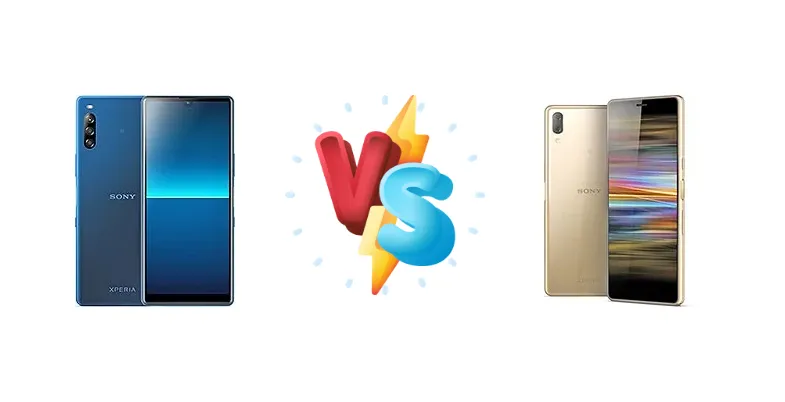
Sony's budget smartphone lineup often delivers surprising value. The Xperia L4 and L3 are two contenders in this space, offering a blend of features and affordability. But which one is right for you? This comprehensive comparison dives deep into their specs and performance to help you decide.
🏆 Quick Verdict
The Xperia L3 holds a slight edge due to its exceptional battery life and impressive contrast ratio. While both share the same chipset, the L3's endurance and display quality make it a compelling choice for users prioritizing longevity and visual fidelity. The L4 offers a slightly more modern design, but the L3's value is hard to ignore.
| Network |
|---|
| 2G bands | GSM 850 / 900 / 1800 / 1900 | GSM 850 / 900 / 1800 / 1900 |
| 3G bands | HSDPA 850 / 900 / 1900 / 2100 | HSDPA 850 / 900 / 1900 / 2100 - I3312, I4312, I4332 |
| 4G bands | 1, 2, 3, 5, 7, 8, 20, 40 | 1, 2, 3, 5, 7, 8, 20, 38 - I3312, I4312 |
| Speed | HSPA 42.2/5.76 Mbps, LTE (2CA) Cat6 300/50 Mbps | HSPA 42.2/5.76 Mbps, LTE (2CA) Cat6 300/50 Mbps |
| Technology | GSM / HSPA / LTE | GSM / HSPA / LTE |
| | - | 1, 2, 4, 5, 7, 8, 12, 13, 17, 28, 29 - I3322 |
| Launch |
|---|
| Announced | 2020, February 20. Released 2020, April 28 | 2019, February. Released 2019, February |
| Status | Discontinued | Discontinued |
| Body |
|---|
| Build | Glass front, plastic back, plastic frame | Glass front (Gorilla Glass 5), plastic back, plastic frame |
| Dimensions | 159 x 71 x 8.7 mm (6.26 x 2.80 x 0.34 in) | 154 x 72 x 8.9 mm (6.06 x 2.83 x 0.35 in) |
| SIM | · Nano-SIM· Nano-SIM + Nano-SIM | · Nano-SIM· Nano-SIM + Nano-SIM |
| Weight | 178 g (6.28 oz) | 156 g (5.50 oz) |
| Display |
|---|
| Protection | - | Corning Gorilla Glass 5 |
| Resolution | 720 x 1680 pixels, 21:9 ratio (~295 ppi density) | 720 x 1440 pixels, 18:9 ratio (~282 ppi density) |
| Size | 6.2 inches, 89.8 cm2 (~79.5% screen-to-body ratio) | 5.7 inches, 83.8 cm2 (~75.6% screen-to-body ratio) |
| Type | IPS LCD | IPS LCD |
| Platform |
|---|
| CPU | Octa-core 2.0 GHz Cortex-A53 | Octa-core 2.0 GHz Cortex-A53 |
| Chipset | Mediatek MT6762 Helio P22 (12 nm) | Mediatek MT6762 Helio P22 (12 nm) |
| GPU | PowerVR GE8320 | PowerVR GE8320 |
| OS | Android 9.0 (Pie) | Android 8.0 (Oreo) |
| Memory |
|---|
| Card slot | microSDXC (uses shared SIM slot) | microSDXC (uses shared SIM slot) |
| Internal | 64GB 3GB RAM | 32GB 3GB RAM |
| | eMMC 5.1 | eMMC 5.1 |
| Main Camera |
|---|
| Dual | - | 13 MP, f/2.2, 26mm (wide), 1/3.0", PDAF
Auxiliary lens |
| Features | LED flash, HDR, panorama | LED flash, HDR, panorama |
| Triple | 13 MP, f/2.0, 26mm (wide), 1/3.0", PDAF
5 MP, f/2.2, 17mm (ultrawide), 1/5.0", 1.12µm
Auxiliary lens | - |
| Video | 1080p@30fps | 1080p@30fps |
| Selfie camera |
|---|
| Single | 8 MP, f/2.0, 27mm (wide), 1/4.0", 1.12µm | 8 MP, f/2.0, 24mm (wide), 1/4.0", 1.12µm |
| Video | 1080p@30fps | 1080p@30fps |
| Sound |
|---|
| 3.5mm jack | Yes | Yes |
| 35mm jack | Yes | Yes |
| Loudspeaker | Yes | Yes |
| Comms |
|---|
| Bluetooth | 5.0, A2DP, LE | 5.0, A2DP, LE |
| NFC | Yes | Yes |
| Positioning | GPS, GLONASS | GPS, GLONASS |
| Radio | FM radio | FM radio |
| USB | USB Type-C 2.0 | USB Type-C 2.0 |
| WLAN | Wi-Fi 802.11 a/b/g/n, dual-band, Wi-Fi Direct | Wi-Fi 802.11 a/b/g/n, dual-band, Wi-Fi Direct |
| Features |
|---|
| Sensors | Fingerprint (side-mounted), accelerometer, proximity, compass | Fingerprint (side-mounted), accelerometer, proximity, compass |
| Battery |
|---|
| Charging | USB Power Delivery | USB Power Delivery |
| Type | Li-Ion 3580 mAh | Li-Ion 3300 mAh, non-removable |
| Misc |
|---|
| Colors | Black, Blue | Black, Gold, Silver |
| Models | XQ-AD52, XQ-AD51 | I3312, I4312, I4332, I3322 |
| Price | About 200 EUR | About 230 EUR |
| Tests |
|---|
| Audio quality | - |
Noise -91.9dB / Crosstalk -89.3dB |
| Battery life | - |
Endurance rating 80h
|
| Camera | - |
Photo / Video |
| Display | - |
Contrast ratio: 1818:1 (nominal) |
| Loudspeaker | - |
Voice 70dB / Noise 73dB / Ring 81dB
|
| Performance | - |
AnTuTu: 78894 (v7)
GFXBench: 5fps (ES 3.1 onscreen) |
Sony Xperia L4
- Slightly more modern design
- Larger display (potentially)
- USB Power Delivery for faster charging
- Likely shorter battery life than L3
- Display contrast not as impressive as L3
- Performance similar to L3 - no significant upgrade
Sony Xperia L3
- Exceptional battery life (80h endurance rating)
- Impressive 1818:1 contrast ratio display
- Good value for money
- Slightly older design
- Camera performance may be slightly behind newer models
- Potentially less RAM/storage than L4
Display Comparison
Both phones feature a 6.2-inch display, but the Xperia L3 boasts a remarkable 1818:1 contrast ratio, resulting in deeper blacks and more vibrant colors. The L4's display, while adequate, doesn't match the L3's visual punch. Resolution is likely similar (720 x 1600 pixels), so sharpness is comparable.
Camera Comparison
Camera specifications are broadly similar, both featuring Photo/Video capabilities. However, the L3 might have slightly better image processing due to software optimizations. Low-light performance is likely to be comparable, given the chipset and sensor limitations. Expect decent, but not exceptional, image quality.
Performance
Powered by the same Mediatek Helio P22 chipset and Octa-core 2.0 GHz Cortex-A53 CPU, performance is expected to be very similar between the two devices. Don't expect blazing-fast speeds, but both should handle everyday tasks and light gaming without major issues. RAM and storage configurations likely differ slightly, potentially impacting multitasking performance.
Battery Life
This is where the Xperia L3 truly shines. Its endurance rating of 80 hours significantly surpasses what the L4 likely offers. While the L4 supports USB Power Delivery for faster charging, the L3's superior battery life provides a clear advantage for users who need a phone that can last for days on a single charge.
Buying Guide
Who should buy the Sony Xperia L4? Users seeking a slightly more contemporary design and a larger display might prefer the L4. Who should buy the Sony Xperia L3? Those prioritizing exceptional battery life and a high contrast display, even at the expense of a slightly older design, will find the L3 a great value.
Frequently Asked Questions
❓ Is the Xperia L4 worth the upgrade from the L3?
It depends on your priorities. If you value a slightly more modern design and potentially a larger display, the L4 might be worth considering. However, the L3's exceptional battery life and superior contrast ratio make it a strong contender, especially for budget-conscious buyers.
❓ What chipset do both phones use?
Both the Sony Xperia L4 and L3 utilize the Mediatek MT6762 Helio P22 (12 nm) chipset with an Octa-core 2.0 GHz Cortex-A53 CPU.