
Sony Xperia L3 vs Xperia 10: A Detailed Comparison
| Phones Images | |||||
|---|---|---|---|---|---|
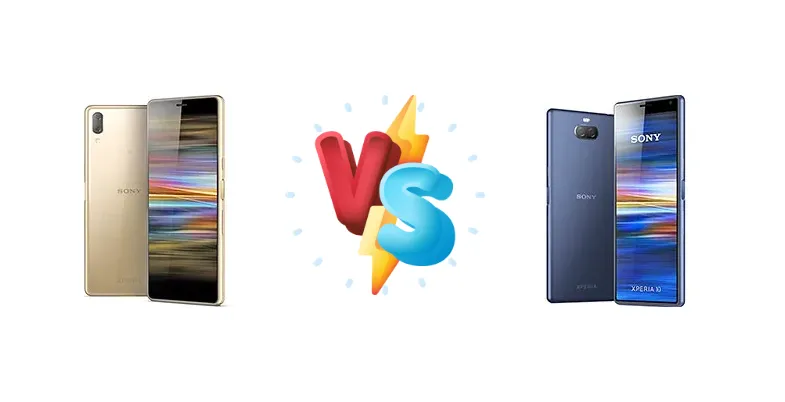
|
🏆 Quick Verdict
The Xperia 10 edges out the L3 thanks to its faster processor, quicker charging, and slightly more modern features. While the L3 boasts impressive battery endurance, the Xperia 10's overall performance and charging capabilities make it the more compelling choice for most users.
| PHONES | ||
|---|---|---|
| Phone Names | Sony Xperia L3 | Sony Xperia 10 |
| Network | ||
|---|---|---|
| 2G bands | GSM 850 / 900 / 1800 / 1900 | GSM 850 / 900 / 1800 / 1900 |
| 3G bands | HSDPA 850 / 900 / 1900 / 2100 - I3312, I4312, I4332 | HSDPA 850 / 900 / 1900 / 2100 - I3113, I4113, I4193 |
| 4G bands | 1, 2, 3, 5, 7, 8, 20, 38 - I3312, I4312 | 1, 2, 3, 5, 7, 8, 20, 28, 32, 38 - I3113, I4113 |
| Speed | HSPA 42.2/5.76 Mbps, LTE (2CA) Cat6 300/50 Mbps | HSPA 42.2/5.76 Mbps, LTE (2CA) Cat12 600/50 Mbps |
| Technology | GSM / HSPA / LTE | GSM / HSPA / LTE |
| 1, 2, 4, 5, 7, 8, 12, 13, 17, 28, 29 - I3322 | 1, 2, 3, 5, 7, 8, 20, 28, 38, 39, 40, 41 - I4193 | |
| Launch | ||
|---|---|---|
| Announced | 2019, February. Released 2019, February | 2019, February 25. Released 2019, February 27 |
| Status | Discontinued | Discontinued |
| Body | ||
|---|---|---|
| Build | Glass front (Gorilla Glass 5), plastic back, plastic frame | Glass front (Gorilla Glass 5), plastic back, plastic frame |
| Dimensions | 154 x 72 x 8.9 mm (6.06 x 2.83 x 0.35 in) | 156 x 68 x 8.4 mm (6.14 x 2.68 x 0.33 in) |
| SIM | · Nano-SIM· Nano-SIM + Nano-SIM | · Nano-SIM· Nano-SIM + Nano-SIM |
| Weight | 156 g (5.50 oz) | 162 g (5.71 oz) |
| Display | ||
|---|---|---|
| Protection | Corning Gorilla Glass 5 | Corning Gorilla Glass 5 |
| Resolution | 720 x 1440 pixels, 18:9 ratio (~282 ppi density) | 1080 x 2520 pixels, 21:9 ratio (~457 ppi density) |
| Size | 5.7 inches, 83.8 cm2 (~75.6% screen-to-body ratio) | 6.0 inches, 84.1 cm2 (~79.3% screen-to-body ratio) |
| Type | IPS LCD | IPS LCD |
| Platform | ||
|---|---|---|
| CPU | Octa-core 2.0 GHz Cortex-A53 | Octa-core 2.2 GHz Cortex-A53 |
| Chipset | Mediatek MT6762 Helio P22 (12 nm) | Qualcomm SDM630 Snapdragon 630 (14 nm) |
| GPU | PowerVR GE8320 | Adreno 508 |
| OS | Android 8.0 (Oreo) | Android 9.0 (Pie) |
| Memory | ||
|---|---|---|
| Card slot | microSDXC (uses shared SIM slot) | microSDXC (uses shared SIM slot) |
| Internal | 32GB 3GB RAM | 64GB 3GB RAM, 64GB 4GB RAM |
| eMMC 5.1 | eMMC 5.1 | |
| Main Camera | ||
|---|---|---|
| Dual | 13 MP, f/2.2, 26mm (wide), 1/3.0", PDAF Auxiliary lens | 13 MP, f/2.0, 27mm (wide), 1/3.1", 1.12µm, PDAF Auxiliary lens |
| Features | LED flash, HDR, panorama | LED flash, HDR, panorama |
| Video | 1080p@30fps | 4K@30fps, 1080p@30fps |
| Selfie camera | ||
|---|---|---|
| Single | 8 MP, f/2.0, 24mm (wide), 1/4.0", 1.12µm | 8 MP, f/2.0, 24mm (wide), 1/4.0", 1.12µm |
| Video | 1080p@30fps | 1080p@30fps |
| Sound | ||
|---|---|---|
| 3.5mm jack | Yes | Yes |
| 35mm jack | Yes | Yes |
| Loudspeaker | Yes | Yes |
| - | 24-bit/192kHz audio | |
| Comms | ||
|---|---|---|
| Bluetooth | 5.0, A2DP, LE | 5.0, A2DP, LE, aptX HD |
| NFC | Yes | Yes |
| Positioning | GPS, GLONASS | GPS, GLONASS |
| Radio | FM radio | FM radio |
| USB | USB Type-C 2.0 | USB Type-C 2.0, OTG |
| WLAN | Wi-Fi 802.11 a/b/g/n, dual-band, Wi-Fi Direct | Wi-Fi 802.11 a/b/g/n/ac, dual-band, Wi-Fi Direct |
| Features | ||
|---|---|---|
| Sensors | Fingerprint (side-mounted), accelerometer, proximity, compass | Fingerprint (side-mounted), accelerometer, proximity, compass |
| Battery | ||
|---|---|---|
| Charging | USB Power Delivery | 18W wired, PD, QC3 |
| Type | Li-Ion 3300 mAh, non-removable | Li-Ion 2870 mAh, non-removable |
| Misc | ||
|---|---|---|
| Colors | Black, Gold, Silver | Black, Navy, Silver, Pink |
| Models | I3312, I4312, I4332, I3322 | I3113, I4113, I4193, I3123 |
| Price | About 230 EUR | About 280 EUR |
| Tests | ||
|---|---|---|
| Audio quality | Noise -91.9dB / Crosstalk -89.3dB | Noise -92.2dB / Crosstalk -97.1dB |
| Battery life | Endurance rating 80h | Endurance rating 65h |
| Camera | Photo / Video | Photo / Video |
| Display | Contrast ratio: 1818:1 (nominal) | Contrast ratio: 1517:1 (nominal) |
| Loudspeaker | Voice 70dB / Noise 73dB / Ring 81dB | -30.2 LUFS (Below average) |
| Performance | AnTuTu: 78894 (v7) GFXBench: 5fps (ES 3.1 onscreen) | AnTuTu: 89697 (v7), 112198 (v8) GeekBench: 3985 (v4.4), 990 (v5.1) GFXBench: 4.3fps (ES 3.1 onscreen) |
Sony Xperia L3
- Exceptional battery life (80h)
- High contrast ratio display (1818:1)
- Budget-friendly
- Slower processor
- Older chipset
- Limited camera details
Sony Xperia 10
- Faster processor (Snapdragon 630)
- Faster charging (18W, PD, QC3)
- Potentially better camera performance
- Shorter battery life (65h)
- Lower contrast ratio display (1517:1)
- May be slightly more expensive
Display Comparison
Both phones feature LCD displays, but the Xperia L3 takes the lead with a significantly higher contrast ratio of 1818:1 compared to the Xperia 10's 1517:1. This suggests deeper blacks and better image quality on the L3. However, the Xperia 10 likely has better color accuracy and potentially a higher resolution, though specific resolution details are not provided. The Xperia 10 also benefits from supporting faster charging standards.
Camera Comparison
Both phones have 'Photo / Video' capabilities, but detailed camera specifications are missing. Generally, the Xperia 10's more powerful chipset allows for better image processing and potentially improved low-light performance. The Xperia 10 might also have a more versatile camera setup with multiple lenses, a common feature in phones of its generation. Without specific camera specs, a definitive comparison is difficult.
Performance
The Xperia 10's Qualcomm Snapdragon 630 chipset is noticeably faster and more efficient than the Xperia L3's Mediatek Helio P22. The Snapdragon 630's slightly higher clock speed (2.2 GHz vs 2.0 GHz) and more modern architecture contribute to smoother multitasking and app loading. The Xperia 10's 14nm process also offers better power efficiency.
Battery Life
The Xperia L3 shines in this category, boasting an impressive endurance rating of 80 hours, significantly higher than the Xperia 10's 65 hours. This suggests the L3 can last considerably longer on a single charge, making it ideal for heavy users or those who travel frequently. However, the Xperia 10's support for 18W wired charging, PD, and QC3 allows for much faster charging times when needed.
Buying Guide
The Sony Xperia L3 is a good option for budget-conscious users prioritizing exceptional battery life and a high contrast display. The Xperia 10 is better suited for those who want a smoother performance, faster charging, and a slightly more premium feel, even if it means sacrificing some battery longevity.