
Sony Xperia XA2 vs L2: Which Sony Mid-Ranger Reigns Supreme?
| Phones Images | |||||
|---|---|---|---|---|---|
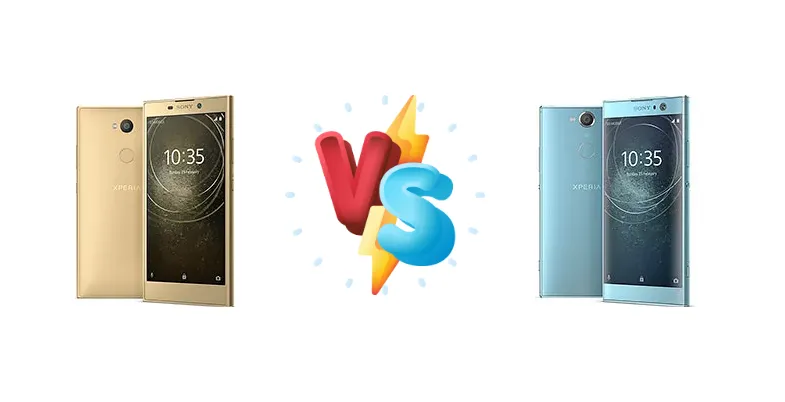
|
🏆 Quick Verdict
For most users, the Sony Xperia XA2 is the superior choice. Its Snapdragon 630 chipset provides significantly better performance, and the 92-hour endurance rating, coupled with 18W Quick Charge 3.0, makes it a more practical daily driver despite a similar price point.
| PHONES | ||
|---|---|---|
| Phone Names | Sony Xperia L2 | Sony Xperia XA2 |
| Network | ||
|---|---|---|
| 2G bands | GSM 850 / 900 / 1800 / 1900 - SIM 1 & SIM 2 (dual-SIM model only) | GSM 850 / 900 / 1800 / 1900 - SIM 1 & SIM 2 (dual-SIM model only) |
| 3G bands | HSDPA 850 / 900 / 1900 / 2100 - H3311, H4311, H4331 | HSDPA 850 / 900 / 1700(AWS) / 1900 / 2100 - H3123 |
| 4G bands | 1, 2, 3, 5, 7, 8, 20, 38 - H3311, H4311 | 1, 2, 4, 5, 7, 8, 12, 13, 17, 25, 28, 29, 66 - H3123 |
| Speed | HSPA 42.2/5.76 Mbps, LTE Cat4 150/50 Mbps | HSPA 42.2/5.76 Mbps, LTE (3CA) Cat13 600/150 Mbps |
| Technology | GSM / HSPA / LTE | GSM / HSPA / LTE |
| 1, 2, 3, 5, 7, 8, 28, 38, 39, 40, 41 - H4331 | 1, 2, 3, 5, 7, 8, 28, 38, 39, 40, 41 - H3133, H4133 | |
| Launch | ||
|---|---|---|
| Announced | 2018, January. Released 2018, January | 2018, January. Released 2018, February |
| Status | Discontinued | Discontinued |
| Body | ||
|---|---|---|
| Build | Glass front (Gorilla Glass 4), plastic back, plastic frame | Glass front (Gorilla Glass 4), plastic back, aluminum frame |
| Dimensions | 150 x 78 x 9.8 mm (5.91 x 3.07 x 0.39 in) | 142 x 70 x 9.7 mm (5.59 x 2.76 x 0.38 in) |
| SIM | · Nano-SIM· Nano-SIM + Nano-SIM | · Nano-SIM· Nano-SIM + Nano-SIM |
| Weight | 178 g (6.28 oz) | 171 g (6.03 oz) |
| Display | ||
|---|---|---|
| Protection | Corning Gorilla Glass 4 | Corning Gorilla Glass 4 |
| Resolution | 720 x 1280 pixels, 16:9 ratio (~267 ppi density) | 1080 x 1920 pixels, 16:9 ratio (~424 ppi density) |
| Size | 5.5 inches, 83.4 cm2 (~71.3% screen-to-body ratio) | 5.2 inches, 74.5 cm2 (~75.0% screen-to-body ratio) |
| Type | IPS LCD | IPS LCD |
| Platform | ||
|---|---|---|
| CPU | Quad-core 1.5 GHz Cortex-A53 | Octa-core 2.2 GHz Cortex-A53 |
| Chipset | Mediatek MT6737T (28 nm) | Qualcomm SDM630 Snapdragon 630 (14 nm) |
| GPU | Mali-T720MP2 | Adreno 508 |
| OS | Android 7.1.1 (Nougat) | Android 8.0 (Oreo) |
| Memory | ||
|---|---|---|
| Card slot | microSDXC (dedicated slot) | microSDXC (uses shared SIM slot) |
| Internal | 32GB 3GB RAM | 32GB 3GB RAM |
| eMMC 5.0 | - | |
| Main Camera | ||
|---|---|---|
| Features | LED flash, HDR | LED flash, HDR, panorama |
| Single | 13 MP, f/2.0, 1/3.1", AF | 23 MP, f/2.0, 24mm (wide), 1/2.3", PDAF |
| Video | 1080p@30fps | 4K@30fps, 1080p@30fps, stereo sound rec., HDR |
| Selfie camera | ||
|---|---|---|
| Single | 8 MP, f/2.4, 1/4.0" | 8 MP, f/2.4, 1/4.0" |
| Video | 1080p@30fps | 1080p@30fps |
| Sound | ||
|---|---|---|
| 3.5mm jack | Yes | Yes |
| 35mm jack | Yes | Yes |
| Loudspeaker | Yes | Yes |
| - | 24-bit/192kHz audio | |
| Comms | ||
|---|---|---|
| Bluetooth | 4.2, A2DP, LE, aptX | 5.0, A2DP, aptX HD, LE |
| NFC | Yes | Yes |
| Positioning | GPS, GLONASS | GPS, GLONASS |
| Radio | FM radio | FM radio |
| USB | USB Type-C 2.0 | USB Type-C 2.0, OTG |
| WLAN | Wi-Fi 802.11 a/b/g/n, Wi-Fi Direct | Wi-Fi 802.11 a/b/g/n, dual-band, Wi-Fi Direct |
| Features | ||
|---|---|---|
| Sensors | Fingerprint (rear-mounted), accelerometer, proximity, compass | Fingerprint (rear-mounted), accelerometer, proximity, compass |
| Battery | ||
|---|---|---|
| Charging | - | 18W wired, QC3 |
| Type | Li-Ion 3300 mAh, non-removable | Li-Ion 3300 mAh, non-removable |
| Misc | ||
|---|---|---|
| Colors | Black, Gold, Pink | Silver, Black, Blue, Pink |
| Models | H4311, H3311, H4331, H3321 | H4113, H3113, H4133, H3123 |
| Price | About 140 EUR | About 200 EUR |
| Tests | ||
|---|---|---|
| Audio quality | Noise -92.0dB / Crosstalk -89.7dB | Noise -92.8dB / Crosstalk -87.8dB |
| Battery life | Endurance rating 65h | Endurance rating 92h |
| Camera | Photo / Video | Photo / Video |
| Display | Contrast ratio: 1130:1 (nominal), 2.266 (sunlight) | Contrast ratio: 1327:1 (nominal), 2.938 (sunlight) |
| Loudspeaker | Voice 67dB / Noise 72dB / Ring 91dB | Voice 68dB / Noise 72dB / Ring 78dB |
| Performance | AnTuTu: 45023 (v7) GeekBench: 1932 (v4.4) | GeekBench: 4215 (v4.4) GFXBench: 6fps (ES 3.1 onscreen) |
Sony Xperia L2
- Longer battery endurance (65h)
- More affordable price point (likely)
- Acceptable for basic smartphone tasks
- Significantly slower processor
- No fast charging support
- Lower display contrast
Sony Xperia XA2
- Faster and more efficient Snapdragon 630 processor
- Superior display contrast ratio
- 18W Quick Charge 3.0 support
- Slightly shorter battery endurance (92h vs 65h, but offset by efficiency)
- Potentially higher price (depending on market)
- No significant camera advantages specified
Display Comparison
Both the Xperia L2 and XA2 feature similar display characteristics, but the XA2 holds a clear advantage in contrast. The XA2 boasts a 1327:1 nominal contrast ratio and 2.938 sunlight contrast, compared to the L2’s 1130:1 and 2.266 respectively. This translates to more vibrant colors and better visibility outdoors. While both displays lack specific details regarding panel technology (like IPS or OLED), the higher contrast ratio suggests a more refined display experience on the XA2.
Camera Comparison
Both phones are listed with 'Photo / Video' capabilities, but lack specific details regarding sensor size, aperture, or image processing. Given Sony’s expertise in camera technology, it’s reasonable to assume both offer acceptable image quality for their price range. However, without further specifications, a definitive comparison is impossible. It's likely the XA2 benefits from the more powerful ISP within the Snapdragon 630, potentially leading to better image processing and low-light performance.
Performance
The performance gap between these two devices is substantial. The Xperia XA2’s Qualcomm Snapdragon 630 (14nm) is a significant upgrade over the L2’s MediaTek MT6737T (28nm). The Snapdragon 630’s octa-core 2.2 GHz Cortex-A53 CPU delivers noticeably faster processing speeds compared to the L2’s quad-core 1.5 GHz Cortex-A53. The smaller 14nm manufacturing process of the Snapdragon 630 also contributes to improved thermal efficiency, reducing the likelihood of performance throttling during sustained use. This difference is particularly noticeable in multitasking and gaming.
Battery Life
The Xperia XA2’s 92-hour endurance rating significantly surpasses the L2’s 65-hour rating. This difference isn’t solely due to battery capacity (which isn’t specified), but also the more efficient Snapdragon 630 chipset. Furthermore, the XA2 supports 18W wired charging with Quick Charge 3.0, allowing for much faster charging speeds than the L2, which lacks fast charging support. This combination of longer battery life and faster charging makes the XA2 the more convenient option for users who are frequently on the go.
Buying Guide
Buy the Sony Xperia L2 if your primary concern is maximizing battery life and you primarily use your phone for basic tasks like calls, texts, and light social media. Buy the Sony Xperia XA2 if you value a smoother user experience, faster app loading times, and the ability to handle more demanding applications and occasional gaming.