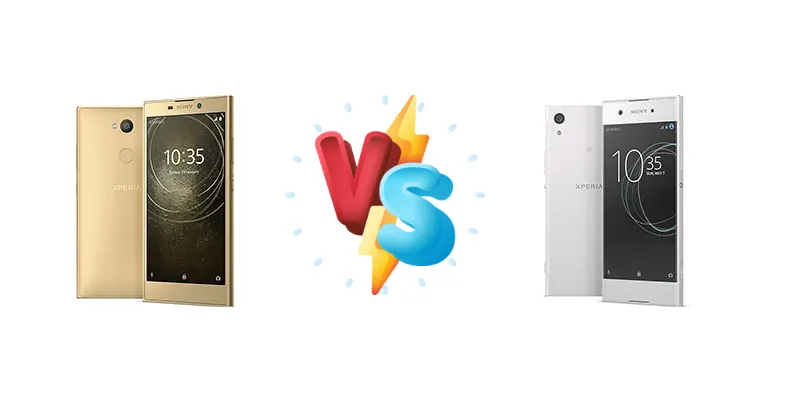
The Sony Xperia L2 and XA1 represent Sony’s attempts to deliver compelling smartphone experiences at accessible price points. Released within a relatively short timeframe of each other, they share a similar aesthetic but diverge significantly in internal hardware. This comparison dissects those differences, focusing on where each phone excels and who will benefit most from its strengths.
🏆 Quick Verdict
For the average user prioritizing performance and display clarity, the Sony Xperia XA1 is the superior choice. Its Helio P20 chipset delivers a noticeable speed boost over the L2’s MT6737T, and its display boasts significantly better sunlight readability. However, the L2’s slightly longer endurance rating offers a trade-off for those prioritizing battery life above all else.
| Network |
|---|
| 2G bands | GSM 850 / 900 / 1800 / 1900 - SIM 1 & SIM 2 (dual-SIM model only) | GSM 850 / 900 / 1800 / 1900 - SIM 1 & SIM 2 (dual-SIM model only) |
| 3G bands | HSDPA 850 / 900 / 1900 / 2100 - H3311, H4311, H4331 | HSDPA 850 / 900 / 1900 / 2100 |
| 4G bands | 1, 2, 3, 5, 7, 8, 20, 38 - H3311, H4311 | 1, 2, 3, 5, 7, 8, 20 |
| Speed | HSPA 42.2/5.76 Mbps, LTE Cat4 150/50 Mbps | HSPA 42.2/5.76 Mbps, LTE (2CA) Cat6 300/50 Mbps or LTE Cat4 150/50 Mbps |
| Technology | GSM / HSPA / LTE | GSM / HSPA / LTE |
| | 1, 2, 3, 5, 7, 8, 28, 38, 39, 40, 41 - H4331 | - |
| Launch |
|---|
| Announced | 2018, January. Released 2018, January | 2017, February. Released 2017, April |
| Status | Discontinued | Discontinued |
| Body |
|---|
| Build | Glass front (Gorilla Glass 4), plastic back, plastic frame | Glass front (Gorilla Glass 4), plastic back, aluminum frame |
| Dimensions | 150 x 78 x 9.8 mm (5.91 x 3.07 x 0.39 in) | 145 x 67 x 8 mm (5.71 x 2.64 x 0.31 in) |
| SIM | · Nano-SIM· Nano-SIM + Nano-SIM | · Nano-SIM· Nano-SIM + Nano-SIM |
| Weight | 178 g (6.28 oz) | 143 g (5.04 oz) |
| Display |
|---|
| Protection | Corning Gorilla Glass 4 | Corning Gorilla Glass 4 |
| Resolution | 720 x 1280 pixels, 16:9 ratio (~267 ppi density) | 720 x 1280 pixels, 16:9 ratio (~294 ppi density) |
| Size | 5.5 inches, 83.4 cm2 (~71.3% screen-to-body ratio) | 5.0 inches, 68.9 cm2 (~70.9% screen-to-body ratio) |
| Type | IPS LCD | IPS LCD |
| Platform |
|---|
| CPU | Quad-core 1.5 GHz Cortex-A53 | Octa-core (4x2.3 GHz Cortex-A53 & 4x1.6 GHz Cortex-A53) |
| Chipset | Mediatek MT6737T (28 nm) | Mediatek MT6757 Helio P20 (16 nm) |
| GPU | Mali-T720MP2 | Mali-T880MP2 |
| OS | Android 7.1.1 (Nougat) | Android 7.0 (Nougat), upgradable to Android 8.0 (Oreo) |
| Memory |
|---|
| Card slot | microSDXC (dedicated slot) | microSDXC (dedicated slot) |
| Internal | 32GB 3GB RAM | 32GB 3GB RAM |
| | eMMC 5.0 | - |
| Main Camera |
|---|
| Features | LED flash, HDR | LED flash, HDR, panorama |
| Single | 13 MP, f/2.0, 1/3.1", AF | 23 MP, f/2.0, 24mm (wide), 1/2.3", PDAF |
| Video | 1080p@30fps | 1080p@30fps, HDR |
| Selfie camera |
|---|
| Single | 8 MP, f/2.4, 1/4.0" | 8 MP, f/2.0, 23mm (wide), 1/4.0", AF |
| Video | 1080p@30fps | 1080p@30fps |
| Sound |
|---|
| 3.5mm jack | Yes | Yes |
| 35mm jack | Yes | Yes |
| Loudspeaker | Yes | Yes |
| Comms |
|---|
| Bluetooth | 4.2, A2DP, LE, aptX | 4.2, A2DP, aptX, LE |
| NFC | Yes | Yes |
| Positioning | GPS, GLONASS | GPS, GLONASS |
| Radio | FM radio | FM radio |
| USB | USB Type-C 2.0 | USB Type-C 2.0, OTG |
| WLAN | Wi-Fi 802.11 a/b/g/n, Wi-Fi Direct | Wi-Fi 802.11 a/b/g/n, dual-band, Wi-Fi Direct |
| Features |
|---|
| Sensors | Fingerprint (rear-mounted), accelerometer, proximity, compass | Accelerometer, proximity, compass |
| Battery |
|---|
| Charging | - | 10W wired |
| Stand-by | - | Up to 560 h (2G) / Up to 603 h (3G) |
| Talk time | - | Up to 11 h 20 min (2G) / Up to 10 h (3G) |
| Type | Li-Ion 3300 mAh, non-removable | Li-Ion 2300 mAh, non-removable |
| Misc |
|---|
| Colors | Black, Gold, Pink | White, Black, Gold, Pink |
| Models | H4311, H3311, H4331, H3321 | G3116, G3121, G3112, G3123, G3125 |
| Price | About 140 EUR | About 140 EUR |
| Tests |
|---|
| Audio quality |
Noise -92.0dB / Crosstalk -89.7dB |
Noise -95.2dB / Crosstalk -90.0dB |
| Battery life |
Endurance rating 65h
| Endurance rating 72h |
| Camera |
Photo / Video |
Photo / Video |
| Display |
Contrast ratio: 1130:1 (nominal), 2.266 (sunlight) |
Contrast ratio: 1049 (nominal), 3.012 (sunlight) |
| Loudspeaker |
Voice 67dB / Noise 72dB / Ring 91dB
|
Voice 58dB / Noise 67dB / Ring 67dB |
| Performance |
AnTuTu: 45023 (v7)
GeekBench: 1932 (v4.4) |
GeekBench: 3611 (v4.4)
GFXBench: 7.9fps (ES 3.1 onscreen) |
Sony Xperia L2
- Slightly longer battery endurance (65h)
- Potentially more efficient power management
- Similar design aesthetic to the XA1
- Significantly slower processor (MT6737T)
- Lower display contrast and sunlight readability
- Less responsive user experience
Sony Xperia XA1
- Faster and more efficient processor (Helio P20)
- Superior display contrast and sunlight visibility
- Smoother multitasking and app performance
- Slightly shorter battery endurance (72h)
- May experience more thermal throttling under heavy load
- 10W charging is relatively slow by modern standards
Display Comparison
Both the Xperia L2 and XA1 feature similar display sizes, but their performance differs significantly. The XA1’s display achieves a contrast ratio of 1049:1 (nominal) and a remarkable 3.012:1 in sunlight, making it far more usable outdoors. The L2, with a 1130:1 nominal contrast and 2.266:1 sunlight contrast, struggles more in bright conditions. While both offer adequate viewing angles, the XA1’s superior contrast translates to richer colors and deeper blacks, enhancing the overall viewing experience. Neither phone specifies panel technology, but given the price point, both likely utilize IPS LCDs.
Camera Comparison
Both phones are listed as having Photo/Video capabilities, but specific details are absent. Given their market positioning, it’s unlikely either boasts a particularly impressive camera system. Focusing on the chipset, the XA1’s Helio P20 includes an ISP capable of handling more complex image processing, potentially resulting in slightly better image quality, particularly in challenging lighting conditions. Without detailed sensor information, it’s difficult to make a definitive judgment, but the XA1’s processing power gives it a slight edge. The absence of OIS on either device suggests reliance on software stabilization.
Performance
The core difference between these two devices lies in their chipsets. The Xperia XA1 is powered by the Mediatek MT6757 Helio P20, a 16nm octa-core processor featuring a cluster of four Cortex-A53 cores clocked at 2.3 GHz and another four at 1.6 GHz. This configuration provides a substantial performance advantage over the Xperia L2’s Mediatek MT6737T, a 28nm quad-core 1.5 GHz Cortex-A53 processor. The smaller manufacturing node of the Helio P20 also contributes to improved thermal efficiency, potentially reducing throttling during sustained workloads. The XA1 will handle multitasking and more demanding apps with greater ease.
Battery Life
The Xperia XA1 offers an endurance rating of 72 hours, while the L2 achieves 65 hours. This suggests the L2 has a slightly larger battery capacity or more efficient power management, despite the less powerful processor. The XA1 supports 10W wired charging, a standard speed for the time, but the L2’s charging speed is not specified. While the XA1’s faster processor consumes more power, the difference in endurance is relatively small, suggesting the L2’s advantage is marginal. Users prioritizing absolute longevity will lean towards the L2, but the XA1’s performance benefits may outweigh the slight battery life reduction for many.
Buying Guide
Buy the Sony Xperia L2 if you prioritize maximum battery endurance and are primarily focused on basic smartphone tasks like calling, texting, and light social media use. Buy the Sony Xperia XA1 if you value a smoother, more responsive user experience, better display visibility outdoors, and are willing to accept slightly shorter battery life for improved performance.
Frequently Asked Questions
❓ Is the Mediatek Helio P20 in the Xperia XA1 powerful enough for modern apps?
While not a flagship-level processor, the Helio P20 is capable of running most modern apps smoothly. It excels at everyday tasks like browsing, social media, and video playback. However, demanding games or heavily multi-tasking may result in some slowdowns. It's a significant step up from the L2's MT6737T.
❓ How much of a difference will the display contrast make in real-world use?
The difference in display contrast is substantial, particularly outdoors. The Xperia XA1’s higher contrast ratio (3.012:1 in sunlight) means images will appear more vibrant and text will be easier to read in bright conditions. The L2’s lower contrast can result in washed-out colors and difficulty seeing the screen in direct sunlight.
❓ Does the Xperia XA1 overheat during prolonged gaming sessions?
The Helio P20 is a relatively efficient processor, but it can still generate heat during extended gaming. While the XA1 doesn't have advanced cooling solutions, the 16nm manufacturing process helps mitigate thermal throttling. Expect some performance reduction after prolonged gaming, but it shouldn't be severe.
❓ Is the difference in battery life between the L2 and XA1 noticeable in everyday use?
The difference of 7 hours in endurance rating is not always directly translated to real-world usage. The XA1's more powerful processor will consume more power, but the difference is likely to be noticeable only with heavy usage. For typical users, the battery life will be comparable.