
Sony Xperia 5 IV vs Google Pixel 7: The Ultimate Showdown
| Phones Images | |||||
|---|---|---|---|---|---|
|
🏆 Quick Verdict
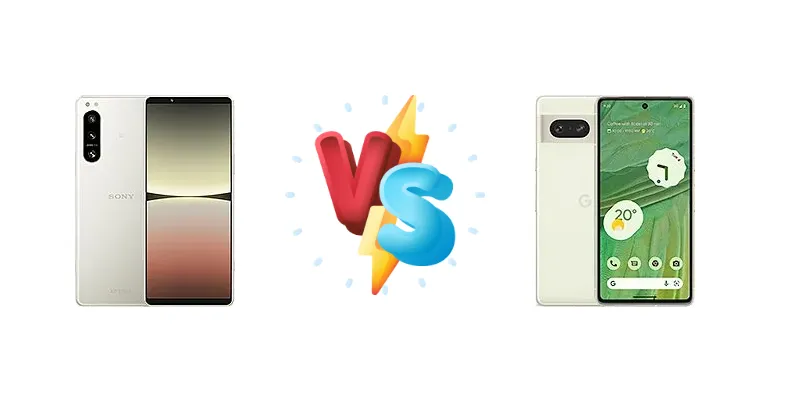
The Xperia 5 IV boasts superior battery life and a slightly brighter display, alongside a more powerful chipset. However, the Pixel 7 shines with its exceptional computational photography, seamless software integration, and generally more accessible price point. For camera enthusiasts, the Xperia wins; for everyday users, the Pixel 7 is a strong contender.
| PHONES | ||
|---|---|---|
| Phone Names | Sony Xperia 5 IV | Google Pixel 7 |
| Network | ||
|---|---|---|
| 2G bands | GSM 850 / 900 / 1800 / 1900 | GSM 850 / 900 / 1800 / 1900 |
| 3G bands | HSDPA 800 / 850 / 900 / 1700(AWS) / 1900 / 2100 | HSDPA 800 / 850 / 900 / 1700(AWS) / 1900 / 2100 |
| 4G bands | 1, 2, 3, 4, 5, 7, 8, 12, 13, 17, 19, 20, 25, 26, 28, 29, 32, 34, 38, 39, 40, 41, 46, 66 - Europe | 1, 2, 3, 4, 5, 7, 8, 12, 13, 14, 17, 18, 19, 20, 25, 26, 28, 29, 30, 38, 40, 41, 42, 46, 48, 66, 71 - GQML3 |
| 5G bands | 1, 3, 5, 7, 8, 20, 28, 38, 40, 41, 77, 78 SA/NSA/Sub6 - Europe | 1, 2, 3, 4, 5, 7, 8, 12, 13, 14, 17, 18, 19, 20, 25, 26, 28, 29, 30, 38, 40, 41, 46, 48, 66, 71, 260, 261 SA/NSA/Sub6/mmWave - GQML3 |
| Speed | HSPA, LTE, 5G | HSPA, LTE, 5G |
| Technology | GSM / HSPA / LTE / 5G | GSM / CDMA / HSPA / EVDO / LTE / 5G |
| 1, 3, 5, 7, 8, 28, 38, 40, 41, 77, 78, 79 SA/NSA/Sub6 - Asia | 1, 2, 3, 5, 7, 8, 12, 14, 20, 25, 28, 30, 38, 40, 41, 48, 66, 71, 75, 76, 77, 78 SA/NSA/Sub6 - GVU6C | |
| Launch | ||
|---|---|---|
| Announced | 2022, September 01 | 2022, October 06 |
| Status | Available. Released 2022, September 22 | Available. Released 2022, October 13 |
| Body | ||
|---|---|---|
| Build | Glass front (Gorilla Glass Victus), glass back (Gorilla Glass Victus), aluminum frame | Glass front (Gorilla Glass Victus), glass back (Gorilla Glass Victus), aluminum frame |
| Dimensions | 156 x 67 x 8.2 mm (6.14 x 2.64 x 0.32 in) | 155.6 x 73.2 x 8.7 mm (6.13 x 2.88 x 0.34 in) |
| SIM | · Nano-SIM + eSIM· Nano-SIM + Nano-SIM | Nano-SIM + eSIM |
| Weight | 172 g (6.07 oz) | 197 g (6.95 oz) |
| IP65/IP68 dust/water resistant (up to 1.5m for 30 min) | IP68 dust/water resistant (up to 1.5m for 30 min) | |
| Display | ||
|---|---|---|
| Protection | Corning Gorilla Glass Victus | Corning Gorilla Glass Victus |
| Resolution | 1080 x 2520 pixels, 21:9 ratio (~449 ppi density) | 1080 x 2400 pixels, 20:9 ratio (~416 ppi density) |
| Size | 6.1 inches, 86.9 cm2 (~83.2% screen-to-body ratio) | 6.3 inches, 96.7 cm2 (~84.9% screen-to-body ratio) |
| Type | OLED, 1B colors, 120Hz, HDR BT.2020 | AMOLED, 90Hz, HDR10+, 1000 nits (HBM), 1400 nits (peak) |
| - | Always-on display | |
| Platform | ||
|---|---|---|
| CPU | Octa-core (1x3.00 GHz Cortex-X2 & 3x2.50 GHz Cortex-A710 & 4x1.80 GHz Cortex-A510) | Octa-core (2x2.85 GHz Cortex-X1 & 2x2.35 GHz Cortex-A78 & 4x1.80 GHz Cortex-A55) |
| Chipset | Qualcomm SM8450 Snapdragon 8 Gen 1 (4 nm) | Google Tensor G2 (5 nm) |
| GPU | Adreno 730 | Mali-G710 MP7 |
| OS | Android 12, upgradable to Android 13 | Android 13, upgradable to Android 15, up to 5 major Android upgrades |
| Memory | ||
|---|---|---|
| Card slot | microSDXC (uses shared SIM slot) | No |
| Internal | 128GB 8GB RAM, 256GB 8GB RAM | 128GB 8GB RAM, 256GB 8GB RAM |
| UFS 3.X | UFS 3.1 | |
| Main Camera | ||
|---|---|---|
| Dual | - | 50 MP, f/1.9, 25mm (wide), 1/1.31", 1.2µm, dual pixel PDAF, OIS 12 MP, f/2.2, 114˚ (ultrawide), 1/2.9", 1.25µm |
| Features | Zeiss optics, Zeiss T* lens coating, color spectrum sensor, LED flash, panorama, HDR, eye tracking | Laser AF, Dual-LED flash, Pixel Shift, Auto-HDR, panorama |
| Single | 12 MP, f/2.0, 24mm (wide), 1/2.9", 1.25µm | 10.8 MP, f/2.2, 21mm (ultrawide), 1/3.1", 1.22µm |
| Triple | 12 MP, f/1.7, 24mm (wide), 1/1.7", 1.8µm, dual pixel PDAF, OIS 12 MP, f/2.4, 60mm (telephoto), 1/3.5", dual pixel PDAF, OIS 12 MP, f/2.2, 124˚, 16mm (ultrawide), 1/2.5", dual pixel PDAF | - |
| Video | 4K@24/25/30/60/120fps HDR, 1080p@30/60/120fps; 5-axis gyro-EIS, OIS | 4K@30/60fps, 1080p@30/60/120/240fps; gyro-EIS, OIS, 10-bit HDR |
| Selfie camera | ||
|---|---|---|
| Features | HDR | HDR, panorama |
| Single | 12 MP, f/2.0, 24mm (wide), 1/2.9", 1.25µm | 10.8 MP, f/2.2, 21mm (ultrawide), 1/3.1", 1.22µm |
| Video | 4K@30fps, 1080p@30/60fps, 5-axis gyro-EIS | 4K@30/60fps, 1080p@30/60fps |
| Sound | ||
|---|---|---|
| 3.5mm jack | Yes | No |
| 35mm jack | Yes | No |
| Loudspeaker | Yes, with stereo speakers | Yes, with stereo speakers |
| 24-bit/192kHz audio Dynamic vibration system | - | |
| Comms | ||
|---|---|---|
| Bluetooth | 5.2, A2DP, LE, aptX HD, aptX Adaptive | 5.2, A2DP, LE, aptX HD |
| NFC | Yes | Yes |
| Positioning | GPS, GLONASS, BDS, GALILEO, QZSS | GPS (L1+L5), GLONASS (G1), BDS (B1I+B1c+B2a), GALILEO (E1+E5a), QZSS (L1+L5) |
| Radio | No | No |
| USB | USB Type-C 3.2, OTG, video output | USB Type-C 3.2 |
| WLAN | Wi-Fi 802.11 a/b/g/n/ac/6e, tri-band, Wi-Fi Direct, DLNA | Wi-Fi 802.11 a/b/g/n/ac/6e, tri-band, Wi-Fi Direct |
| Features | ||
|---|---|---|
| Sensors | Fingerprint (side-mounted), accelerometer, gyro, proximity, barometer, compass | Fingerprint (under display, optical), accelerometer, gyro, proximity, compass, barometer |
| Native Sony Alpha camera support | - | |
| Battery | ||
|---|---|---|
| Charging | Wired, PD3.0, 50% in 30 min Wireless Reverse wireless | 20W wired, PD3.0, 50% in 30 min 20W wireless Reverse wireless |
| Type | Li-Po 5000 mAh | Li-Ion 4355 mAh |
| Misc | ||
|---|---|---|
| Colors | Green, Black, Ecru White | Obsidian, Lemongrass, Snow |
| Models | XQCQ62B-GC, XQCQ62G.GC, XQ-CQ72/B2TWCX0, XQ-CQ72/C2TWCX0, XQ-CQ72/G2TWCX0, XQCQ54C0B.YD, XQCQ54C0G.YD, XQCQ54C0C.YD, XQ-CQ54, XQ-CQ72, A204SO | GVU6C, GQML3, GO3Z5 |
| Price | € 248.89 / $ 999.00 / £ 189.99 | € 199.00 / $ 179.26 / £ 189.99 / ₹ 28,499 |
| Tests | ||
|---|---|---|
| Battery life | Endurance rating 116h | Endurance rating 96h |
| Camera | Photo / Video | Photo / Video |
| Display | Contrast ratio: Infinite (nominal) | Contrast ratio: Infinite (nominal) |
| Loudspeaker | -26.9 LUFS (Good) | -26.2 LUFS (Good) |
| Performance | AnTuTu: 835038 (v9) GeekBench: 3448 (v5.1) GFXBench: 63fps (ES 3.1 onscreen) | AnTuTu: 813114 (v9) GeekBench: 3288 (v5.1) GFXBench: 59fps (ES 3.1 onscreen) |
Sony Xperia 5 IV
- Exceptional battery life
- Slightly brighter display
- Powerful Snapdragon 8 Gen 1 chipset
- More manual camera controls
- Compact design
- Software can feel less polished
- Price is higher
- Snapdragon 8 Gen 1 can throttle under sustained load
Google Pixel 7
- Outstanding computational photography
- Clean and smooth Android experience
- Seamless Google integration
- Magic Eraser and Super Res Zoom
- Generally more affordable
- Shorter battery life
- Tensor G2 isn't as powerful as Snapdragon 8 Gen 1
- Less manual camera control
Display Comparison
Both phones feature excellent OLED displays with a nominal infinite contrast ratio. The Xperia 5 IV edges out the Pixel 7 with a slightly higher peak brightness of 979 nits versus 974 nits, though the difference is minimal in real-world usage. Both offer vibrant colors and sharp visuals, making them enjoyable for media consumption.
Camera Comparison
This is where the battle gets interesting. The Xperia 5 IV offers more manual control and versatility with its triple-lens setup. The Pixel 7, however, leverages Google's exceptional computational photography to produce consistently stunning images, particularly in low light. The Pixel 7's Super Res Zoom and Magic Eraser are standout features. While the Xperia 5 IV has a dedicated telephoto lens, the Pixel 7's software processing often yields superior results.
Performance
The Xperia 5 IV packs a Snapdragon 8 Gen 1, a powerhouse chipset known for its raw performance. The Pixel 7 utilizes Google's Tensor G2, which prioritizes AI and machine learning tasks over outright speed. While the Snapdragon 8 Gen 1 generally benchmarks higher, the Tensor G2 provides a smooth and responsive experience optimized for Google's features. Gaming performance is slightly better on the Xperia 5 IV.
Battery Life
The Xperia 5 IV takes a clear lead in battery life, boasting an impressive endurance rating of 116 hours compared to the Pixel 7's 96 hours. This translates to significantly longer usage between charges, making the Xperia 5 IV a better choice for heavy users.
Buying Guide
The Sony Xperia 5 IV is ideal for photography enthusiasts who appreciate manual controls, a compact design, and don't mind a slightly less polished software experience. The Google Pixel 7 is perfect for users who value a clean Android experience, outstanding camera performance (especially in challenging conditions), and tight integration with Google services.