
Sony Xperia 5 III vs Xperia 5 II: The Ultimate Showdown
| Phones Images | |||||
|---|---|---|---|---|---|
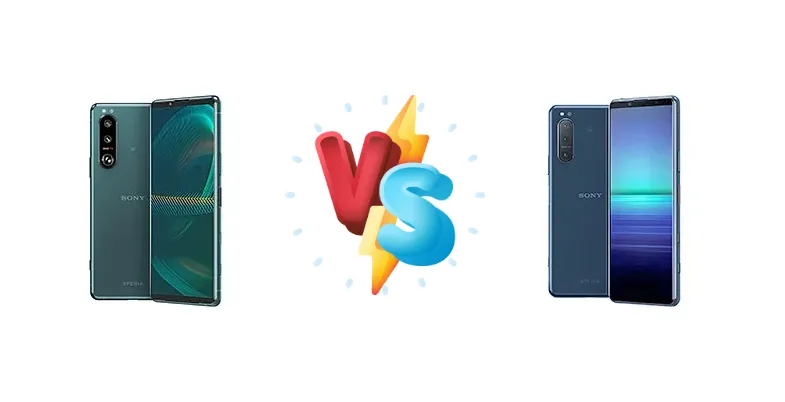
|
🏆 Quick Verdict
The Xperia 5 III boasts a more powerful Snapdragon 888 chipset and slightly brighter display, offering a performance edge. However, the Xperia 5 II remains a strong contender with a comparable battery life and a slightly lower price point, making it a great value option for many.
| PHONES | ||
|---|---|---|
| Phone Names | Sony Xperia 5 III | Sony Xperia 5 II |
| Network | ||
|---|---|---|
| 2G bands | GSM 850 / 900 / 1800 / 1900 | GSM 850 / 900 / 1800 / 1900 |
| 3G bands | HSDPA 800 / 850 / 900 / 1700(AWS) / 1900 / 2100 | HSDPA 800 / 850 / 900 / 1700(AWS) / 1900 / 2100 |
| 4G bands | 1, 2, 3, 4, 5, 7, 8, 12, 13, 17, 19, 20, 25, 26, 28, 29, 32, 34, 38, 39, 40, 41, 46, 48, 66, 71 - USA | 1, 2, 3, 4, 5, 7, 8, 12, 13, 17, 19, 20, 25, 26, 28, 29, 32, 34, 38, 39, 40, 41, 46, 48, 66 |
| 5G bands | 1, 2, 3, 5, 7, 8, 20, 28, 38, 40, 41, 66, 71, 77, 78 SA/NSA/Sub6 - USA | 1, 3, 8, 28, 77, 78 SA/NSA |
| Speed | HSPA, LTE, 5G | HSPA 42.2/5.76 Mbps, LTE Cat18 1200/150 Mbps, 5G |
| Technology | GSM / HSPA / LTE / 5G | GSM / HSPA / LTE / 5G |
| 1, 3, 5, 7, 8, 28, 38, 40, 41, 77, 78, 79 SA/NSA/Sub6 - Asia | - | |
| Launch | ||
|---|---|---|
| Announced | 2021, April 14 | 2020, September 17 |
| Status | Available. Released 2021, October 08 | Available. Released 2020, October 12 |
| Body | ||
|---|---|---|
| Build | Glass front (Gorilla Glass 6), glass back (Gorilla Glass 6), aluminum frame | Glass front (Gorilla Glass 6), glass back (Gorilla Glass 6), aluminum frame |
| Dimensions | 157 x 68 x 8.2 mm (6.18 x 2.68 x 0.32 in) | 158 x 68 x 8 mm (6.22 x 2.68 x 0.31 in) |
| SIM | · Nano-SIM· Nano-SIM + Nano-SIM | · Nano-SIM· Nano-SIM + Nano-SIM |
| Weight | 168 g (5.93 oz) | 163 g (5.75 oz) |
| IP65/IP68 dust/water resistant (up to 1.5m for 30 min) | IP65/IP68 dust/water resistant (up to 1.5m for 30 mins) | |
| Display | ||
|---|---|---|
| Protection | Corning Gorilla Glass 6 | Corning Gorilla Glass 6 |
| Resolution | 1080 x 2520 pixels, 21:9 ratio (~449 ppi density) | 1080 x 2520 pixels, 21:9 ratio (~449 ppi density) |
| Size | 6.1 inches, 86.9 cm2 (~81.4% screen-to-body ratio) | 6.1 inches, 86.9 cm2 (~80.9% screen-to-body ratio) |
| Type | OLED, 1B colors, 120Hz, HDR BT.2020 | OLED, 120Hz, HDR BT.2020 |
| - | Triluminos display X-Reality Engine | |
| Platform | ||
|---|---|---|
| CPU | Octa-core (1x2.84 GHz Cortex-X1 & 3x2.42 GHz Cortex-A78 & 4x1.80 GHz Cortex-A55) | Octa-core (1x2.84 GHz Cortex-A77 & 3x2.42 GHz Cortex-A77 & 4x1.80 GHz Cortex-A55) |
| Chipset | Qualcomm SM8350 Snapdragon 888 5G (5 nm) | Qualcomm SM8250 Snapdragon 865 5G (7 nm+) |
| GPU | Adreno 660 | Adreno 650 |
| OS | Android 11, upgradable to Android 13 | Android 10, upgradable to Android 12 |
| Memory | ||
|---|---|---|
| Card slot | microSDXC (uses shared SIM slot) | microSDXC (uses shared SIM slot) |
| Internal | 128GB 8GB RAM, 256GB 8GB RAM | 128GB 8GB RAM, 256GB 8GB RAM |
| UFS 3.X | UFS 3.0 | |
| Main Camera | ||
|---|---|---|
| Features | Zeiss optics, Zeiss T* lens coating, color spectrum sensor, LED flash, panorama, HDR, eye tracking | Zeiss optics, color spectrum sensor, LED flash, panorama, HDR, eye tracking |
| Single | 8 MP, f/2.0, 24mm (wide), 1/4", 1.12µm | - |
| Triple | 12 MP, f/1.7, 24mm (wide), 1/1.7", 1.8µm, dual pixel PDAF, OIS 12 MP, f/2.3, 70mm (telephoto), f/2.8, 105mm (telephoto), 1/2.9", dual pixel PDAF, 3x/4.4x optical zoom, OIS 12 MP, f/2.2, 124˚, 16mm (ultrawide), 1/2.6", dual pixel PDAF | 12 MP, f/1.7, 24mm (wide), 1/1.7", 1.8µm, dual pixel PDAF, OIS 12 MP, f/2.4, 70mm (telephoto), 1/3.4", 1.0µm, PDAF, 3x optical zoom, OIS 12 MP, f/2.2, 124˚, 16mm (ultrawide), 1/2.55", dual pixel PDAF |
| Video | 4K@24/25/30/60/120fps HDR, 1080p@30/60/120fps; 5-axis gyro-EIS, OIS | 4K@24/30/60/120fps HDR, 1080p, 5-axis gyro-EIS, OIS |
| Selfie camera | ||
|---|---|---|
| Features | HDR | HDR |
| Single | 8 MP, f/2.0, 24mm (wide), 1/4.0", 1.12µm | 8 MP, f/2.0, 24mm (wide), 1/4.0", 1.12µm |
| Video | 1080p@30fps, 5-axis gyro-EIS | 1080p@30fps, 5-axis gyro-EIS |
| Sound | ||
|---|---|---|
| 3.5mm jack | Yes | Yes |
| 35mm jack | Yes | Yes |
| Loudspeaker | Yes, with stereo speakers | Yes, with stereo speakers |
| 24-bit/192kHz audio Dynamic vibration system | 24-bit/192kHz audio Dynamic vibration system | |
| Comms | ||
|---|---|---|
| Bluetooth | 5.2, A2DP, LE, aptX HD, aptX Adaptive | 5.1, A2DP, aptX HD, LE |
| NFC | Yes | Yes |
| Positioning | GPS, GLONASS, BDS, GALILEO, QZSS | GPS, GLONASS, BDS, GALILEO, QZSS |
| Radio | No | No |
| USB | USB Type-C 3.1, OTG, video output | USB Type-C 3.1, OTG |
| WLAN | Wi-Fi 802.11 a/b/g/n/ac/6, dual-band, Wi-Fi Direct, DLNA | Wi-Fi 802.11 a/b/g/n/ac/6, dual-band, Wi-Fi Direct, DLNA |
| Features | ||
|---|---|---|
| Sensors | Fingerprint (side-mounted), accelerometer, gyro, proximity, barometer, compass | Fingerprint (side-mounted), accelerometer, gyro, proximity, barometer, compass |
| Native Sony Alpha camera support | - | |
| Battery | ||
|---|---|---|
| Charging | Wired, PD, 50% in 30 min | 21W wired, PD3.0, 50% in 30 min |
| Type | Li-Po 4500 mAh | Li-Ion 4000 mAh |
| Misc | ||
|---|---|---|
| Colors | Black, Green, Pink | Black, Grey, Blue, Pink |
| Models | XQBQ62/G, XQBQ52G.UKCX, XQBQ52B.UKCX, XQ-BQ52, XQ-BQ72, XQ-BQ42, XQ-BQ62, SO-53B | SO-52A, XQ-AS52, XQ-AS62, XQ-AS72, A002SO, SOG02 |
| Price | € 431.90 / £ 199.99 | About 650 EUR |
| Pricing | ||
|---|---|---|
| 128GB 8GB RAM | - | $ 695.00 |
| RENEWED | - | £ 239.00 |
| Tests | ||
|---|---|---|
| Battery life | Endurance rating 100h | Endurance rating 102h |
| Camera | Photo / Video | Photo / Video |
| Display | Contrast ratio: Infinite (nominal) | Contrast ratio: Infinite (nominal) |
| Loudspeaker | -26.7 LUFS (Good) | -28.3 LUFS (Average) |
| Performance | AnTuTu: 708394 (v9) GeekBench: 3549 (v5.1) GFXBench: 53fps (ES 3.1 onscreen) | AnTuTu: 532655 (v8) GeekBench: 3301 (v5.1) GFXBench: 41fps (ES 3.1 onscreen) |
Sony Xperia 5 III
- More powerful Snapdragon 888 chipset
- Slightly brighter display
- 120fps 4K video recording
- Latest Sony camera processing
- Potentially higher price
- Minor design changes over the 5 II
Sony Xperia 5 II
- Excellent camera system
- Slightly longer battery life (marginally)
- More affordable price
- Compact and ergonomic design
- Older Snapdragon 865 chipset
- Slightly dimmer display
Display Comparison
Both phones feature excellent OLED displays with a 120Hz refresh rate. The Xperia 5 III edges out the 5 II with a measured peak brightness of 590 nits versus 600 nits, though the difference is minimal in real-world usage. Both offer infinite contrast ratios, delivering deep blacks and vibrant colors. The 5 III's slightly improved brightness can be beneficial in direct sunlight.
Camera Comparison
Both phones offer excellent camera systems with Sony's signature manual controls. While both have similar camera setups (wide, ultrawide, telephoto), the 5 III benefits from Sony's latest image processing algorithms and potentially improved sensor technology. The 5 III also supports 120fps video recording at 4K resolution, a feature absent in the 5 II. Both offer exceptional video quality.
Performance
The Xperia 5 III's Snapdragon 888 (5nm) significantly outperforms the Xperia 5 II's Snapdragon 865 (7nm+). The Cortex-X1 prime core in the 888 provides a noticeable boost in single-core performance, resulting in smoother multitasking and faster app loading times. Gaming performance is also improved on the 5 III.
Battery Life
Battery life is remarkably similar between the two devices. The Xperia 5 II has a slightly higher endurance rating (102h vs 100h), but the difference is negligible in practical use. Both support PD fast charging, reaching 50% in 30 minutes.
Buying Guide
The Sony Xperia 5 III is ideal for users prioritizing performance, the latest chipset, and a brighter screen. The Xperia 5 II is a better choice for those seeking excellent camera capabilities, a slightly longer battery life, and a more budget-friendly price without sacrificing too much.