
Sony Xperia 10 VI vs Google Pixel 8a: A Deep Dive into Battery, Performance, and Value
| Phones Images | |||||
|---|---|---|---|---|---|
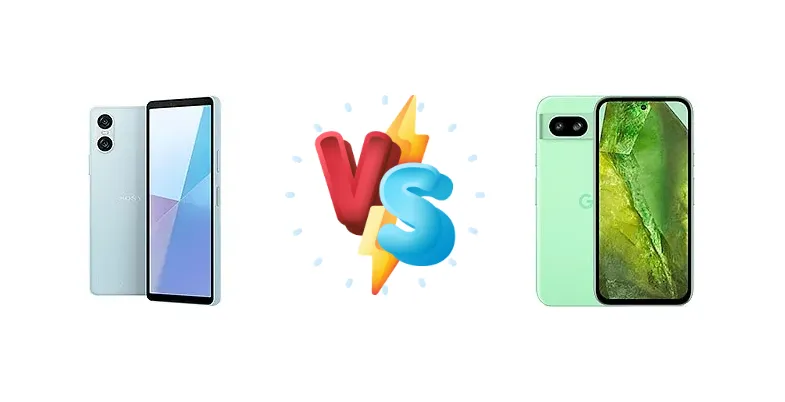
|
🏆 Quick Verdict
For the average user prioritizing longevity and battery endurance, the Google Pixel 8a is the clear winner. Its 40:06h endurance rating and brighter display outweigh the Xperia 10 VI’s strengths. However, users valuing a more traditional Sony experience and potentially longer software support may prefer the Xperia 10 VI.
| PHONES | ||
|---|---|---|
| Phone Names | Sony Xperia 10 VI | Google Pixel 8a |
| Network | ||
|---|---|---|
| 2G bands | GSM 850 / 900 / 1800 / 1900 | GSM 850 / 900 / 1800 / 1900 |
| 3G bands | HSDPA 850 / 900 / 1700(AWS) / 2100 | HSDPA 800 / 850 / 900 / 1700(AWS) / 1900 / 2100 |
| 4G bands | 1, 3, 4, 5, 7, 8, 20, 28, 38, 39, 40, 41 | 1, 2, 3, 4, 5, 7, 8, 12, 17, 18, 19, 20, 26, 28, 32, 38, 40, 41, 42, 66 - G6GPR (International) |
| 5G bands | 1, 3, 5, 7, 8, 20, 28, 38, 40, 41, 77, 78, 79 SA/NSA | 1, 2, 3, 5, 7, 8, 12, 20, 26, 28, 38, 40, 41, 66, 75, 76, 77, 78 SA/NSA/Sub6 - G6GPR (International) |
| Speed | HSPA, LTE, 5G | HSPA, LTE, 5G |
| Technology | GSM / HSPA / LTE / 5G | GSM / HSPA / LTE / 5G |
| Launch | ||
|---|---|---|
| Announced | 2024, May 15 | 2024, May 07 |
| Status | Available. Released 2024, June 13 | Available. Released 2024, May 14 |
| Body | ||
|---|---|---|
| Build | Glass front (Gorilla Glass Victus), plastic frame, plastic back | Glass front (Gorilla Glass 3), aluminum frame, plastic back |
| Dimensions | 155 x 68 x 8.3 mm (6.10 x 2.68 x 0.33 in) | 152.1 x 72.7 x 8.9 mm (5.99 x 2.86 x 0.35 in) |
| SIM | · Nano-SIM + eSIM· Nano-SIM + Nano-SIM | Nano-SIM + eSIM |
| Weight | 164 g (5.78 oz) | 188 g (6.63 oz) |
| Display | ||
|---|---|---|
| Protection | Corning Gorilla Glass Victus | Corning Gorilla Glass 3, Mohs level 5 |
| Resolution | 1080 x 2520 pixels, 21:9 ratio (~449 ppi density) | 1080 x 2400 pixels, 20:9 ratio (~430 ppi density) |
| Size | 6.1 inches, 86.9 cm2 (~82.5% screen-to-body ratio) | 6.1 inches, 90.3 cm2 (~81.6% screen-to-body ratio) |
| Type | OLED, 1B colors, HDR | OLED, HDR, 120Hz, 2000 nits (peak) |
| Platform | ||
|---|---|---|
| CPU | Octa-core (4x2.2 GHz Cortex-A78 & 4x1.8 GHz Cortex-A55) | Nona-core (1x3.0 GHz Cortex-X3 & 4x2.45 GHz Cortex-A715 & 4x2.15 GHz Cortex-A510) |
| Chipset | Qualcomm SM6450 Snapdragon 6 Gen 1 (4 nm) | Google Tensor G3 (4 nm) |
| GPU | Adreno 710 | Immortalis-G715s MC10 |
| OS | Android 14, upgradable to Android 16, up to 3 major Android upgrades | Android 14, upgradable to Android 16, up to 7 major Android upgrades |
| Memory | ||
|---|---|---|
| Card slot | microSDXC (uses shared SIM slot) | No |
| Internal | 128GB 8GB RAM | 128GB 8GB RAM, 256GB 8GB RAM |
| Main Camera | ||
|---|---|---|
| Dual | 48 MP, f/1.8, 26mm (wide), 1/2.0", 0.8µm, PDAF, OIS 8 MP, f/2.2, 120˚, 16mm (ultrawide), 1/4.0", 1.12µm | 64 MP (16 MP eff.), f/1.9, 26mm (wide), 1/1.73", 0.8µm, dual pixel PDAF, OIS 13 MP, f/2.2, 120˚ (ultrawide), 1.12µm |
| Features | LED flash, HDR, panorama | Dual-LED flash, Pixel Shift, Ultra HDR, panorama, Best Take |
| Video | 4K@30fps, 1080p@30/60/120fps, gyro-EIS, OIS | 4K@30/60fps, 1080p@30/60/120/240fps, OIS |
| Selfie camera | ||
|---|---|---|
| Features | HDR | HDR, panorama |
| Single | 8 MP, f/2.0, 26mm (wide), 1/4.0", 1.12µm | 13 MP, f/2.2, 20mm (ultrawide), 1.12µm |
| Video | 1080p@30fps | 4K@30fps, 1080p@30/60fps |
| Sound | ||
|---|---|---|
| 35mm jack | Yes | No |
| Loudspeaker | Yes, with stereo speakers | Yes, with stereo speakers |
| Comms | ||
|---|---|---|
| Bluetooth | 5.2, A2DP, LE, aptX HD, aptX Adaptive | 5.3, A2DP, LE |
| NFC | Yes | Yes |
| Positioning | GPS, GLONASS, GALILEO, BDS, QZSS | GPS, GLONASS, GALILEO, BDS, QZSS, NavIC |
| Radio | No | No |
| USB | USB Type-C 2.0, OTG | USB Type-C 3.2 |
| WLAN | Wi-Fi 802.11 a/b/g/n/ac, dual-band, Wi-Fi Direct | Wi-Fi 802.11 a/b/g/n/ac/6e, dual/tri-band (market/region dependent) |
| Features | ||
|---|---|---|
| Sensors | Fingerprint (side-mounted), accelerometer, gyro, proximity, compass | Fingerprint (under display, optical), accelerometer, gyro, proximity, compass, barometer |
| Battery | ||
|---|---|---|
| Charging | Wired, PD, QC | 18W wired, PD3.0 7.5W wireless Bypass charging |
| Type | 5000 mAh | Li-Po 4492 mAh |
| Misc | ||
|---|---|---|
| Colors | Blue, Black, White | Obsidian, Porcelain, Bay, Aloe |
| Models | XQ-ES54, XQ-ES72, XQ-ES72/L2TWCX0, XQ-ES72/B2TWCX0, XQ-ES72/W2TWCX0, XQES54EUKCB.GC | GKV4X, G6GPR, G8HHN, G576D |
| Price | € 342.14 / $ 799.00 / £ 317.49 | $ 229.98 / C$ 417.99 / £ 279.00 / € 299.99 / ₹ 33,300 |
| EU LABEL | ||
|---|---|---|
| Battery | - | 40:06h endurance, 1000 cycles |
| Energy | - | Class B |
| Free fall | - | Class A (270 falls) |
| Repairability | - | Class B |
Sony Xperia 10 VI
- Exceptional battery life (40:06h endurance)
- Brighter display (1508 nits)
- Powerful Tensor G3 chipset
- Guaranteed Android updates
- Potentially shorter long-term battery health
- Charging speed is relatively slow (18W)
Google Pixel 8a
- Long-term battery health focus
- Streamlined Sony experience
- PD and QC fast charging support
- Potentially longer software support
- Dimmer display (1010 nits)
- Less powerful Snapdragon 6 Gen 1 chipset
Display Comparison
The Pixel 8a’s display significantly outshines the Xperia 10 VI in peak brightness, reaching 1508 nits compared to the Xperia’s 1010 nits. This translates to superior visibility in direct sunlight. While both utilize a 4nm process for their respective chipsets, the display technology isn’t specified for either, but the Pixel 8a’s higher brightness suggests a more advanced panel. The Xperia 10 VI’s display, while adequate, will appear dimmer in comparison, impacting outdoor usability. Bezels are not specified, but Sony traditionally favors a more symmetrical look, while Google often maximizes screen real estate.
Camera Comparison
The Pixel 8a’s camera system is expected to leverage Google’s renowned computational photography, despite lacking detailed sensor specifications in the provided data. The focus is on software optimization, delivering excellent image quality in various conditions. The Xperia 10 VI’s camera capabilities are less emphasized, suggesting a more traditional approach. Without sensor size or aperture information for either device, it’s difficult to make a direct comparison, but Google’s history suggests a stronger emphasis on image processing and low-light performance. The absence of details on OIS for either phone makes it difficult to assess stabilization capabilities.
Performance
The Google Pixel 8a’s Tensor G3, a nona-core processor with a Cortex-X3 prime core clocked at 3.0 GHz, offers a substantial performance advantage over the Xperia 10 VI’s Snapdragon 6 Gen 1. The Snapdragon 6 Gen 1’s octa-core configuration, with Cortex-A78 cores peaking at 2.2 GHz, is geared towards efficiency rather than raw power. The Tensor G3’s architecture, including the A715 and A510 cores, is designed for AI and machine learning tasks, enhancing features like Google Assistant and image processing. While the Xperia 10 VI will handle everyday tasks smoothly, the Pixel 8a will excel in demanding applications and multitasking. RAM specifications are missing, but the Tensor G3 benefits from optimized memory management.
Battery Life
The Google Pixel 8a dominates in battery endurance, boasting a remarkable 40:06h rating and a claimed 1000-cycle lifespan. This is significantly higher than the Xperia 10 VI’s 13:56h active use score. While the Xperia 10 VI’s battery capacity isn’t specified, the Pixel 8a’s longevity suggests a more efficient combination of hardware and software. The Pixel 8a supports 18W wired charging, PD3.0, and 7.5W wireless charging, while the Xperia 10 VI offers wired charging with PD and QC support. The Pixel 8a’s ‘bypass charging’ feature, allowing direct power from the charger, further extends battery health.
Buying Guide
Buy the Sony Xperia 10 VI if you need exceptional battery *health* over time, prefer a more understated design, and value Sony’s audio and video processing. Buy the Google Pixel 8a if you prioritize camera quality, a brighter and more vibrant display, and the latest Android features with guaranteed updates, even if it means potentially shorter battery lifespan in the long run.