
Sony Xperia 10 IV vs Xperia 10 V: A Detailed Comparison
| Phones Images | |||||
|---|---|---|---|---|---|
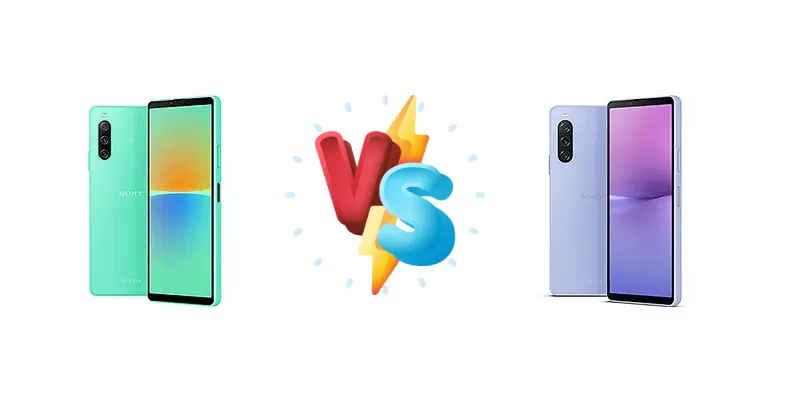
|
🏆 Quick Verdict
The Xperia 10 V edges out the IV thanks to a significantly brighter display and slightly improved battery life. While both share the same processor, the V's display enhancements make it the more compelling choice for most users, especially those prioritizing outdoor visibility. It's a worthwhile upgrade.
| PHONES | ||
|---|---|---|
| Phone Names | Sony Xperia 10 IV | Sony Xperia 10 V |
| Network | ||
|---|---|---|
| 2G bands | GSM 850 / 900 / 1800 / 1900 | GSM 850 / 900 / 1800 / 1900 |
| 3G bands | HSDPA 850 / 900 / 1700(AWS) / 2100 | HSDPA 850 / 900 / 1700(AWS) / 2100 |
| 4G bands | 1, 3, 4, 5, 7, 8, 20, 28, 38, 39, 40, 41 | 1, 3, 4, 5, 7, 8, 20, 28, 38, 39, 40, 41 |
| 5G bands | 1, 3, 7, 8, 28, 38, 41, 77, 78, 79 SA/NSA | 1, 3, 5, 7, 8, 20, 28, 38, 40, 41, 77, 78, 79 SA/NSA |
| Speed | HSPA, LTE, 5G | HSPA, LTE, 5G |
| Technology | GSM / HSPA / LTE / 5G | GSM / HSPA / LTE / 5G |
| Launch | ||
|---|---|---|
| Announced | 2022, May 11 | 2023, May 11 |
| Status | Available. Released 2022, June 30 | Available. Released 2023, June 21 |
| Body | ||
|---|---|---|
| Build | Glass front (Gorilla Glass Victus), plastic frame, plastic back | Glass front (Gorilla Glass Victus), plastic frame, plastic back |
| Dimensions | 153 x 67 x 8.3 mm (6.02 x 2.64 x 0.33 in) | 155 x 68 x 8.3 mm (6.10 x 2.68 x 0.33 in) |
| SIM | · Nano-SIM + eSIM· Nano-SIM + Nano-SIM | · Nano-SIM + eSIM· Nano-SIM + Nano-SIM |
| Weight | 161 g (5.68 oz) | 159 g (5.61 oz) |
| IP65/IP68 dust/water resistant (up to 1.5m for 30 min) | IP65/IP68 dust/water resistant (up to 1.5m for 30 min) | |
| Display | ||
|---|---|---|
| Protection | Corning Gorilla Glass Victus | Corning Gorilla Glass Victus |
| Resolution | 1080 x 2520 pixels, 21:9 ratio (~457 ppi density) | 1080 x 2520 pixels, 21:9 ratio (~449 ppi density) |
| Size | 6.0 inches, 84.1 cm2 (~82.0% screen-to-body ratio) | 6.1 inches, 86.9 cm2 (~82.5% screen-to-body ratio) |
| Type | OLED, 1B colors, HDR | OLED, 1B colors, HDR |
| Triluminos display | Triluminos display | |
| Platform | ||
|---|---|---|
| CPU | Octa-core (2x2.2 GHz Kryo 660 Gold & 6x1.7 GHz Kryo 660 Silver) | Octa-core (2x2.2 GHz Kryo 660 Gold & 6x1.7 GHz Kryo 660 Silver) |
| Chipset | Qualcomm SM6375 Snapdragon 695 5G (6 nm) | Qualcomm SM6375 Snapdragon 695 5G (6 nm) |
| GPU | Adreno 619 | Adreno 619 |
| OS | Android 12, upgradable to Android 14 | Android 13, upgradable to Android 15 |
| Memory | ||
|---|---|---|
| Card slot | microSDXC (uses shared SIM slot) | microSDXC (uses shared SIM slot) |
| Internal | 128GB 6GB RAM | 128GB 6GB RAM, 128GB 8GB RAM |
| UFS | UFS | |
| Main Camera | ||
|---|---|---|
| Features | LED flash, HDR, panorama | LED flash, HDR, panorama |
| Single | 8 MP, f/2.0, 27mm (wide), 1/4.0" | - |
| Triple | 12 MP, f/1.8, 27mm (wide), 1/2.8", PDAF, OIS 8 MP, f/2.2, 54mm (telephoto), 1/4.4", PDAF, 2x optical zoom 8 MP, f/2.2, 120˚, 16mm (ultrawide), 1/4.0" | 48 MP, f/1.8, 26mm (wide), 1/2.0", 0.8µm, PDAF, OIS 8 MP, f/2.2, 54mm (telephoto), 1/4.4", 1.0µm, PDAF, 2x optical zoom 8 MP, f/2.2, 120˚, 16mm (ultrawide), 1/4.0", 1.12µm |
| Video | 1080p@30fps | 1080p@30fps |
| Selfie camera | ||
|---|---|---|
| Features | HDR | HDR |
| Single | 8 MP, f/2.0, 27mm (wide), 1/4.0" | 8 MP, f/2.0, 26mm (wide), 1/4.0", 1.12µm |
| Video | 1080p@30fps | 1080p@30fps |
| Sound | ||
|---|---|---|
| 3.5mm jack | Yes | Yes |
| 35mm jack | Yes | Yes |
| Loudspeaker | Yes | Yes, with stereo speakers |
| 24-bit/192kHz audio | 24-bit/192kHz audio | |
| Comms | ||
|---|---|---|
| Bluetooth | 5.1, A2DP, LE, aptX HD, aptX Adaptive | 5.1, A2DP, LE, aptX HD, aptX Adaptive |
| NFC | Yes | Yes |
| Positioning | GPS, GLONASS, GALILEO, BDS, QZSS | GPS, GLONASS, GALILEO, BDS, QZSS |
| Radio | No | No |
| USB | USB Type-C 2.0, OTG | USB Type-C 2.0, OTG |
| WLAN | Wi-Fi 802.11 a/b/g/n/ac, dual-band, Wi-Fi Direct | Wi-Fi 802.11 a/b/g/n/ac, dual-band, Wi-Fi Direct |
| Features | ||
|---|---|---|
| Sensors | Fingerprint (side-mounted), accelerometer, proximity, compass | Fingerprint (side-mounted), accelerometer, proximity, compass |
| Battery | ||
|---|---|---|
| Charging | 21W wired (unofficial rating), PD, QC | Wired, PD, QC |
| Type | Li-Po 5000 mAh | Li-Po 5000 mAh |
| Misc | ||
|---|---|---|
| Colors | Black, White, Mint, Lavender | Black, White, Sage Green, Lavender |
| Models | XQ-CC54, XQ-CC72, SOG07 | XQ-DC72, XQ-DC54 |
| Price | £ 99.99 / € 112.89 | € 225.00 / $ 699.00 / £ 194.99 |
| Tests | ||
|---|---|---|
| Battery life | Endurance rating 163h | Endurance rating 175h |
| Camera | Photo / Video | Photo / Video |
| Display | Contrast ratio: Infinite (nominal) | Contrast ratio: Infinite (nominal) |
| Loudspeaker | -30.6 LUFS (Below average) | -27.4 LUFS (Good) |
| Performance | AnTuTu: 396008 (v9) GeekBench: 1908 (v5.1) GFXBench: 16fps (ES 3.1 onscreen) | AnTuTu: 357142 (v9) GeekBench: 1897 (v5.5), 2067 (v6) GFXBench: 16fps (ES 3.1 onscreen) |
Sony Xperia 10 IV
- Affordable
- Good battery life (163h endurance)
- Compact and lightweight
- 5G connectivity
- Dim display (683 nits)
- Performance is adequate but not exceptional
- 60Hz refresh rate
Sony Xperia 10 V
- Brighter display (947 nits)
- Slightly better battery life (175h endurance)
- Compact and lightweight
- 5G connectivity
- Performance is adequate but not exceptional
- 60Hz refresh rate
- Incremental upgrade over IV
Display Comparison
The display is where the Xperia 10 V truly shines. It boasts a measured peak brightness of 947 nits, a substantial jump from the 10 IV's 683 nits. Both feature an 'infinite' contrast ratio (typical of OLED panels), offering deep blacks and vibrant colors. The increased brightness on the V makes a noticeable difference in outdoor visibility and overall viewing experience. Both phones use a 6.1-inch OLED panel with a 60Hz refresh rate.
Camera Comparison
Both the Xperia 10 IV and 10 V feature a triple-camera system, typically including a main lens, ultrawide lens, and telephoto lens. While specific megapixel counts and aperture values may vary slightly, the overall camera experience should be comparable. Sony's image processing algorithms are a key factor here, and improvements in the V's software could lead to slightly better image quality, particularly in challenging lighting conditions. Expect good, but not exceptional, camera performance.
Performance
Surprisingly, both phones utilize the same Qualcomm Snapdragon 695 5G chipset and CPU configuration. This means performance will be very similar in everyday tasks like browsing, social media, and light gaming. Don't expect flagship-level performance from either device, but they're perfectly capable for their intended use case. Software optimization might differ slightly, but the core processing power is identical.
Battery Life
The Xperia 10 V demonstrates a slight advantage in battery life. While the 10 IV boasts an endurance rating of 163 hours, the 10 V achieves 175 hours. Active use scores also favor the V (16:14h vs. likely a slightly lower score for the IV). This difference, while not massive, contributes to the V's overall appeal.
Buying Guide
The Sony Xperia 10 IV is a good option for budget-conscious buyers who don't need the absolute brightest display and are happy with a solid, reliable phone. The Xperia 10 V is ideal for users who value a vibrant, easily viewable screen, especially in sunlight, and appreciate slightly better battery endurance.