
Sony Xperia 10 III vs Xiaomi 12 Lite: A Deep Dive into Mid-Range Choices
| Phones Images | |||||
|---|---|---|---|---|---|
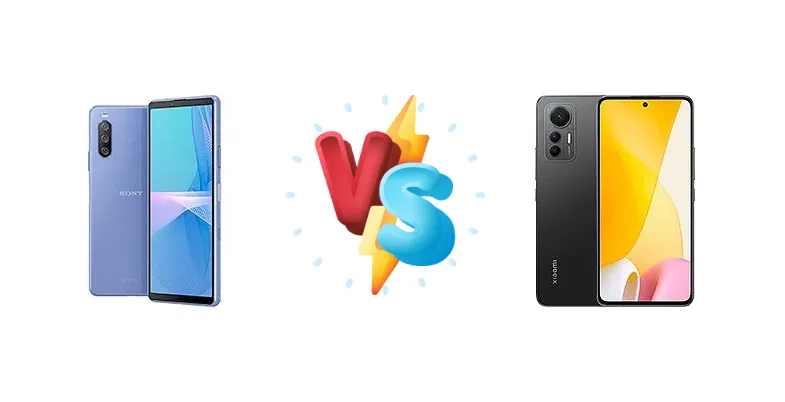
|
🏆 Quick Verdict
For the average user prioritizing longevity and a more conservative design, the Sony Xperia 10 III is the better choice, thanks to its significantly superior battery endurance. However, if rapid charging and a brighter, more vibrant display are paramount, the Xiaomi 12 Lite delivers a compelling experience.
| PHONES | ||
|---|---|---|
| Phone Names | Sony Xperia 10 III | Xiaomi 12 Lite |
| Network | ||
|---|---|---|
| 2G bands | GSM 850 / 900 / 1800 / 1900 | GSM 850 / 900 / 1800 / 1900 |
| 3G bands | HSDPA 850 / 900 / 1700(AWS) / 2100 | HSDPA 850 / 900 / 1700(AWS) / 1900 / 2100 |
| 4G bands | 1, 3, 4, 5, 7, 8, 20, 28, 38, 39, 40, 41 | 1, 2, 3, 4, 5, 7, 8, 12, 13, 17, 18, 19, 20, 26, 28, 32, 38, 40, 41, 42, 48, 66 |
| 5G bands | 1, 3, 7, 8, 28, 77, 78 SA/NSA | 1, 3, 5, 7, 8, 20, 28, 38, 40, 41, 66, 77, 78 SA/NSA |
| Speed | HSPA, LTE, 5G | HSPA, LTE, 5G |
| Technology | GSM / HSPA / LTE / 5G | GSM / HSPA / LTE / 5G |
| Launch | ||
|---|---|---|
| Announced | 2021, April 14 | 2022, July 09 |
| Status | Available. Released 2021, June 11 | Available. Released 2022, July 11 |
| Body | ||
|---|---|---|
| Build | Glass front (Gorilla Glass 6), glass back (Gorilla Glass 6), plastic frame | Glass front (Gorilla Glass 5), glass back, plastic frame |
| Dimensions | 154 x 68 x 8.3 mm (6.06 x 2.68 x 0.33 in) | 159.3 x 73.7 x 7.3 mm (6.27 x 2.90 x 0.29 in) |
| SIM | · Nano-SIM· Nano-SIM + Nano-SIM | Nano-SIM + Nano-SIM |
| Weight | 169 g (5.96 oz) | 173 g (6.10 oz) |
| IP65/IP68 dust/water resistant (up to 1.5m for 30 mins) | - | |
| Display | ||
|---|---|---|
| Protection | Corning Gorilla Glass 6 | Corning Gorilla Glass 5 |
| Resolution | 1080 x 2520 pixels, 21:9 ratio (~457 ppi density) | 1080 x 2400 pixels, 20:9 ratio (~402 ppi density) |
| Size | 6.0 inches, 84.1 cm2 (~80.3% screen-to-body ratio) | 6.55 inches, 103.6 cm2 (~88.2% screen-to-body ratio) |
| Type | OLED, 1B colors, HDR | AMOLED, 68B colors, 120Hz, Dolby Vision, HDR10+, 950 nits (peak) |
| Triluminos display | - | |
| Platform | ||
|---|---|---|
| CPU | Octa-core (2x2.0 GHz Kryo 560 Gold & 6x1.7 GHz Kryo 560 Silver) | Octa-core (1x2.4 GHz Cortex-A78 & 3x2.2 GHz Cortex-A78 & 4x1.9 GHz Cortex-A55) |
| Chipset | Qualcomm SM6350 Snapdragon 690 5G (8 nm) | Qualcomm SM7325 Snapdragon 778G 5G (6 nm) |
| GPU | Adreno 619 | Adreno 642L |
| OS | Android 11, upgradable to Android 13 | Android 12, upgradable to Android 14, HyperOS |
| Memory | ||
|---|---|---|
| Card slot | microSDXC (uses shared SIM slot) | No |
| Internal | 128GB 6GB RAM, 256GB 6GB RAM | 128GB 6GB RAM, 128GB 8GB RAM, 256GB 8GB RAM |
| UFS | UFS 2.2 | |
| Main Camera | ||
|---|---|---|
| Features | LED flash, HDR, panorama | Dual-LED dual-tone flash, HDR, panorama |
| Single | - | 32 MP, f/2.5, (wide), 1/2.8", 0.8µm, AF |
| Triple | 12 MP, f/1.8, 27mm (wide), 1/2.8", PDAF 8 MP, f/2.4, 54mm (telephoto), 1/4.0", PDAF, 2x optical zoom 8 MP, f/2.2, 120˚, 16mm (ultrawide), 1/4.0" | 108 MP, f/1.9, 26mm (wide), 1/1.52", 0.7µm, PDAF 8 MP, f/2.2, 120˚ (ultrawide), 1/4.0", 1.12µm 2 MP (macro) |
| Video | 4K@30fps, 1080p@30fps | 4K@30fps, 1080p@30/60/120fps; gyro-EIS |
| Selfie camera | ||
|---|---|---|
| Features | HDR | HDR, panorama |
| Single | 8 MP, f/2.0, 27mm (wide), 1/4.0" | 32 MP, f/2.5, (wide), 1/2.8", 0.8µm, AF |
| Video | 1080p@30fps | 1080p@30/60fps, 720p@120fps |
| Sound | ||
|---|---|---|
| 3.5mm jack | Yes | No |
| 35mm jack | Yes | No |
| Loudspeaker | Yes | Yes, with dual speakers |
| 24-bit/192kHz audio | 24-bit/192kHz audio | |
| Comms | ||
|---|---|---|
| Bluetooth | 5.1, A2DP, LE, aptX HD | 5.2, A2DP, LE, aptX HD, aptX Adaptive |
| Infrared port | - | Yes |
| NFC | Yes | Yes (market/region dependent) |
| Positioning | GPS, GLONASS, GALILEO, BDS, QZSS | GPS (L1), GLONASS (G1), BDS (B1I+B1c), GALILEO (E1), QZSS (L1) |
| Radio | FM radio (region dependent) | No |
| USB | USB Type-C 3.1, OTG, Display Port | USB Type-C 2.0, OTG |
| WLAN | Wi-Fi 802.11 a/b/g/n/ac, dual-band, Wi-Fi Direct | Wi-Fi 802.11 a/b/g/n/ac/6, dual-band, Wi-Fi Direct |
| Features | ||
|---|---|---|
| Sensors | Fingerprint (side-mounted), accelerometer, proximity, compass | Fingerprint (under display, optical), accelerometer, gyro, compass |
| - | Virtual proximity sensing | |
| Battery | ||
|---|---|---|
| Charging | 21W wired (unofficial rating), PD, QC | 67W wired, PD3.0, QC4, 50% in 13 min |
| Type | Li-Po 4500 mAh | Li-Po 4300 mAh |
| Misc | ||
|---|---|---|
| Colors | Black, White, Blue, Pink | Black, Lite Green, Lite Pink |
| Models | SO-52B, SOG04, XQ-BT52, A102SO | 2203129G |
| Price | About 300 EUR | € 119.80 / $ 269.00 / £ 121.15 |
| SAR | - | 1.09 W/kg (head) 0.73 W/kg (body) |
| SAR EU | - | 0.60 W/kg (head) 1.00 W/kg (body) |
| Tests | ||
|---|---|---|
| Battery life | Endurance rating 137h | Endurance rating 100h |
| Camera | Photo / Video | Photo / Video |
| Display | Contrast ratio: Infinite (nominal) | Contrast ratio: Infinite (nominal) |
| Loudspeaker | -28.2 LUFS (Average) | -25.2 LUFS (Very good) |
| Performance | AnTuTu: 286216 (v8) GeekBench: 1738 (v5.1) GFXBench: 12fps (ES 3.1 onscreen) | AnTuTu: 528905 (v9) GeekBench: 2943 (v5.1) GFXBench: 29fps (ES 3.1 onscreen) |
Sony Xperia 10 III
- Exceptional battery life (137h endurance)
- More understated and durable design
- Reliable and consistent software experience
- Dimmer display compared to the competition
- Older chipset with less processing power
Xiaomi 12 Lite
- Significantly faster 67W charging
- Brighter and more vibrant display
- More powerful Snapdragon 778G chipset
- Shorter battery life (100h endurance)
- Potentially more aggressive software customization
Display Comparison
The Xiaomi 12 Lite boasts a significantly brighter display, reaching 824 nits compared to the Xperia 10 III’s 559 nits. This difference translates to much better visibility outdoors under direct sunlight. Both displays share an 'Infinite' (nominal) contrast ratio, suggesting standard OLED performance. While neither phone features LTPO technology for variable refresh rates, the Xiaomi 12 Lite’s higher peak brightness makes it the clear winner for users who frequently consume content on the go. The Xperia 10 III’s dimmer screen may be preferable for those sensitive to bright displays, but it’s a compromise on overall usability.
Camera Comparison
Both phones offer photo and video capabilities, but detailed sensor information is lacking. However, the Xiaomi 12 Lite’s more modern chipset likely provides superior image signal processing (ISP) capabilities, leading to better dynamic range and noise reduction. Without specific sensor size data, it’s difficult to definitively declare a winner, but the Xiaomi 12 Lite’s processing power gives it an edge. It's important to note that both phones likely include standard features like HDR and night mode, but the quality of these features will be influenced by the chipset and software optimization.
Performance
The Xiaomi 12 Lite’s Qualcomm SM7325 Snapdragon 778G 5G (6nm) chipset represents a clear generational leap over the Xperia 10 III’s Snapdragon 690 (8nm). The 778G features a more modern CPU architecture – a Cortex-A78 prime core versus the Kryo 560 Gold in the Xperia – and a more efficient 6nm manufacturing process. This results in noticeably faster application loading times and smoother multitasking on the Xiaomi. While both phones are capable of handling everyday tasks, the 12 Lite will perform better in demanding applications and games. The 12 Lite’s CPU configuration (1x2.4 GHz Cortex-A78 & 3x2.2 GHz Cortex-A78 & 4x1.9 GHz Cortex-A55) is more balanced and powerful than the Xperia 10 III’s (2x2.0 GHz Kryo 560 Gold & 6x1.7 GHz Kryo 560 Silver).
Battery Life
The Sony Xperia 10 III’s endurance rating of 137 hours significantly surpasses the Xiaomi 12 Lite’s 100 hours. This difference is substantial and highlights the Xperia’s strength in battery life. However, the Xiaomi 12 Lite compensates with its 67W wired charging, capable of reaching 50% charge in just 13 minutes. The Xperia 10 III’s 21W charging is considerably slower. This creates a trade-off: the Xperia 10 III offers longer runtimes between charges, while the 12 Lite allows for quick top-ups when needed. The 6nm process of the Snapdragon 778G in the 12 Lite does contribute to better efficiency, but it isn't enough to overcome the Xperia 10 III's larger battery capacity and optimized power management.
Buying Guide
Buy the Sony Xperia 10 III if you need a phone that can reliably last through two full days of moderate use, value a more understated design, and prefer a consistent, if not cutting-edge, software experience. Buy the Xiaomi 12 Lite if you prioritize a sleek, modern aesthetic, demand fast 67W charging, and want a brighter display for media consumption, even if it means sacrificing some battery life.