
Sony Xperia 10 III vs Xperia 1 II: A Clash of Titans
| Phones Images | |||||
|---|---|---|---|---|---|
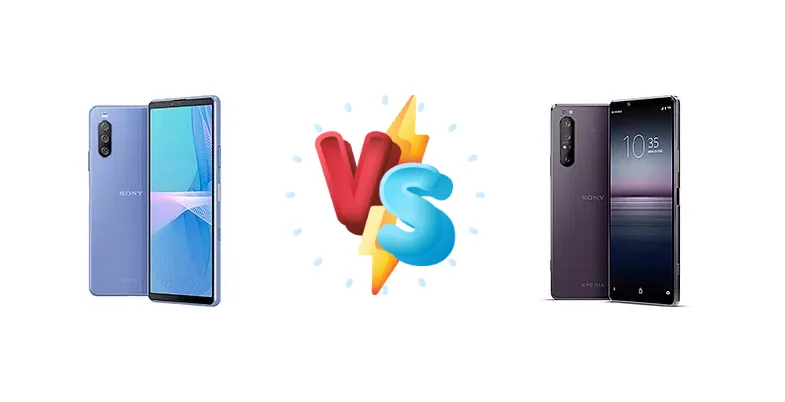
|
🏆 Quick Verdict
The Xperia 1 II is the clear winner for performance and camera quality thanks to its Snapdragon 865 and advanced features. However, the Xperia 10 III offers exceptional battery life and a more budget-friendly price point, making it a solid choice for those prioritizing longevity and value.
| PHONES | ||
|---|---|---|
| Phone Names | Sony Xperia 10 III | Sony Xperia 1 II |
| Network | ||
|---|---|---|
| 2G bands | GSM 850 / 900 / 1800 / 1900 | GSM 850 / 900 / 1800 / 1900 |
| 3G bands | HSDPA 850 / 900 / 1700(AWS) / 2100 | HSDPA 800 / 850 / 900 / 1700(AWS) / 1900 / 2100 |
| 4G bands | 1, 3, 4, 5, 7, 8, 20, 28, 38, 39, 40, 41 | 1, 2, 3, 4, 5, 7, 8, 12, 13, 17, 19, 20, 25, 26, 28, 29, 32, 34, 38, 39, 40, 41, 46, 66 |
| 5G bands | 1, 3, 7, 8, 28, 77, 78 SA/NSA | 1, 3, 28, 77, 78 NSA/Sub6 |
| Speed | HSPA, LTE, 5G | HSPA 42.2/5.76 Mbps, LTE (6CA) Cat19 1600/150 Mbps, 5G (2+ Gbps DL) |
| Technology | GSM / HSPA / LTE / 5G | GSM / HSPA / LTE / 5G |
| Launch | ||
|---|---|---|
| Announced | 2021, April 14 | 2020, February 24 |
| Status | Available. Released 2021, June 11 | Available. Released 2020, May 22 |
| Body | ||
|---|---|---|
| Build | Glass front (Gorilla Glass 6), glass back (Gorilla Glass 6), plastic frame | Glass front (Gorilla Glass 6), glass back (Gorilla Glass 6), aluminum frame |
| Dimensions | 154 x 68 x 8.3 mm (6.06 x 2.68 x 0.33 in) | 165.1 x 71.1 x 7.6 mm (6.5 x 2.80 x 0.30 in) |
| SIM | · Nano-SIM· Nano-SIM + Nano-SIM | Nano-SIM + Nano-SIM |
| Weight | 169 g (5.96 oz) | 181.4 g (6.38 oz) |
| IP65/IP68 dust/water resistant (up to 1.5m for 30 mins) | IP65/IP68 dust/water resistant (up to 1.5m for 30 mins) | |
| Display | ||
|---|---|---|
| Protection | Corning Gorilla Glass 6 | Corning Gorilla Glass 6 |
| Resolution | 1080 x 2520 pixels, 21:9 ratio (~457 ppi density) | 1644 x 3840 pixels, 21:9 ratio (~643 ppi density) |
| Size | 6.0 inches, 84.1 cm2 (~80.3% screen-to-body ratio) | 6.5 inches, 98.6 cm2 (~84.0% screen-to-body ratio) |
| Type | OLED, 1B colors, HDR | OLED, 1B colors, HDR BT.2020 |
| Triluminos display | Runs at 1096 x 2560 pixels except for select use cases | |
| Platform | ||
|---|---|---|
| CPU | Octa-core (2x2.0 GHz Kryo 560 Gold & 6x1.7 GHz Kryo 560 Silver) | Octa-core (1x2.84 GHz Cortex-A77 & 3x2.42 GHz Cortex-A77 & 4x1.80 GHz Cortex-A55) |
| Chipset | Qualcomm SM6350 Snapdragon 690 5G (8 nm) | Qualcomm SM8250 Snapdragon 865 5G (7 nm+) |
| GPU | Adreno 619 | Adreno 650 |
| OS | Android 11, upgradable to Android 13 | Android 10, upgradable to Android 12 |
| Memory | ||
|---|---|---|
| Card slot | microSDXC (uses shared SIM slot) | microSDXC (uses shared SIM slot) |
| Internal | 128GB 6GB RAM, 256GB 6GB RAM | 256GB 8GB RAM, 256GB 12GB RAM |
| UFS | UFS 3.0 | |
| Main Camera | ||
|---|---|---|
| Features | LED flash, HDR, panorama | Zeiss optics, color spectrum sensor, LED flash, panorama, HDR, eye tracking |
| Triple | 12 MP, f/1.8, 27mm (wide), 1/2.8", PDAF 8 MP, f/2.4, 54mm (telephoto), 1/4.0", PDAF, 2x optical zoom 8 MP, f/2.2, 120˚, 16mm (ultrawide), 1/4.0" | 12 MP, f/1.7, 24mm (wide), 1/1.7", 1.8µm, dual pixel PDAF, OIS 12 MP, f/2.4, 70mm (telephoto), 1/3.4", 1.0µm, PDAF, 3x optical zoom, OIS 12 MP, f/2.2, 124˚, 16mm (ultrawide), 1/2.55", dual pixel PDAF 0.3 MP, TOF 3D, (depth) |
| Video | 4K@30fps, 1080p@30fps | 4K@24/25/30/60/120fps HDR, 1080p@30/60/120fps; 5-axis gyro-EIS, OIS |
| Selfie camera | ||
|---|---|---|
| Features | HDR | HDR |
| Single | 8 MP, f/2.0, 27mm (wide), 1/4.0" | 8 MP, f/2.0, 24mm (wide), 1/4.0", 1.12µm |
| Video | 1080p@30fps | 1080p@30fps (5-axis gyro-EIS) |
| Sound | ||
|---|---|---|
| 3.5mm jack | Yes | Yes |
| 35mm jack | Yes | Yes |
| Loudspeaker | Yes | Yes, with stereo speakers |
| 24-bit/192kHz audio | 24-bit/192kHz audio Dynamic vibration system | |
| Comms | ||
|---|---|---|
| Bluetooth | 5.1, A2DP, LE, aptX HD | 5.1, A2DP, aptX HD, LE |
| NFC | Yes | Yes |
| Positioning | GPS, GLONASS, GALILEO, BDS, QZSS | GPS, GLONASS, BDS, GALILEO |
| Radio | FM radio (region dependent) | No |
| USB | USB Type-C 3.1, OTG, Display Port | USB Type-C 3.1, OTG |
| WLAN | Wi-Fi 802.11 a/b/g/n/ac, dual-band, Wi-Fi Direct | Wi-Fi 802.11 a/b/g/n/ac/6, dual-band, Wi-Fi Direct, DLNA |
| Features | ||
|---|---|---|
| Sensors | Fingerprint (side-mounted), accelerometer, proximity, compass | Fingerprint (side-mounted), accelerometer, gyro, proximity, barometer, compass |
| Battery | ||
|---|---|---|
| Charging | 21W wired (unofficial rating), PD, QC | 21W wired, PD 11W wireless |
| Type | Li-Po 4500 mAh | Li-Po 4000 mAh |
| Misc | ||
|---|---|---|
| Colors | Black, White, Blue, Pink | Black, Purple, Mirror Lake Green |
| Models | SO-52B, SOG04, XQ-BT52, A102SO | XQ-AT51, XQ-AT52, SOG01, XQ-AT42 |
| Price | About 300 EUR | About 700 EUR |
| Tests | ||
|---|---|---|
| Battery life | Endurance rating 137h | Endurance rating 83h |
| Camera | Photo / Video | Photo / Video |
| Display | Contrast ratio: Infinite (nominal) | Contrast ratio: Infinite (nominal) |
| Loudspeaker | -28.2 LUFS (Average) | -27.3 LUFS (Good) |
| Performance | AnTuTu: 286216 (v8) GeekBench: 1738 (v5.1) GFXBench: 12fps (ES 3.1 onscreen) | AnTuTu: 534701 (v8) GeekBench: 3295 (v5.1) GFXBench: 39fps (ES 3.1 onscreen) |
Sony Xperia 10 III
- Exceptional battery life
- Affordable price
- Decent display
- 5G connectivity
- Lower performance
- Less advanced camera
- Plastic build
Sony Xperia 1 II
- Flagship performance
- Excellent camera system with variable telephoto
- Stunning 120Hz display
- Wireless charging
- Higher price
- Shorter battery life
- Larger and heavier design
Display Comparison
Both phones boast excellent contrast ratios (Infinite, nominally). The Xperia 1 II edges out the 10 III with a slightly higher peak brightness of 611 nits versus 559 nits, resulting in a marginally more vibrant viewing experience, especially outdoors. Both feature OLED panels, offering rich colors and deep blacks. The Xperia 1 II also has a 120Hz refresh rate, providing smoother scrolling and animations.
Camera Comparison
The Xperia 1 II's camera system is a major upgrade. It features a variable telephoto lens, offering greater flexibility in framing shots. While both phones offer Photo/Video capabilities, the 1 II's larger sensor and more advanced processing algorithms result in superior image quality, especially in low light. The 1 II also supports 4K 120fps video recording, a feature absent in the 10 III.
Performance
The Xperia 1 II's Snapdragon 865 chipset with its Cortex-A77 cores provides a significant performance advantage over the Xperia 10 III's Snapdragon 690. Expect noticeably faster app loading, smoother multitasking, and better gaming performance on the 1 II. The 10 III is adequate for everyday tasks but will struggle with demanding games or applications.
Battery Life
The Xperia 10 III shines in this category. Its endurance rating of 137h significantly surpasses the Xperia 1 II's 83h. This translates to considerably longer battery life for the 10 III, making it a champion for users who need a phone that can last for days on a single charge.
Buying Guide
The Sony Xperia 10 III is ideal for users seeking a reliable, long-lasting phone with a decent display and camera, without breaking the bank. It's perfect for everyday use and those who value battery endurance. The Sony Xperia 1 II is for photography enthusiasts and power users who demand top-tier performance, a stunning display, and a professional-grade camera system, and are willing to pay a premium.