
Sony Xperia 10 III vs Xperia 1: A Detailed Comparison
| Phones Images | |||||
|---|---|---|---|---|---|
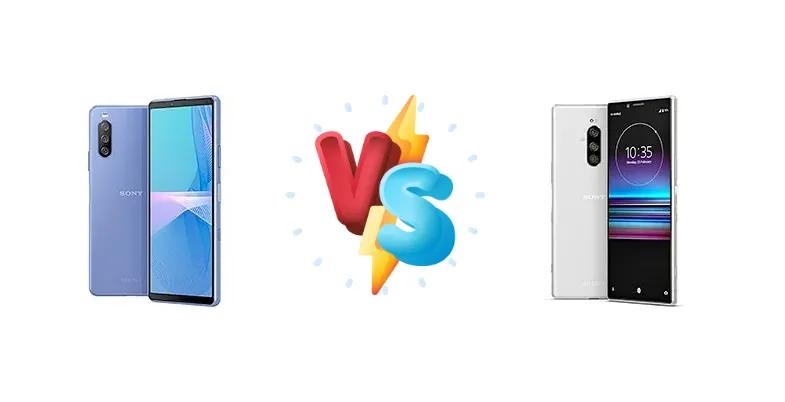
|
🏆 Quick Verdict
The Xperia 1 offers significantly better performance and a more premium experience thanks to its Snapdragon 855 chipset. However, the Xperia 10 III boasts exceptional battery life and a more affordable price point. Ultimately, the Xperia 1 is the winner for power users, while the 10 III is a great value option.
| PHONES | ||
|---|---|---|
| Phone Names | Sony Xperia 10 III | Sony Xperia 1 |
| Network | ||
|---|---|---|
| 2G bands | GSM 850 / 900 / 1800 / 1900 | GSM 850 / 900 / 1800 / 1900 |
| 3G bands | HSDPA 850 / 900 / 1700(AWS) / 2100 | HSDPA 800 / 850 / 900 / 1700(AWS) / 1900 / 2100 |
| 4G bands | 1, 3, 4, 5, 7, 8, 20, 28, 38, 39, 40, 41 | 1, 2, 3, 4, 5, 7, 8, 12, 13, 17, 19, 20, 26, 28, 29, 32, 38, 39, 40, 41, 46, 66 |
| 5G bands | 1, 3, 7, 8, 28, 77, 78 SA/NSA | - |
| Speed | HSPA, LTE, 5G | HSPA 42.2/5.76 Mbps, LTE Cat19 1600/150 Mbps |
| Technology | GSM / HSPA / LTE / 5G | GSM / HSPA / LTE |
| Launch | ||
|---|---|---|
| Announced | 2021, April 14 | 2019, February 25. Released 2019, May 30 |
| Status | Available. Released 2021, June 11 | Discontinued |
| Body | ||
|---|---|---|
| Build | Glass front (Gorilla Glass 6), glass back (Gorilla Glass 6), plastic frame | Glass front (Gorilla Glass 6), glass back (Gorilla Glass 6), aluminum frame |
| Dimensions | 154 x 68 x 8.3 mm (6.06 x 2.68 x 0.33 in) | 167 x 72 x 8.2 mm (6.57 x 2.83 x 0.32 in) |
| SIM | · Nano-SIM· Nano-SIM + Nano-SIM | · Nano-SIM· Nano-SIM + Nano-SIM |
| Weight | 169 g (5.96 oz) | 178 g (6.28 oz) |
| IP65/IP68 dust/water resistant (up to 1.5m for 30 mins) | IP65/IP68 dust/water resistant (up to 1.5m for 30 mins) | |
| Display | ||
|---|---|---|
| Protection | Corning Gorilla Glass 6 | Corning Gorilla Glass 6 |
| Resolution | 1080 x 2520 pixels, 21:9 ratio (~457 ppi density) | 1644 x 3840 pixels, 21:9 ratio (~643 ppi density) |
| Size | 6.0 inches, 84.1 cm2 (~80.3% screen-to-body ratio) | 6.5 inches, 98.6 cm2 (~82.0% screen-to-body ratio) |
| Type | OLED, 1B colors, HDR | OLED, HDR BT.2020 |
| Triluminos display | Runs at 1096 x 2560 pixels except for select use cases Triluminos display X-Reality Engine | |
| Platform | ||
|---|---|---|
| CPU | Octa-core (2x2.0 GHz Kryo 560 Gold & 6x1.7 GHz Kryo 560 Silver) | Octa-core (1x2.84 GHz Kryo 485 & 3x2.42 GHz Kryo 485 & 4x1.78 GHz Kryo 485) |
| Chipset | Qualcomm SM6350 Snapdragon 690 5G (8 nm) | Qualcomm SM8150 Snapdragon 855 (7 nm) |
| GPU | Adreno 619 | Adreno 640 |
| OS | Android 11, upgradable to Android 13 | Android 9.0 (Pie), upgradable to Android 11 |
| Memory | ||
|---|---|---|
| Card slot | microSDXC (uses shared SIM slot) | microSDXC (uses shared SIM slot) - dual SIM model only |
| Internal | 128GB 6GB RAM, 256GB 6GB RAM | 64GB 6GB RAM, 128GB 6GB RAM |
| UFS | UFS 2.1 | |
| Main Camera | ||
|---|---|---|
| Features | LED flash, HDR, panorama | Color spectrum sensor, LED flash, panorama, HDR, eye tracking |
| Triple | 12 MP, f/1.8, 27mm (wide), 1/2.8", PDAF 8 MP, f/2.4, 54mm (telephoto), 1/4.0", PDAF, 2x optical zoom 8 MP, f/2.2, 120˚, 16mm (ultrawide), 1/4.0" | 12 MP, f/1.6, 26mm (wide), 1/2.55", 1.4µm, predictive dual pixel PDAF, 5-axis OIS 12 MP, f/2.4, 52mm (telephoto), 1/3.4", 1.0µm, predictive PDAF, 2x optical zoom, 5-axis OIS 12 MP, f/2.4, 16mm (ultrawide), 1/3.4", 1.0µm |
| Video | 4K@30fps, 1080p@30fps | 4K@24/25/30fps HDR, 1080p@60fps, 1080p@30fps (5-axis gyro-EIS), 1080p@960fps |
| Selfie camera | ||
|---|---|---|
| Features | HDR | HDR |
| Single | 8 MP, f/2.0, 27mm (wide), 1/4.0" | 8 MP, f/2.0, 24mm (wide), 1/4.0", 1.12µm |
| Video | 1080p@30fps | 1080p@30fps (5-axis gyro-EIS) |
| Sound | ||
|---|---|---|
| 3.5mm jack | Yes | No |
| 35mm jack | Yes | No |
| Loudspeaker | Yes | Yes, with stereo speakers |
| 24-bit/192kHz audio | 24-bit/192kHz audio Dynamic vibration system | |
| Comms | ||
|---|---|---|
| Bluetooth | 5.1, A2DP, LE, aptX HD | 5.0, A2DP, aptX HD, LE |
| NFC | Yes | Yes |
| Positioning | GPS, GLONASS, GALILEO, BDS, QZSS | GPS, GLONASS, BDS, GALILEO |
| Radio | FM radio (region dependent) | No |
| USB | USB Type-C 3.1, OTG, Display Port | USB Type-C 3.1, OTG |
| WLAN | Wi-Fi 802.11 a/b/g/n/ac, dual-band, Wi-Fi Direct | Wi-Fi 802.11 a/b/g/n/ac, dual-band, Wi-Fi Direct, DLNA |
| Features | ||
|---|---|---|
| Sensors | Fingerprint (side-mounted), accelerometer, proximity, compass | Fingerprint (side-mounted), accelerometer, gyro, proximity, barometer, compass |
| Battery | ||
|---|---|---|
| Charging | 21W wired (unofficial rating), PD, QC | 18W wired, PD2.0 |
| Type | Li-Po 4500 mAh | Li-Ion 3330 mAh, non-removable |
| Misc | ||
|---|---|---|
| Colors | Black, White, Blue, Pink | Black, Gray, Purple, White |
| Models | SO-52B, SOG04, XQ-BT52, A102SO | J8110, J8170, J9110, J9150, SOV40, SO-03L |
| Price | About 300 EUR | About 500 EUR |
| Tests | ||
|---|---|---|
| Audio quality | - | Noise -93.6dB / Crosstalk -85.2dB |
| Battery life | Endurance rating 137h | Endurance rating 79h |
| Camera | Photo / Video | Photo / Video |
| Display | Contrast ratio: Infinite (nominal) | Contrast ratio: Infinite (nominal) |
| Loudspeaker | -28.2 LUFS (Average) | -26.7 LUFS (Good) |
| Performance | AnTuTu: 286216 (v8) GeekBench: 1738 (v5.1) GFXBench: 12fps (ES 3.1 onscreen) | AnTuTu: 356734 (v7), 418206 (v8) GeekBench: 10985 (v4.4), 2753 (v5.1) GFXBench: 33fps (ES 3.1 onscreen) |
Sony Xperia 10 III
- Exceptional battery life
- Large display
- Affordable price
- 5G Connectivity
- Lower performance
- Less premium build
- Camera not as advanced
Sony Xperia 1
- Flagship performance
- Brighter display
- Superior camera
- Premium design
- Shorter battery life
- Higher price
- Larger size
Display Comparison
The Xperia 1 takes the lead in display quality. While both offer 'infinite' contrast ratios (likely OLED), the Xperia 1's measured 665 nits brightness is noticeably higher than the 10 III's 559 nits, resulting in better outdoor visibility. Both feature excellent color accuracy typical of Sony devices, but the Xperia 1's higher resolution and potentially better panel technology contribute to a sharper, more vibrant image.
Camera Comparison
Both phones offer capable cameras, but the Xperia 1 generally produces superior image quality. While specific camera specs aren't provided, the Xperia 1's flagship chipset typically allows for better image processing and features. Expect better low-light performance and more detail in photos from the Xperia 1. Both offer Photo/Video capabilities.
Performance
Performance is where the Xperia 1 truly shines. Its Snapdragon 855 chipset is a significant upgrade over the 10 III's Snapdragon 690 5G. Expect smoother multitasking, faster app loading times, and a much better gaming experience on the Xperia 1. The 10 III is perfectly adequate for everyday tasks, but it will struggle with demanding games or heavy workloads.
Battery Life
The Xperia 10 III is the clear winner in battery life. Its endurance rating of 137 hours significantly surpasses the Xperia 1's 79 hours. This translates to considerably longer usage between charges, making the 10 III a better choice for those who prioritize longevity.
Buying Guide
The Sony Xperia 10 III is ideal for users prioritizing long battery life, a large display, and a budget-friendly price. It's a solid choice for everyday use and media consumption. The Sony Xperia 1 is best suited for photography enthusiasts, gamers, and those who demand top-tier performance and a premium build quality, willing to pay a higher price.