
Sony Xperia 10 II vs. Apple iPhone SE (2020): A Deep Dive into Battery, Performance, and Value
| Phones Images | |||||
|---|---|---|---|---|---|
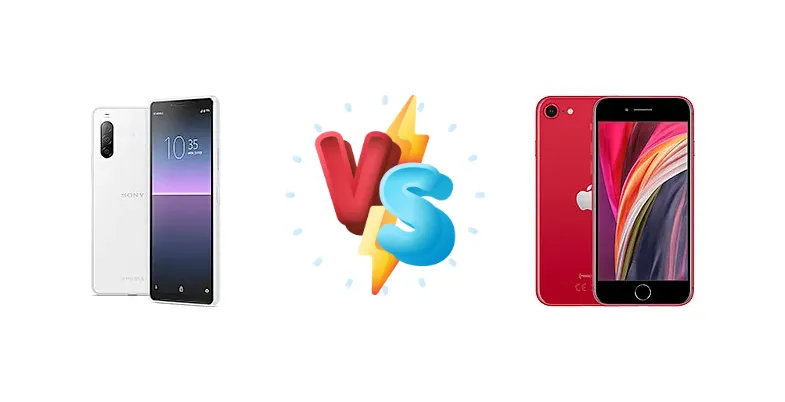
|
🏆 Quick Verdict
For the average user prioritizing all-day battery life and a more versatile feature set, the Sony Xperia 10 II is the better choice. However, if raw processing power and a streamlined iOS experience are paramount, the Apple iPhone SE (2020) remains a compelling option.
| PHONES | ||
|---|---|---|
| Phone Names | Sony Xperia 10 II | Apple iPhone SE (2020) |
| Network | ||
|---|---|---|
| 2G bands | GSM 850 / 900 / 1800 / 1900 | GSM 850 / 900 / 1800 / 1900 |
| 3G bands | HSDPA 850 / 900 / 1700(AWS) / 2100 | HSDPA 850 / 900 / 1700(AWS) / 1900 / 2100 |
| 4G bands | 1, 3, 4, 5, 7, 8, 12, 20, 28, 38, 39, 40, 41 | 1, 2, 3, 4, 5, 7, 8, 11, 12, 13, 17, 18, 19, 20, 21, 25, 26, 28, 29, 30, 32, 34, 38, 39, 40, 41, 42, 46, 48, 66 - A2296 |
| Speed | HSPA 42.2/5.76 Mbps, LTE Cat11 600/75 Mbps | HSPA 42.2/5.76 Mbps, LTE (5CA) Cat16 1024/150 Mbps, EV-DO Rev.A 3.1 Mbps |
| Technology | GSM / HSPA / LTE | GSM / CDMA / HSPA / EVDO / LTE |
| - | 1, 2, 3, 4, 5, 7, 8, 12, 13, 14, 17, 18, 19, 20, 25, 26, 29, 30, 34, 38, 39, 40, 41, 42, 46, 48, 66, 71 - A2275, A2298 | |
| Launch | ||
|---|---|---|
| Announced | 2020, February 24 | 2020, April 15 |
| Status | Available. Released 2020, May 05 | Available. Released 2020, April 24 |
| Body | ||
|---|---|---|
| Build | Glass front (Gorilla Glass 6), glass back (Gorilla Glass 6), plastic frame | Glass front, glass back, aluminum frame |
| Dimensions | 157 x 69 x 8.2 mm (6.18 x 2.72 x 0.32 in) | 138.4 x 67.3 x 7.3 mm (5.45 x 2.65 x 0.29 in) |
| SIM | · Nano-SIM· Nano-SIM + Nano-SIM | Nano-SIM + eSIM |
| Weight | 151 g (5.33 oz) | 148 g (5.22 oz) |
| IP65/IP68 dust/water resistant (up to 1.5m for 30 mins) | IP67 dust/water resistant (up to 1m for 30 min) Apple Pay (Visa, MasterCard, AMEX certified) | |
| Display | ||
|---|---|---|
| Protection | Corning Gorilla Glass 6 | Ion-strengthened glass |
| Resolution | 1080 x 2520 pixels, 21:9 ratio (~457 ppi density) | 750 x 1334 pixels, 16:9 ratio (~326 ppi density) |
| Size | 6.0 inches, 84.1 cm2 (~77.6% screen-to-body ratio) | 4.7 inches, 60.9 cm2 (~65.4% screen-to-body ratio) |
| Type | OLED | Retina IPS LCD, 625 nits (typ) |
| Platform | ||
|---|---|---|
| CPU | Octa-core (4x2.0 GHz Kryo 260 Gold & 4x1.8 GHz Kryo 260 Silver) | Hexa-core (2x2.65 GHz Lightning + 4x1.8 GHz Thunder) |
| Chipset | Qualcomm SDM665 Snapdragon 665 (11 nm) | Apple A13 Bionic (7 nm+) |
| GPU | Adreno 610 | Apple GPU (4-core graphics) |
| OS | Android 10, upgradable to Android 12 | iOS 13, upgradable to iOS 26.1 |
| Memory | ||
|---|---|---|
| Card slot | microSDXC (uses shared SIM slot) | No |
| Internal | 64GB 4GB RAM, 128GB 4GB RAM | 64GB 3GB RAM, 128GB 3GB RAM, 256GB 3GB RAM |
| - | NVMe | |
| Main Camera | ||
|---|---|---|
| Features | LED flash, HDR, panorama | Quad-LED dual-tone flash, HDR, panorama |
| Single | - | 12 MP, f/1.8 (wide), PDAF, OIS |
| Triple | 12 MP, f/2.0, 26mm (wide), 1/2.8", PDAF 8 MP, f/2.4, 52mm (telephoto), 1/4.0", PDAF, 2x optical zoom 8 MP, f/2.2, 120˚, 16mm (ultrawide), 1/4.0" | - |
| Video | 4K@30fps, 1080p@30fps | 4K@24/30/60fps, 1080p@30/60/120/240fps, HDR, OIS, stereo sound rec. |
| Selfie camera | ||
|---|---|---|
| Features | HDR | HDR |
| Single | 8 MP, f/2.0, 24mm (wide), 1/4.0" | 7 MP, f/2.2 |
| Video | 1080p@30fps | 1080p@30fps; gyro-EIS |
| Sound | ||
|---|---|---|
| 3.5mm jack | Yes | No |
| 35mm jack | Yes | No |
| Loudspeaker | Yes | Yes, with stereo speakers |
| 24-bit/192kHz audio | - | |
| Comms | ||
|---|---|---|
| Bluetooth | 5.0, A2DP, LE, aptX HD | 5.0, A2DP, LE |
| NFC | Yes | Yes |
| Positioning | GPS, GLONASS | GPS, GLONASS |
| Radio | No | No |
| USB | USB Type-C 2.0, OTG | Lightning, USB 2.0 |
| WLAN | Wi-Fi 802.11 a/b/g/n/ac, dual-band, Wi-Fi Direct | Wi-Fi 802.11 a/b/g/n/ac/6, dual-band, hotspot |
| Features | ||
|---|---|---|
| Sensors | Fingerprint (side-mounted), accelerometer, proximity, compass | Fingerprint (front-mounted), accelerometer, proximity, gyro, compass, barometer |
| Battery | ||
|---|---|---|
| Charging | 18W wired, PD, QC3 | 18W wired, 50% in 30 min 7.5W wireless (Qi) |
| Type | Li-Po 3600 mAh | Li-Ion 1821 mAh (6.91 Wh) |
| Misc | ||
|---|---|---|
| Colors | Black, White, Mint Green, Berry Blue | Black, White, Red |
| Models | XQ-AU51, XQ-AU52, SO-41A | A2275, A2296, A2298, iPhone12,8 |
| Price | About 700 EUR | $ 120.00 / C$ 165.75 / £ 99.95 / € 130.89 |
| SAR | - | 1.17 W/kg (head) 1.16 W/kg (body) |
| SAR EU | - | 0.98 W/kg (head) 0.99 W/kg (body) |
| Tests | ||
|---|---|---|
| Battery life | Endurance rating 92h | Endurance rating 59h |
| Camera | Photo / Video | Photo / Video |
| Display | Contrast ratio: Infinite (nominal) | Contrast ratio: 1544:1 (nominal) |
| Loudspeaker | -28.8 LUFS (Average) | -24.1 LUFS (Very good) |
| Performance | AnTuTu: 196545 (v8) GeekBench: 5679 (v4.4), 1413 (v5.1) GFXBench: 5.6fps (ES 3.1 onscreen) | AnTuTu: 462253 (v8) GeekBench: 3237 (v5.1) |
Sony Xperia 10 II
- Exceptional battery life (92h endurance)
- More versatile Android operating system
- Potentially larger storage options (market dependent)
- Significantly slower processor than iPhone SE
- Lower display brightness and contrast
- No wireless charging
Apple iPhone SE (2020)
- Blazing-fast performance with A13 Bionic
- Brighter and higher contrast display
- Wireless charging and faster initial charge time
- Poor battery life (59h endurance)
- Smaller display size
- iOS ecosystem lock-in
Display Comparison
The iPhone SE (2020) boasts a significantly brighter display at 670 nits compared to the Xperia 10 II’s 520 nits, making it more legible outdoors under direct sunlight. While the Xperia 10 II lacks a specified contrast ratio, Apple’s display delivers a strong 1544:1 contrast ratio, resulting in richer blacks and more vibrant colors. Both displays utilize LCD technology, but the iPhone SE’s higher brightness and contrast provide a more visually impactful experience, despite the Xperia 10 II having a larger screen size.
Camera Comparison
Both devices offer photo and video capabilities, but the specifics are limited in the provided data. Given Sony’s expertise in camera technology, the Xperia 10 II likely emphasizes image processing geared towards natural colors and detail. The iPhone SE (2020), leveraging Apple’s computational photography, likely prioritizes ease of use and consistent results. Without sensor size or aperture information, it’s difficult to definitively declare a winner, but the A13’s image signal processor (ISP) provides a significant advantage in post-processing capabilities. The lack of detail regarding camera features suggests neither phone is a standout in this category.
Performance
The core difference lies in the chipsets. The Apple A13 Bionic (7nm+) in the iPhone SE (2020) is a generational leap ahead of the Qualcomm Snapdragon 665 (11nm) found in the Xperia 10 II. The A13’s hexa-core architecture, with its 2x2.65 GHz Lightning cores, delivers substantially faster CPU and GPU performance. While the Xperia 10 II’s octa-core CPU offers multi-tasking capabilities, it cannot match the single-core performance of the A13. This translates to quicker app launches, smoother gaming, and faster processing of demanding tasks on the iPhone SE. The 7nm process node of the A13 also contributes to better thermal efficiency, minimizing throttling during sustained workloads.
Battery Life
Battery life is where the Xperia 10 II truly shines. Its endurance rating of 92 hours dwarfs the iPhone SE (2020)’s 59 hours. This substantial difference is due to a combination of factors, including a larger battery capacity (not specified in the data) and the more power-efficient Snapdragon 665 chipset. While both phones support 18W wired charging, the iPhone SE (2020) boasts a 50% charge in 30 minutes and adds 7.5W wireless charging (Qi), a feature absent on the Xperia 10 II. However, the Xperia 10 II’s superior endurance mitigates the need for frequent charging.
Buying Guide
Buy the Sony Xperia 10 II if you need a phone that can reliably last through two full days of moderate use, appreciate a larger display for media consumption, and prefer the flexibility of Android. Buy the Apple iPhone SE (2020) if you prioritize a snappy user experience, seamless integration with the Apple ecosystem, and demand the highest possible performance for gaming and demanding applications within a compact form factor.