
Sony Xperia 1 vs Xperia 5 II: The Ultimate Showdown
| Phones Images | |||||
|---|---|---|---|---|---|
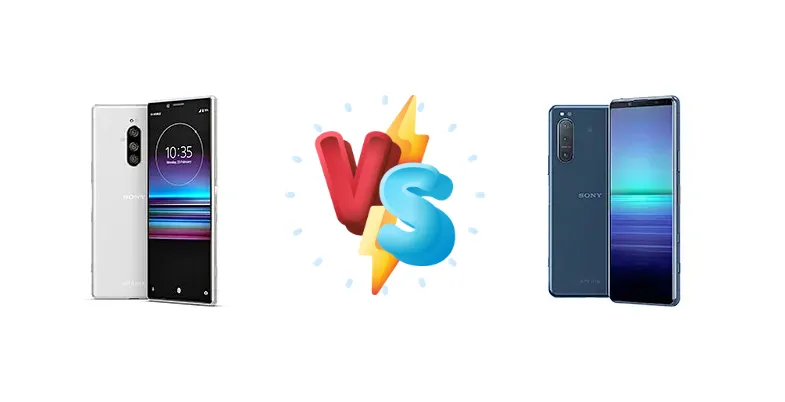
|
🏆 Quick Verdict
The Xperia 5 II emerges as the overall winner thanks to its newer Snapdragon 865 chipset, faster charging, and significantly improved battery life. While the Xperia 1 boasts a larger, brighter display, the 5 II's refinements make it the more compelling package for most users.
| PHONES | ||
|---|---|---|
| Phone Names | Sony Xperia 1 | Sony Xperia 5 II |
| Network | ||
|---|---|---|
| 2G bands | GSM 850 / 900 / 1800 / 1900 | GSM 850 / 900 / 1800 / 1900 |
| 3G bands | HSDPA 800 / 850 / 900 / 1700(AWS) / 1900 / 2100 | HSDPA 800 / 850 / 900 / 1700(AWS) / 1900 / 2100 |
| 4G bands | 1, 2, 3, 4, 5, 7, 8, 12, 13, 17, 19, 20, 26, 28, 29, 32, 38, 39, 40, 41, 46, 66 | 1, 2, 3, 4, 5, 7, 8, 12, 13, 17, 19, 20, 25, 26, 28, 29, 32, 34, 38, 39, 40, 41, 46, 48, 66 |
| 5G bands | - | 1, 3, 8, 28, 77, 78 SA/NSA |
| Speed | HSPA 42.2/5.76 Mbps, LTE Cat19 1600/150 Mbps | HSPA 42.2/5.76 Mbps, LTE Cat18 1200/150 Mbps, 5G |
| Technology | GSM / HSPA / LTE | GSM / HSPA / LTE / 5G |
| Launch | ||
|---|---|---|
| Announced | 2019, February 25. Released 2019, May 30 | 2020, September 17 |
| Status | Discontinued | Available. Released 2020, October 12 |
| Body | ||
|---|---|---|
| Build | Glass front (Gorilla Glass 6), glass back (Gorilla Glass 6), aluminum frame | Glass front (Gorilla Glass 6), glass back (Gorilla Glass 6), aluminum frame |
| Dimensions | 167 x 72 x 8.2 mm (6.57 x 2.83 x 0.32 in) | 158 x 68 x 8 mm (6.22 x 2.68 x 0.31 in) |
| SIM | · Nano-SIM· Nano-SIM + Nano-SIM | · Nano-SIM· Nano-SIM + Nano-SIM |
| Weight | 178 g (6.28 oz) | 163 g (5.75 oz) |
| IP65/IP68 dust/water resistant (up to 1.5m for 30 mins) | IP65/IP68 dust/water resistant (up to 1.5m for 30 mins) | |
| Display | ||
|---|---|---|
| Protection | Corning Gorilla Glass 6 | Corning Gorilla Glass 6 |
| Resolution | 1644 x 3840 pixels, 21:9 ratio (~643 ppi density) | 1080 x 2520 pixels, 21:9 ratio (~449 ppi density) |
| Size | 6.5 inches, 98.6 cm2 (~82.0% screen-to-body ratio) | 6.1 inches, 86.9 cm2 (~80.9% screen-to-body ratio) |
| Type | OLED, HDR BT.2020 | OLED, 120Hz, HDR BT.2020 |
| Runs at 1096 x 2560 pixels except for select use cases Triluminos display X-Reality Engine | Triluminos display X-Reality Engine | |
| Platform | ||
|---|---|---|
| CPU | Octa-core (1x2.84 GHz Kryo 485 & 3x2.42 GHz Kryo 485 & 4x1.78 GHz Kryo 485) | Octa-core (1x2.84 GHz Cortex-A77 & 3x2.42 GHz Cortex-A77 & 4x1.80 GHz Cortex-A55) |
| Chipset | Qualcomm SM8150 Snapdragon 855 (7 nm) | Qualcomm SM8250 Snapdragon 865 5G (7 nm+) |
| GPU | Adreno 640 | Adreno 650 |
| OS | Android 9.0 (Pie), upgradable to Android 11 | Android 10, upgradable to Android 12 |
| Memory | ||
|---|---|---|
| Card slot | microSDXC (uses shared SIM slot) - dual SIM model only | microSDXC (uses shared SIM slot) |
| Internal | 64GB 6GB RAM, 128GB 6GB RAM | 128GB 8GB RAM, 256GB 8GB RAM |
| UFS 2.1 | UFS 3.0 | |
| Main Camera | ||
|---|---|---|
| Features | Color spectrum sensor, LED flash, panorama, HDR, eye tracking | Zeiss optics, color spectrum sensor, LED flash, panorama, HDR, eye tracking |
| Triple | 12 MP, f/1.6, 26mm (wide), 1/2.55", 1.4µm, predictive dual pixel PDAF, 5-axis OIS 12 MP, f/2.4, 52mm (telephoto), 1/3.4", 1.0µm, predictive PDAF, 2x optical zoom, 5-axis OIS 12 MP, f/2.4, 16mm (ultrawide), 1/3.4", 1.0µm | 12 MP, f/1.7, 24mm (wide), 1/1.7", 1.8µm, dual pixel PDAF, OIS 12 MP, f/2.4, 70mm (telephoto), 1/3.4", 1.0µm, PDAF, 3x optical zoom, OIS 12 MP, f/2.2, 124˚, 16mm (ultrawide), 1/2.55", dual pixel PDAF |
| Video | 4K@24/25/30fps HDR, 1080p@60fps, 1080p@30fps (5-axis gyro-EIS), 1080p@960fps | 4K@24/30/60/120fps HDR, 1080p, 5-axis gyro-EIS, OIS |
| Selfie camera | ||
|---|---|---|
| Features | HDR | HDR |
| Single | 8 MP, f/2.0, 24mm (wide), 1/4.0", 1.12µm | 8 MP, f/2.0, 24mm (wide), 1/4.0", 1.12µm |
| Video | 1080p@30fps (5-axis gyro-EIS) | 1080p@30fps, 5-axis gyro-EIS |
| Sound | ||
|---|---|---|
| 3.5mm jack | No | Yes |
| 35mm jack | No | Yes |
| Loudspeaker | Yes, with stereo speakers | Yes, with stereo speakers |
| 24-bit/192kHz audio Dynamic vibration system | 24-bit/192kHz audio Dynamic vibration system | |
| Comms | ||
|---|---|---|
| Bluetooth | 5.0, A2DP, aptX HD, LE | 5.1, A2DP, aptX HD, LE |
| NFC | Yes | Yes |
| Positioning | GPS, GLONASS, BDS, GALILEO | GPS, GLONASS, BDS, GALILEO, QZSS |
| Radio | No | No |
| USB | USB Type-C 3.1, OTG | USB Type-C 3.1, OTG |
| WLAN | Wi-Fi 802.11 a/b/g/n/ac, dual-band, Wi-Fi Direct, DLNA | Wi-Fi 802.11 a/b/g/n/ac/6, dual-band, Wi-Fi Direct, DLNA |
| Features | ||
|---|---|---|
| Sensors | Fingerprint (side-mounted), accelerometer, gyro, proximity, barometer, compass | Fingerprint (side-mounted), accelerometer, gyro, proximity, barometer, compass |
| Battery | ||
|---|---|---|
| Charging | 18W wired, PD2.0 | 21W wired, PD3.0, 50% in 30 min |
| Type | Li-Ion 3330 mAh, non-removable | Li-Ion 4000 mAh |
| Misc | ||
|---|---|---|
| Colors | Black, Gray, Purple, White | Black, Grey, Blue, Pink |
| Models | J8110, J8170, J9110, J9150, SOV40, SO-03L | SO-52A, XQ-AS52, XQ-AS62, XQ-AS72, A002SO, SOG02 |
| Price | About 500 EUR | About 650 EUR |
| Pricing | ||
|---|---|---|
| 128GB 8GB RAM | - | $ 695.00 |
| RENEWED | - | £ 239.00 |
| Tests | ||
|---|---|---|
| Audio quality | Noise -93.6dB / Crosstalk -85.2dB | - |
| Battery life | Endurance rating 79h | Endurance rating 102h |
| Camera | Photo / Video | Photo / Video |
| Display | Contrast ratio: Infinite (nominal) | Contrast ratio: Infinite (nominal) |
| Loudspeaker | -26.7 LUFS (Good) | -28.3 LUFS (Average) |
| Performance | AnTuTu: 356734 (v7), 418206 (v8) GeekBench: 10985 (v4.4), 2753 (v5.1) GFXBench: 33fps (ES 3.1 onscreen) | AnTuTu: 532655 (v8) GeekBench: 3301 (v5.1) GFXBench: 41fps (ES 3.1 onscreen) |
Sony Xperia 1
- Stunning 4K OLED display
- Excellent camera system
- Premium design and build quality
- Variable focal lengths
- Shorter battery life
- Slower charging
- Larger and heavier form factor
Sony Xperia 5 II
- Improved performance with Snapdragon 865
- Excellent battery life
- Faster charging (PD3.0)
- More compact and manageable size
- 5G Connectivity
- Lower resolution display than Xperia 1
- Slightly less versatile camera zoom range
Display Comparison
The Xperia 1 features a 6.5-inch 4K OLED display with a 120Hz refresh rate (though it dynamically adjusts), offering stunning visuals and vibrant colors. Its peak brightness reaches 665 nits. The Xperia 5 II has a slightly smaller 6.1-inch FHD+ OLED display with a 120Hz refresh rate, peaking at 600 nits. While the 1's resolution is higher, the 5 II's smaller size makes it more manageable, and the difference in brightness isn't drastic.
Camera Comparison
Both phones feature excellent camera systems with variable focal lengths. The Xperia 1 has a slightly more versatile setup with a 24mm, 16mm, and 70mm lens. The Xperia 5 II offers a 26mm, 16mm, and 77mm lens. Image quality is generally comparable, with both phones producing detailed and vibrant photos. The 5 II benefits from improved image processing thanks to its newer chipset.
Performance
The Xperia 5 II's Snapdragon 865 5G chipset provides a noticeable performance boost over the Xperia 1's Snapdragon 855. The 865 offers improved CPU and GPU performance, making it smoother for demanding tasks and gaming. Both phones have ample RAM (8GB), but the 5 II's newer chipset ensures a more responsive experience.
Battery Life
This is where the Xperia 5 II truly shines. It boasts a significantly better endurance rating of 102 hours compared to the Xperia 1's 79 hours. The 5 II also supports 21W fast charging with PD3.0, allowing for a 50% charge in just 30 minutes, a feature absent in the Xperia 1.
Buying Guide
The Sony Xperia 1 is ideal for photography enthusiasts who prioritize a larger, brighter display and don't mind sacrificing some battery life. It's also a good choice for those who appreciate a more premium, larger form factor. The Xperia 5 II is better suited for users who want a more compact and powerful phone with excellent battery life and a modern chipset, without breaking the bank.