
Sony Xperia 1 VI vs OnePlus 12R: A Deep Dive into Flagship Performance and Battery Life
| Phones Images | |||||
|---|---|---|---|---|---|
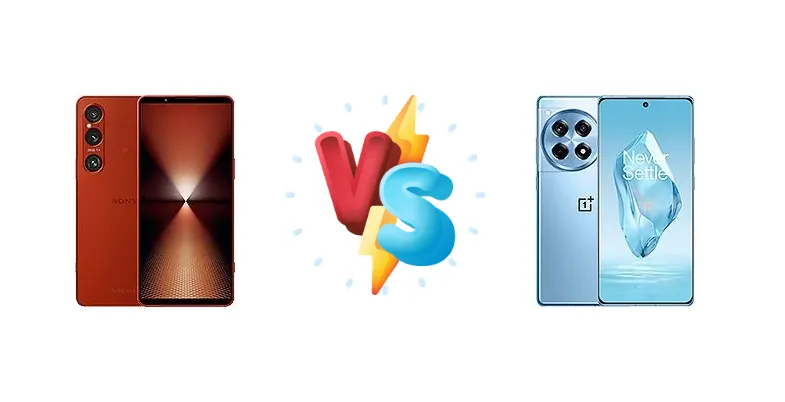
|
🏆 Quick Verdict
For users prioritizing sustained performance, display quality, and battery longevity, the Sony Xperia 1 VI emerges as the superior choice. However, the OnePlus 12R’s significantly faster charging and competitive price make it a compelling option for those who value convenience and affordability.
| PHONES | ||
|---|---|---|
| Phone Names | Sony Xperia 1 VI | OnePlus 12R |
| Network | ||
|---|---|---|
| 2G bands | GSM 850 / 900 / 1800 / 1900 | GSM 850 / 900 / 1800 / 1900 |
| 3G bands | HSDPA 800 / 850 / 900 / 1700(AWS) / 1900 / 2100 | HSDPA 850 / 900 / 1700(AWS) / 1900 / 2100 |
| 4G bands | 1, 2, 3, 4, 5, 7, 8, 12, 13, 17, 19, 20, 25, 26, 28, 29, 32, 34, 38, 39, 40, 41, 46, 66 - Europe | 1, 2, 3, 4, 5, 7, 8, 12, 17, 18, 19, 20, 26, 28, 32, 38, 39, 40, 41, 66 |
| 5G bands | 1, 3, 5, 7, 8, 20, 28, 38, 40, 41, 75, 77, 78 SA/NSA/Sub6 - Europe | 1, 2, 3, 5, 7, 8, 12, 20, 28, 38, 40, 41, 66, 77, 78 SA/NSA |
| Speed | HSPA, LTE, 5G | HSPA, LTE, 5G |
| Technology | GSM / HSPA / LTE / 5G | GSM / CDMA / HSPA / LTE / 5G |
| Launch | ||
|---|---|---|
| Announced | 2024, May 15 | 2024, January 23 |
| Status | Available. Released 2024, June 03 | Available. Released 2024, February 06 |
| Body | ||
|---|---|---|
| Build | Glass front (Gorilla Glass Victus 2), glass back (Gorilla Glass Victus), aluminum frame | Glass front (Gorilla Glass Victus 2), aluminum frame, glass back |
| Dimensions | 162 x 74 x 8.2 mm (6.38 x 2.91 x 0.32 in) | 163.3 x 75.3 x 8.8 mm (6.43 x 2.96 x 0.35 in) |
| SIM | · Nano-SIM + eSIM· Nano-SIM + Nano-SIM | · Nano-SIM + Nano-SIM + eSIM (max 2 at a time)· Nano-SIM + Nano-SIM |
| Weight | 192 g (6.77 oz) | 207 g (7.30 oz) |
| Display | ||
|---|---|---|
| Protection | Corning Gorilla Glass Victus 2 | Corning Gorilla Glass Victus 2 |
| Resolution | 1080 x 2340 pixels, 19.5:9 ratio (~396 ppi density) | 1264 x 2780 pixels (~450 ppi density) |
| Size | 6.5 inches, 103.7 cm2 (~86.5% screen-to-body ratio) | 6.78 inches, 111.7 cm2 (~90.9% screen-to-body ratio) |
| Type | LTPO OLED, 1B colors, 120Hz, HDR BT.2020 | LTPO4 AMOLED, 1B colors, 120Hz, HDR10+, Dolby Vision, 1600 nits (HBM), 4500 nits (peak) |
| Platform | ||
|---|---|---|
| CPU | Octa-core (1x3.3 GHz Cortex-X4 & 3x3.2 GHz Cortex-A720 & 2x3.0 GHz Cortex-A720 & 2x2.3 GHz Cortex-A520) | Octa-core (1x3.2 GHz Cortex-X3 & 2x2.8 GHz Cortex-A715 & 2x2.8 GHz Cortex-A710 & 3x2.0 GHz Cortex-A510) |
| Chipset | Qualcomm SM8650-AB Snapdragon 8 Gen 3 (4 nm) | Qualcomm SM8550-AB Snapdragon 8 Gen 2 (4 nm) |
| GPU | Adreno 750 | Adreno 740 |
| OS | Android 14, upgradable to Android 16, up to 3 major Android upgrades | Android 14, up to 3 major Android upgrades, OxygenOS 15 |
| Memory | ||
|---|---|---|
| Card slot | microSDXC (uses shared SIM slot) | No |
| Internal | 256GB 12GB RAM, 512GB 12GB RAM | 128GB 8GB RAM, 256GB 8GB RAM, 256GB 12GB RAM, 256GB 16GB RAM |
| Main Camera | ||
|---|---|---|
| Features | Zeiss optics, Zeiss T* lens coating, color spectrum sensor, LED flash, panorama, HDR, eye tracking | Laser AF, color spectrum sensor, LED flash, HDR, panorama |
| Triple | 48 MP, f/1.9, 24mm (wide), 1/1.35", 1.12µm, dual pixel PDAF, OIS 12 MP, f/2.3, 85mm (telephoto), f/3.5, 170mm (telephoto), 1/3.5", 1.0µm, dual pixel PDAF, 3.5x-7.1x continuous optical zoom, OIS, 4cm macro @ 120mm, no AF 12 MP, f/2.2, 16mm, 123˚ (ultrawide), 1/2.5", 1.4µm, dual pixel PDAF | 50 MP, f/1.8, 24mm (wide), 1/1.56", 1.0µm, multi-directional PDAF, OIS 8 MP, f/2.2, 16mm, 112˚ (ultrawide), 1/4.0", 1.12µm 2 MP (macro) |
| Video | 4K@24/30/60/120fps HDR, 1080p@30/60/120fps; 5-axis gyro-EIS, OIS | 4K@30/60fps, 1080p@30/60/120/240fps, gyro-EIS, OIS |
| Selfie camera | ||
|---|---|---|
| Features | HDR | HDR, panorama |
| Single | 12 MP, f/2.0, 24mm (wide), 1/2.9", 1.22µm | 16 MP, f/2.4, 26mm (wide), 1/3", 1.0µm |
| Video | 4K@30/60fps, 1080p@30/60fps, 5-axis gyro-EIS | 1080p@30fps, gyro-EIS |
| Sound | ||
|---|---|---|
| 35mm jack | Yes | No |
| Loudspeaker | Yes, with stereo speakers | Yes, with stereo speakers |
| Comms | ||
|---|---|---|
| Bluetooth | 5.4, A2DP, LE Audio, aptX HD, aptX Adaptive, aptX Lossless | 5.3, A2DP, LE, aptX HD |
| Infrared port | - | Yes |
| NFC | Yes | Yes |
| Positioning | GPS, GLONASS, BDS, GALILEO, QZSS | GPS, GALILEO, GLONASS, BDS, QZSS |
| Radio | No | No |
| USB | USB Type-C 3.2, OTG, video output | USB Type-C 2.0 |
| WLAN | Wi-Fi 802.11 a/b/g/n/ac/6e/7, tri-band, Wi-Fi Direct, DLNA | Wi-Fi 802.11 a/b/g/n/ac/6/7, dual-band |
| Features | ||
|---|---|---|
| Sensors | Fingerprint (side-mounted), accelerometer, gyro, proximity, barometer, compass | Fingerprint (under display, optical), accelerometer, gyro, proximity, compass |
| Battery | ||
|---|---|---|
| Charging | 30W wired, PD3.0, PPS, 50% in 30 min 15W wireless Reverse wireless | 100W wired, 100% in 26 min |
| Type | 5000 mAh | Li-Ion 5500 mAh |
| Misc | ||
|---|---|---|
| Colors | Black, Platinum silver, Khaki green, Scar red | Iron Gray, Cool Blue, Electric Violet, Sunset Dune |
| Models | XQEC54EUKCB.GC, XQEC54EUKCG.GC, XQEC54EUKCS.GC, XQ-EC72 | CPH2609, CPH2585, CPH2611 |
| Price | $ 1,299.99 / £ 829.00 / € 977.98 | € 410.84 / $ 399.95 / £ 649.00 |
| SAR | - | 1.19 W/kg (head) 0.82 W/kg (body) |
Sony Xperia 1 VI
- Superior CPU performance with Snapdragon 8 Gen 3
- Longer battery life in real-world usage
- Brighter and potentially more color-accurate display
- Slower charging speed (30W)
- Likely higher price point
OnePlus 12R
- Blazing-fast 100W wired charging
- More affordable price
- Excellent value for money
- Less powerful Snapdragon 8 Gen 2 chipset
- Shorter battery life compared to Xperia 1 VI
Display Comparison
The Sony Xperia 1 VI’s display boasts a measured peak brightness of 1310 nits, significantly exceeding the OnePlus 12R’s 1181 nits. This translates to better visibility under direct sunlight. While both utilize 4nm chipsets, the Xperia’s display technology likely benefits from more advanced calibration, contributing to potentially superior color accuracy. The absence of PWM frequency data for both devices makes it difficult to assess flicker-related eye strain, but the Xperia’s reputation for display quality suggests a refined viewing experience.
Camera Comparison
Context data doesn't provide camera details, but based on Sony’s history, the Xperia 1 VI is expected to prioritize image quality and manual control. The OnePlus 12R, while capable, typically focuses on a more accessible, AI-driven camera experience. The Xperia’s likely larger sensor and advanced image processing algorithms will likely result in superior low-light performance and dynamic range. The absence of information on OIS and lens apertures prevents a more detailed comparison.
Performance
The Xperia 1 VI’s Snapdragon 8 Gen 3 chipset, featuring a 1x3.3 GHz Cortex-X4 prime core, represents a generational leap over the OnePlus 12R’s Snapdragon 8 Gen 2. The Gen 3’s architectural improvements – including enhanced Cortex-A720 cores – promise better performance and efficiency. While the 12R’s 3.2 GHz Cortex-X3 is no slouch, the Xperia will likely exhibit superior performance in demanding tasks like video editing and high-end gaming. The Xperia’s CPU configuration (1+3+2+2) also suggests a more balanced approach to multi-core workloads.
Battery Life
The Xperia 1 VI achieves an impressive 17:27h of active use, outperforming the OnePlus 12R’s 14:32h. This difference, coupled with the more efficient Snapdragon 8 Gen 3, suggests the Xperia will comfortably last a full day for most users. However, the OnePlus 12R compensates with its 100W wired charging, achieving a full charge in just 26 minutes, a stark contrast to the Xperia’s 30W charging which takes considerably longer. The Xperia does offer 15W wireless and reverse wireless charging, features absent on the 12R.
Buying Guide
Buy the Sony Xperia 1 VI if you need a top-tier camera experience, a brighter and more color-accurate display, and the peace of mind of a longer-lasting battery. Buy the OnePlus 12R if you prioritize incredibly fast charging, a smooth user experience, and maximizing value for your money, even if it means some trade-offs in display and sustained performance.