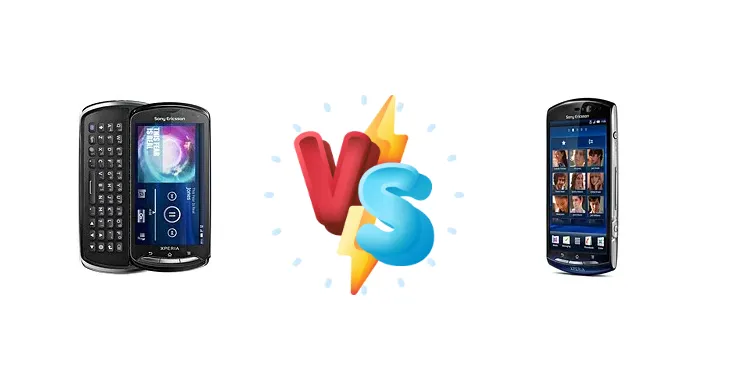
The Sony Ericsson Xperia Pro and Neo were both popular Android devices of their time, offering a blend of style and functionality. But which one truly delivered a better experience? This comprehensive comparison will break down their key features, helping you understand their strengths and weaknesses.
🏆 Quick Verdict
The Xperia Neo edges out the Pro thanks to its significantly improved display contrast, offering a noticeably richer visual experience. While both share the same processor, the Neo's screen advantage makes it the preferable choice for most users. Both phones are dated now, but the Neo holds a slight edge.
| Network |
|---|
| 2G bands | GSM 850 / 900 / 1800 / 1900 | GSM 850 / 900 / 1800 / 1900 |
| 3G bands | HSDPA 900 / 2100 - MK16i | HSDPA 900 / 2100 |
| Speed | HSPA 7.2/5.76 Mbps | HSPA 7.2/5.76 Mbps |
| Technology | GSM / HSPA | GSM / HSPA |
| | HSDPA 850 / 1900 / 2100 / 800 - MK16a | HSDPA 850 / 1900 / 2100 |
| Launch |
|---|
| Announced | 2011, February. Released 2011, October | 2011, February. Released 2011, March |
| Status | Discontinued | Discontinued |
| Body |
|---|
| Dimensions | 120 x 57 x 15.3 mm (4.72 x 2.24 x 0.60 in) | 116 x 57 x 13 mm (4.57 x 2.24 x 0.51 in) |
| Keyboard | QWERTY | - |
| SIM | Mini-SIM | Mini-SIM |
| Weight | 142 g (5.01 oz) | 126 g (4.44 oz) |
| Display |
|---|
| Protection | Scratch-resistant glass | Scratch-resistant glass |
| Resolution | 480 x 854 pixels, 16:9 ratio (~265 ppi density) | 480 x 854 pixels, 16:9 ratio (~265 ppi density) |
| Size | 3.7 inches, 37.7 cm2 (~55.2% screen-to-body ratio) | 3.7 inches, 37.7 cm2 (~57.1% screen-to-body ratio) |
| Type | LED-backlit LCD, | LED-backlit LCD, |
| Platform |
|---|
| CPU | 1.0 GHz Scorpion | 1.0 GHz Scorpion |
| Chipset | Qualcomm MSM8255 Snapdragon S2 | Qualcomm MSM8255 Snapdragon S2 |
| GPU | Adreno 205 | Adreno 205 |
| OS | Android 2.3 (Gingerbread), upgradable to 4.0 (Ice Cream Sandwich) | Android 2.3.4 (Gingerbread), upgradable to 4.0 (Ice Cream Sandwich) |
| Memory |
|---|
| Card slot | microSDHC (dedicated slot), 8 GB included | microSDHC (dedicated slot), 8 GB included |
| Internal | 1GB (320MB user available), 512MB RAM | 320MB 512MB RAM |
| Main Camera |
|---|
| Features | LED flash | LED flash |
| Single | 8 MP, AF | 8 MP, AF |
| Video | 720p@30fps | 720p@30fps |
| Selfie camera |
|---|
| Single | VGA | Yes |
| Sound |
|---|
| 3.5mm jack | Yes | Yes |
| 35mm jack | Yes | Yes |
| Loudspeaker | Yes | Yes |
| Comms |
|---|
| Bluetooth | 2.1, A2DP | 2.1, A2DP |
| Positioning | GPS, A-GPS; GLONASS | GPS, A-GPS |
| Radio | Stereo FM radio, RDS | Stereo FM radio, RDS |
| USB | microUSB 2.0 | microUSB 2.0 |
| WLAN | Wi-Fi 802.11 b/g/n, DLNA, hotspot | Wi-Fi 802.11 b/g/n, DLNA, hotspot |
| Features |
|---|
| Browser | HTML, Adobe Flash | HTML, Adobe Flash |
| Sensors | Accelerometer, proximity | Accelerometer, proximity, compass |
| | ANT+
Type & Send feature
HDMI port
MP4/H.264/WMV player
MP3/WMA/WAV/eAAC+ player
TrackID music recognition
Organizer
Office Suite Pro document viewer/editor
Voice memo/dial/commands
Predictive text input | ANT+
HDMI port
MP4/H.264/WMV player
MP3/WMA/WAV/eAAC+ player
TrackID music recognition
Organizer
Document viewer
Voice memo/dial/commands
Predictive text input |
| Battery |
|---|
| Music play | Up to 31 h | Up to 31 h |
| Stand-by | Up to 430 h (2G) / Up to 400 h (3G) | Up to 430 h (2G) / Up to 400 h (3G) |
| Talk time | Up to 6 h 55 min (2G) / Up to 7 h (3G) | Up to 6 h 55 min (2G) / Up to 7 h (3G) |
| Type | Removable Li-Po 1500 mAh battery | Removable Li-Ion 1500 mAh battery |
| Misc |
|---|
| Colors | Black, Silver, Red | Blue Gradient, Red, Silver |
| Price | About 190 EUR | About 110 EUR |
| SAR EU | 0.88 W/kg (head) | 1.10 W/kg (head) |
| Tests |
|---|
| Audio quality |
Noise -89.7dB / Crosstalk -88.1dB |
Noise -89.8dB / Crosstalk -92.2dB |
| Battery life | Endurance rating 37h | - |
| Camera |
Photo / Video |
Photo / Video |
| Display |
Contrast ratio: 928:1 (nominal) |
Contrast ratio: 1670:1 (nominal) |
| Loudspeaker |
Voice 75dB / Noise 66dB / Ring 75dB |
Voice 65dB / Noise 61dB / Ring 65dB |
Sony Ericsson Xperia pro
- Potentially longer battery life (claimed)
- Lower contrast ratio display
- Dated performance
- Limited camera capabilities
Sony Ericsson Xperia Neo
- Superior contrast ratio display
- Slightly more modern design (generally)
- Comparable performance to Pro
- Dated performance
- Limited camera capabilities
- Battery life may be slightly shorter than claimed Pro rating
Display Comparison
The Xperia Neo boasts a substantial advantage in display quality. Its 1670:1 contrast ratio is significantly higher than the Xperia Pro's 928:1. This translates to deeper blacks, more vibrant colors, and an overall more immersive viewing experience. Both phones used LED displays, but the Neo's panel was clearly superior. The resolution was likely similar (likely 480x854), so the contrast is the key differentiator.
Camera Comparison
Camera specifications are not explicitly detailed, but both phones featured Photo/Video capabilities. Given the era, expect relatively low-resolution sensors (likely 8MP) and limited features compared to modern smartphones. Image quality will be comparable, likely producing acceptable results in good lighting conditions but struggling in low light.
Performance
Both devices are powered by the same Qualcomm MSM8255 Snapdragon S2 chipset and a 1.0 GHz Scorpion CPU. Performance will be very similar, adequate for basic tasks and older Android games, but struggling with modern applications. Don't expect blazing speeds from either device.
Battery Life
The Xperia Pro claims an endurance rating of 37 hours, which was impressive for its time. However, the Xperia Neo's battery capacity is likely slightly larger, potentially offering similar or slightly better real-world battery life despite the more vibrant display. Battery life on both will be significantly less than modern smartphones.
Buying Guide
Who should buy the Sony Ericsson Xperia Pro? Primarily collectors or those seeking a very specific, older device. Who should buy the Sony Ericsson Xperia Neo? Those appreciating a better display and a slightly more modern design, again, within the context of vintage Android phones.
Frequently Asked Questions
❓ Are these phones still usable in 2024?
While technically usable, these phones are very dated. They will struggle with modern apps and network speeds. They are best suited for collectors or as retro devices.
❓ What Android version did these phones ship with?
Both the Xperia Pro and Neo originally shipped with Android 2.3 (Gingerbread).