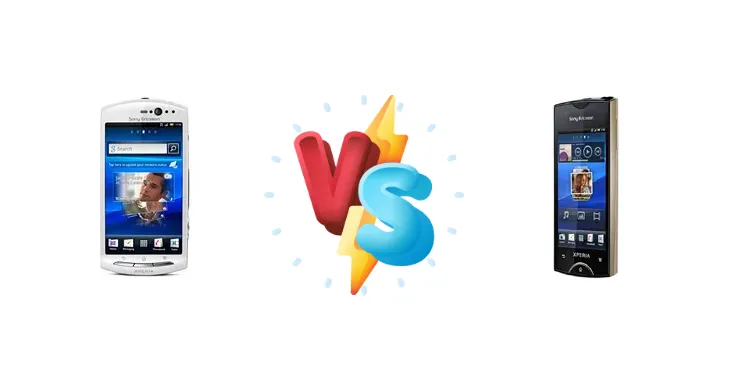
The Sony Ericsson Xperia Neo V and Xperia Ray were both popular Android smartphones from a bygone era. While sharing a similar chipset, they offered distinct features and design choices. This comparison dives deep into their strengths and weaknesses to help you understand which phone was the better option.
🏆 Quick Verdict
The Xperia Ray edges out the Neo V thanks to its superior sunlight display performance and reverse charging capability. While both offer similar processing power, the Ray's screen visibility in bright conditions gives it a slight advantage, making it a more practical choice for everyday use.
| Network |
|---|
| 2G bands | GSM 850 / 900 / 1800 / 1900 | GSM 850 / 900 / 1800 / 1900 |
| 3G bands | HSDPA 900 / 2100 - MT11i | HSDPA 900 / 2100 - ST18i |
| 4G bands | - | 1, 2, 3, 4, 5, 6, 7, 8, 9, 18, 19, 20, 26, 34, 38, 39, 40, 41 - International |
| 5G bands | - | 1, 3, 38, 41, 77, 78, 79 SA/NSA - International |
| EDGE | No | - |
| GPRS | Class 10 | - |
| Speed | HSPA 7.2/5.76 Mbps | HSPA 7.2/5.76 Mbps |
| Technology | GSM / HSPA | GSM / HSPA |
| | HSDPA 850 / 1900 / 2100 - MT11a | HSDPA 850 / 1900 / 2100 - ST18a |
| Launch |
|---|
| Announced | 2011, August. Released 2011, October | 2011, June. Released 2011, August |
| Status | Discontinued | Discontinued |
| Body |
|---|
| Dimensions | 116 x 57 x 13 mm (4.57 x 2.24 x 0.51 in) | 111 x 53 x 9.4 mm (4.37 x 2.09 x 0.37 in) |
| Keyboard | QWERTY | - |
| SIM | Mini-SIM | Mini-SIM |
| Weight | 126 g (4.44 oz) | 100 g (3.53 oz) |
| Display |
|---|
| Protection | Scratch-resistant glass | Scratch-resistant glass |
| Resolution | 480 x 854 pixels, 16:9 ratio (~265 ppi density) | 480 x 854 pixels, 16:9 ratio (~297 ppi density) |
| Size | 3.7 inches, 37.7 cm2 (~57.1% screen-to-body ratio) | 3.3 inches, 30.0 cm2 (~51.0% screen-to-body ratio) |
| Type | LED-backlit LCD, | LED-backlit LCD, |
| | - | Touch sensitive controls |
| Platform |
|---|
| CPU | 1.0 GHz Scorpion | 1.0 GHz Scorpion |
| Chipset | Qualcomm MSM8255 Snapdragon S2 | Qualcomm MSM8255 Snapdragon S2 |
| GPU | Adreno 205 | Adreno 205 |
| OS | Android 2.3.4 (Gingerbread), upgradable to 4.0 (Ice Cream Sandwich) | Android 2.3 (Gingerbread), upgradable to 4.0.4 (Ice Cream Sandwich) |
| Memory |
|---|
| Call records | Yes | - |
| Card slot | microSDHC (dedicated slot), 2 GB included | microSDHC (dedicated slot), 4 GB included |
| Internal | 1GB (320MB user available), 512MB RAM | 1GB (300MB user available), 512MB RAM |
| Phonebook | Yes, Photocall | - |
| Main Camera |
|---|
| Features | LED flash, panorama | LED flash |
| Quad | - | 40 MP, f/1.8, 27mm (wide), 1/1.7", PDAF
8 MP, f/3.4, 125mm (Periscope telephoto), PDAF, OIS, 5x optical zoom
8 MP, f/2.4, 17mm (ultrawide)
2 MP, (depth) |
| Single | 5 MP, AF | 8 MP, AF |
| Video | 720p@30fps | 720p |
| Selfie camera |
|---|
| Features | - | HDR |
| Single | VGA | VGA |
| Sound |
|---|
| 3.5mm jack | Yes | Yes |
| 35mm jack | Yes | Yes |
| Loudspeaker | Yes | Yes |
| Comms |
|---|
| Bluetooth | 2.1, A2DP, EDR | 2.1, A2DP, EDR |
| NFC | - | Yes |
| Positioning | GPS, A-GPS | GPS, A-GPS |
| Radio | Stereo FM radio, RDS | Stereo FM radio, RDS |
| USB | microUSB 2.0, OTG | microUSB 2.0 |
| WLAN | Wi-Fi 802.11 b/g/n, DLNA, hotspot | Wi-Fi 802.11 b/g/n, DLNA, hotspot |
| Features |
|---|
| Browser | No | HTML, Adobe Flash |
| Games | Yes | - |
| Java | No | - |
| Messaging | SMS, MMS | - |
| Sensors | Accelerometer, proximity, compass | Accelerometer, proximity, compass |
| | ANT+
HDMI port
MP4/H.264/WMV player
MP3/WMA/WAV/eAAC+ player
TrackID music recognition
Organizer
Document viewer
Voice memo/dial/commands
Predictive text input (T9 Trace) | ANT+
MP4/H.264 player
MP3/WAV player
TrackID music recognition
SensMe
Document viewer
Voice memo
Predictive text input |
| Battery |
|---|
| Charging | - | 40W wired
5W reverse wired |
| Music play | Up to 31 h | Up to 36 h |
| Stand-by | Up to 430 h (2G) / Up to 400 h (3G) | Up to 430 h (2G) / Up to 440 h (3G) |
| Talk time | Up to 6 h 55 min (2G) / Up to 7 h (3G) | Up to 6 h 50 min (2G) / Up to 7 h (3G) |
| Type | Removable Li-Po 1500 mAh battery | Removable Li-Ion 1500 mAh battery |
| Misc |
|---|
| Colors | White, Blue Gradient, Silver | Black, Gold, White, Pink |
| Models | - | BMH-AN10, BMH-AN20 |
| Price | About 150 EUR | About 170 EUR |
| SAR EU | 1.10 W/kg (head) | 0.96 W/kg (head) |
| Tests |
|---|
| Audio quality |
Noise -89.6dB / Crosstalk -80.9dB |
Noise -89.4dB / Crosstalk -91.3dB |
| Battery life |
Endurance rating 42h
| - |
| Camera |
Photo / Video |
Photo / Video |
| Display |
Contrast ratio: 1578:1 (nominal) |
Contrast ratio: 1.955:1 (sunlight) |
| Loudspeaker |
Voice 68dB / Noise 65dB / Ring 71dB
|
Voice 64dB / Noise 61dB / Ring 66dB
|
Sony Ericsson Xperia neo V
- Potentially longer battery life (42h endurance rating)
- Good contrast ratio (1578:1) in controlled environments
- Weaker sunlight display performance
- No reverse charging
Sony Ericsson Xperia ray
- Excellent sunlight display (1.955:1)
- 5W reverse wired charging
- Slightly more modern design (generally)
- Potentially shorter battery life compared to Neo V
- Similar performance to Neo V
Display Comparison
The Xperia Ray boasts a significantly better contrast ratio specifically optimized for sunlight readability (1.955:1) compared to the Neo V's nominal 1578:1. While the Neo V's contrast is good in controlled environments, the Ray's outdoor visibility is a clear winner. Both phones likely used similar LCD panels, but the Ray's tuning was clearly focused on sunlight performance.
Camera Comparison
Both phones feature Photo/Video capabilities, but specific megapixel counts and sensor details are missing. General knowledge suggests both had 8MP cameras. Image quality would likely be similar, with both struggling in low-light conditions. Neither phone was a camera powerhouse.
Performance
Both devices share the same Qualcomm MSM8255 Snapdragon S2 chipset and a 1.0 GHz Scorpion CPU. Performance will be comparable, though the Neo V's slightly larger battery *might* allow for marginally better sustained performance under heavy load. However, expect both to struggle with modern apps and games.
Battery Life
The Neo V claims an endurance rating of 42h, suggesting a larger battery capacity than the Ray. However, the Ray's 5W reverse wired charging is a unique feature allowing it to potentially charge other devices, adding a degree of utility.
Buying Guide
The Xperia Neo V might appeal to those prioritizing battery life (though both are dated). The Xperia Ray is better suited for users who frequently use their phones outdoors and appreciate a brighter, more visible display. However, both are very old devices and not recommended for modern use.
Frequently Asked Questions
❓ What Android version did these phones run?
Both the Xperia Neo V and Xperia Ray originally shipped with Android 2.3 (Gingerbread), with potential for updates to Android 4.0 (Ice Cream Sandwich).
❓ Are these phones still worth buying?
No. Both phones are very old and lack modern features, security updates, and app compatibility. They are not recommended for practical use in 2024.