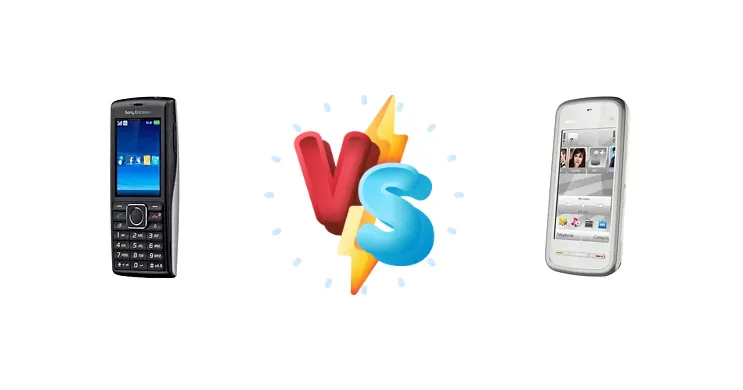
Remember the days of feature phones and simple joys? The Sony Ericsson Cedar and Nokia 5233 represent a bygone era of mobile technology. Both phones offer a nostalgic experience, but which one delivers the better package? Let's dive into a detailed comparison.
🏆 Quick Verdict
The Nokia 5233 edges out the Cedar thanks to its slightly faster processor and dedicated gaming features. While the Cedar likely boasts Sony Ericsson's renowned design and potentially better audio, the 5233's broader functionality and established reputation make it the stronger choice for most.
| Network |
|---|
| 2G bands | GSM 850 / 900 / 1800 / 1900 | GSM 850 / 900 / 1800 / 1900 |
| 3G bands | HSDPA 2100 | - |
| EDGE | - | Class 32 |
| GPRS | - | Class 32 |
| Speed | HSPA 7.2/2 Mbps | - |
| Technology | GSM / HSPA | GSM |
| | HSDPA 850 / 1900 / 2100 | - |
| Launch |
|---|
| Announced | 2010, June. Released 2010, September | 2010, January. Released 2010, January |
| Status | Discontinued | Discontinued |
| Body |
|---|
| Dimensions | 111 x 49 x 15.5 mm (4.37 x 1.93 x 0.61 in) | 111 x 51.7 x 14.5 mm, 83 cc (4.37 x 2.04 x 0.57 in) |
| SIM | Mini-SIM | Mini-SIM |
| Weight | 84 g (2.96 oz) | 113 g (3.99 oz) |
| Display |
|---|
| Resolution | 240 x 320 pixels, 4:3 ratio (~182 ppi density) | 360 x 640 pixels, 16:9 ratio (~229 ppi density) |
| Size | 2.2 inches, 15.0 cm2 (~27.6% screen-to-body ratio) | 3.2 inches, 28.2 cm2 (~49.2% screen-to-body ratio) |
| Type | TFT, 256K colors | TFT resistive touchscreen, 16M colors |
| | - | Handwriting recognition |
| Platform |
|---|
| CPU | - | 434 MHz ARM 11 |
| OS | - | Symbian 9.4, Series 60 rel. 5 |
| Memory |
|---|
| Call records | Yes | - |
| Card slot | microSDHC (dedicated slot) | microSDHC (dedicated slot) |
| Internal | 280MB | 70MB 128MB RAM |
| Phonebook | 1000 entries, Photocall | - |
| Main Camera |
|---|
| Single | 2 MP | 2 MP |
| Video | 320p@15fps | 640x360@30fps |
| Sound |
|---|
| 3.5mm jack | Yes | Yes |
| 35mm jack | Yes | Yes |
| Loudspeaker | Yes | Yes |
| Comms |
|---|
| Bluetooth | 2.1, A2DP | 2.0, A2DP |
| Positioning | No | No |
| Radio | Stereo FM radio, RDS | Stereo FM radio, RDS |
| USB | microUSB 2.0 | microUSB 2.0 |
| WLAN | No | No |
| Features |
|---|
| Browser | WAP 2.0/HTML | WAP 2.0/xHTML, HTML, Adobe Flash Lite |
| Games | Yes | - |
| Java | Yes, MIDP 2.0 | - |
| Messaging | SMS(threaded view), MMS, Email, Push Email, IM | - |
| Sensors | - | Accelerometer, proximity |
| | MP3/eAAC+/WAV player
MP4/H.264 player
YouTube, Facebook, MySpace, Twitter apps
Organizer
Widget manager
Eco friendly materials
Voice memo
Predictive text input | Comes with music on select markets
MP4/H.264/WMV player
MP3/WAV/eAAC+/WMA player
Organizer
Photo editor
Voice memo/dial
Predictive text input |
| Battery |
|---|
| Music play | - | Up to 33 h |
| Stand-by | Up to 420 h (2G) / Up to 475 h (3G) | Up to 432 h |
| Talk time | Up to 12 h 30 min (2G) / Up to 5 h (3G) | Up to 7 h |
| Type | Removable Li-Po 1000 mAh battery (BST-43) | Removable Li-Ion 1320 mAh battery (BL-5J) |
| Misc |
|---|
| Colors | Black/Silver, Black/Red | Black, White |
| Price | About 50 EUR | About 100 EUR |
| SAR | 1.08 W/kg (head) 0.56 W/kg (body) | - |
| SAR EU | 1.16 W/kg (head) | 1.10 W/kg (head) |
Sony Ericsson Cedar
- Sleek and compact design
- Potentially excellent audio quality (typical of Sony Ericsson)
- Simple and user-friendly interface
- Likely slower performance
- Limited features compared to the 5233
- Lack of detailed specifications available
Nokia 5233
- Larger display for better viewing
- Faster processor for smoother performance
- Dedicated gaming features and support
- More readily available information and support
- Design may be considered less premium than the Cedar
- Camera quality is basic
Display Comparison
The Cedar likely featured a smaller, more compact display, typical of Sony Ericsson's design philosophy. The Nokia 5233, with its 3.2-inch screen, offered a larger viewing area, making it better for browsing and gaming. Expect the 5233 to have slightly better color reproduction.
Camera Comparison
Both phones featured basic cameras, likely in the 2-3 megapixel range. Image quality would be comparable, adequate for casual snapshots but not exceptional. The Nokia 5233 might have slightly better software for image processing.
Performance
The Nokia 5233's 434 MHz ARM 11 processor provides a noticeable performance advantage over the Cedar, which likely used a less powerful processor. This translates to smoother app navigation and a more responsive user interface on the 5233. The Cedar would feel more basic in terms of speed.
Battery Life
Battery life is difficult to definitively compare without specific specs for the Cedar. However, feature phones generally offered excellent battery life. The Nokia 5233, with its slightly larger battery, likely provided marginally better endurance, especially with moderate usage.
Buying Guide
The Sony Ericsson Cedar is ideal for those prioritizing a sleek, minimalist design and a simple, focused user experience. The Nokia 5233 is better suited for users who want a bit more functionality, including gaming and a slightly more responsive interface.
Frequently Asked Questions
❓ Are spare parts readily available for these phones?
Finding spare parts for both phones can be challenging due to their age. Online marketplaces like eBay are your best bet, but availability will vary.
❓ Can I use these phones with a modern SIM card?
These phones use older SIM card technology. You may need an adapter or a SIM card cut down to the correct size. Compatibility isn't guaranteed.