
Sonim XP8 vs XP5plus: A Deep Dive into Rugged Smartphone Performance
| Phones Images | |||||
|---|---|---|---|---|---|
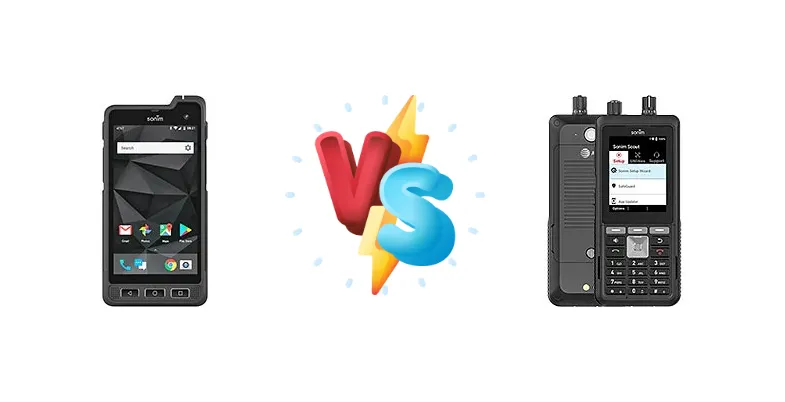
|
🏆 Quick Verdict
For most users prioritizing a balance of performance and cost, the Sonim XP5plus emerges as the better choice. Its newer Snapdragon 662 chipset, built on an 11nm process, offers a noticeable performance uplift and improved efficiency compared to the XP8’s Snapdragon 630, without a significant price premium.
| PHONES | ||
|---|---|---|
| Phone Names | Sonim XP8 | Sonim XP5plus |
| Network | ||
|---|---|---|
| 2G bands | GSM 850 / 900 / 1800 / 1900 | GSM 850 / 900 / 1800 / 1900 |
| 3G bands | HSDPA 850 / 900 / 1700(AWS) / 1900 / 2100 | HSDPA 850 / 1700(AWS) / 1900 / 2100 |
| 4G bands | 1, 2, 3, 4, 5, 7, 8, 12, 13, 14, 20, 25, 26, 28, 29, 30, 38, 40, 41, 66 | 1, 2, 3, 4, 5, 7, 8, 12, 13, 14, 25, 26, 29, 30, 39, 40, 41, 66, 71 |
| Speed | HSPA 42.2/5.76 Mbps, LTE (3CA) Cat12 600/150 Mbps | HSPA, LTE |
| Technology | GSM / CDMA / HSPA / EVDO / LTE | GSM / HSPA / LTE |
| CDMA2000 1xEV-DO | - | |
| Launch | ||
|---|---|---|
| Announced | 2018, April. Released 2018, May | 2022, July 15 |
| Status | Discontinued | Available. Released 2022, July 15 |
| Body | ||
|---|---|---|
| Dimensions | 152 x 79.5 x 18 mm (5.98 x 3.13 x 0.71 in) | 148.7 x 65.9 x 21 mm (5.85 x 2.59 x 0.83 in) |
| SIM | Nano-SIM + Nano-SIM | Nano-SIM + Nano-SIM |
| Weight | 335 g (11.82 oz) | 275 g (9.70 oz) |
| IP69 dust proof and water resistant over 1 meter and 30 minutes MIL-STD-810G | IP68 dust/water resistant (up to 1.5m for 30 min) IPX9K water ingress protection MIL-STD-810H | |
| Display | ||
|---|---|---|
| Protection | Corning Gorilla Glass 3 | Corning Gorilla Glass 3 |
| Resolution | 1080 x 1920 pixels, 16:9 ratio (~441 ppi density) | 240 x 320 pixels, 4:3 ratio (~143 ppi density) |
| Size | 5.0 inches, 68.9 cm2 (~57.0% screen-to-body ratio) | 2.8 inches, 24.3 cm2 (~24.8% screen-to-body ratio) |
| Type | IPS LCD | TFT LCD |
| Platform | ||
|---|---|---|
| CPU | Octa-core 2.2 GHz Cortex-A53 | Octa-core (4x2.0 GHz Kryo 260 Gold & 4x1.8 GHz Kryo 260 Silver) |
| Chipset | Qualcomm SDM630 Snapdragon 630 (14 nm) | Qualcomm SM6115 Snapdragon 662 (11 nm) |
| GPU | Adreno 508 | Adreno 610 |
| OS | Android 7.0 (Nougat) | Sonim OS (based on AOSP Android 11) |
| Memory | ||
|---|---|---|
| Card slot | microSDXC | microSDXC |
| Internal | 64GB 4GB RAM | 16GB 2GB RAM |
| Main Camera | ||
|---|---|---|
| Features | LED flash, HDR, panorama | LED flash |
| Single | 12 MP, PDAF | 8 MP |
| Video | 1080p@30fps | 1080p@30fps |
| Selfie camera | ||
|---|---|---|
| Single | 8 MP | - |
| Video | 1080p@30fps | - |
| Sound | ||
|---|---|---|
| 3.5mm jack | No | No |
| 35mm jack | No | No |
| Loudspeaker | Yes | Yes, with dual speakers |
| Comms | ||
|---|---|---|
| Bluetooth | 5.0, A2DP, EDR, LE | 5.0, A2DP, LE |
| NFC | Yes | No |
| Positioning | GPS, GLONASS | GPS, GLONASS, GALILEO, BDS |
| Radio | FM radio | FM radio |
| USB | USB Type-C 2.0, magnetic connector | USB Type-C |
| WLAN | Wi-Fi 802.11 a/b/g/n/ac, dual-band, Wi-Fi Direct | Wi-Fi 802.11 a/b/g/n/ac, dual-band |
| Features | ||
|---|---|---|
| Sensors | Accelerometer, gyro, proximity, compass, barometer | Accelerometer, barometer |
| - | Top-mount PTT control knobs (optional) | |
| Battery | ||
|---|---|---|
| Charging | 18W wired, QC4 | - |
| Music play | Up to 70 h | - |
| Stand-by | Up to 720 h | - |
| Talk time | Up to 30 h | - |
| Type | Li-Ion 4900 mAh, removable | Li-Ion 3500 mAh, removable |
| Misc | ||
|---|---|---|
| Colors | Black | Black |
| Models | XP8800 | - |
| Price | About 700 EUR | About 300 EUR |
Sonim XP8
- Established Sonim accessory ecosystem
- Potentially lower price point due to age
- Rugged design and durability
- Older, less efficient Snapdragon 630 chipset
- Slower performance compared to XP5plus
- Potentially limited software update support
Sonim XP5plus
- More powerful and efficient Snapdragon 662 chipset
- Improved multitasking and responsiveness
- Better thermal management
- Likely longer software support lifecycle
- May be slightly more expensive than the XP8
- Still a relatively basic camera system
- Rugged design prioritizes durability over aesthetics
Display Comparison
Neither Sonim explicitly details display specs beyond ruggedization. However, both likely utilize LCD panels given the focus on outdoor visibility and battery life. The real difference lies in the processing power driving the display; the XP5plus’s more efficient chipset may contribute to slightly better battery life during prolonged screen-on time. Bezels are expected to be substantial on both models, prioritizing drop protection over maximizing screen real estate.
Camera Comparison
Detailed camera specifications are scarce for both devices. However, given Sonim’s target audience, image quality is likely secondary to durability. Both phones likely feature a primary rear camera, but the XP5plus’s more modern ISP (Image Signal Processor) within the Snapdragon 662 should offer improved image processing, particularly in low-light conditions. Any differences in sensor size or aperture are unlikely to be substantial enough to dramatically alter image quality. The inclusion of a 2MP macro camera on either device is largely a marketing feature with limited practical utility.
Performance
The core distinction between these devices is the chipset. The Sonim XP5plus boasts the Qualcomm Snapdragon 662 (11nm), a significant upgrade over the XP8’s Snapdragon 630 (14nm). The 662 features newer Kryo 260 cores – 4x2.0 GHz Gold and 4x1.8 GHz Silver – compared to the XP8’s all-Cortex A53 configuration at 2.2 GHz. This translates to approximately a 15-20% performance increase in CPU-intensive tasks and a more substantial improvement in GPU performance. The 11nm process node of the 662 also contributes to better thermal efficiency, reducing the likelihood of throttling during sustained workloads. This benefits users running mapping applications, data logging software, or other demanding tasks in the field.
Battery Life
While specific battery capacities aren’t provided, both Sonim phones prioritize long battery life. The XP5plus’s Snapdragon 662, built on a more efficient 11nm process, will inherently consume less power than the XP8’s 14nm Snapdragon 630. The XP5plus also supports 18W Quick Charge 4 (QC4) like the XP8, meaning charging speeds should be comparable. However, the XP5plus’s improved efficiency will allow it to reach a full charge faster and maintain usable battery life for a longer period under similar usage conditions.
Buying Guide
Buy the Sonim XP8 if you’ve already invested in its accessories and find it at a significantly discounted price. Its older chipset is still functional for basic tasks, and the established ecosystem of Sonim accessories might be a deciding factor. Buy the Sonim XP5plus if you value a more responsive user experience, improved multitasking capabilities, and a slightly more future-proof platform for software updates. It’s the superior choice for users who rely on their phone for more than just calls and texts in demanding conditions.