
Sonim XP400 vs XP8: A Deep Dive into Rugged Smartphone Performance
| Phones Images | |||||
|---|---|---|---|---|---|
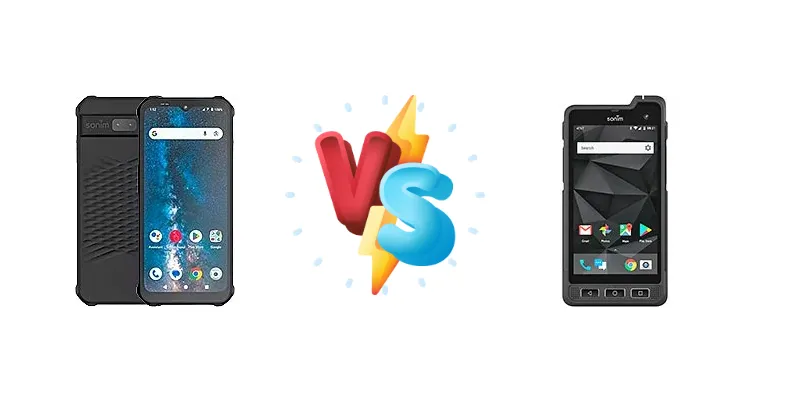
|
🏆 Quick Verdict
For most users, the Sonim XP400 is the superior choice. Its Snapdragon 4 Gen 2 (4nm) chipset delivers a substantial performance advantage over the XP8’s older Snapdragon 630 (14nm), translating to smoother multitasking and app responsiveness. While the XP8 offers 18W Quick Charge 4, the XP400’s efficiency gains offset the slower charging for typical use cases.
| PHONES | ||
|---|---|---|
| Phone Names | Sonim XP400 | Sonim XP8 |
| Network | ||
|---|---|---|
| 2G bands | GSM 850 / 900 / 1800 / 1900 | GSM 850 / 900 / 1800 / 1900 |
| 3G bands | HSDPA 850 / 900 / 1700(AWS) / 1900 / 2100 | HSDPA 850 / 900 / 1700(AWS) / 1900 / 2100 |
| 4G bands | 1, 3, 5, 7, 8, 20, 26, 28, 32, 38, 40, 41, 42, 68, 71 | 1, 2, 3, 4, 5, 7, 8, 12, 13, 14, 20, 25, 26, 28, 29, 30, 38, 40, 41, 66 |
| 5G bands | 1, 3, 5, 7, 8, 20, 26, 28, 38, 40, 41, 71, 75, 77, 78 SA/NSA | - |
| Speed | HSPA, LTE, 5G | HSPA 42.2/5.76 Mbps, LTE (3CA) Cat12 600/150 Mbps |
| Technology | GSM / HSPA / LTE / 5G | GSM / CDMA / HSPA / EVDO / LTE |
| - | CDMA2000 1xEV-DO | |
| Launch | ||
|---|---|---|
| Announced | 2025, January 22 | 2018, April. Released 2018, May |
| Status | Available. Released 2025, January 22 | Discontinued |
| Body | ||
|---|---|---|
| Dimensions | 170 x 78 x 10.2 mm (6.69 x 3.07 x 0.40 in) | 152 x 79.5 x 18 mm (5.98 x 3.13 x 0.71 in) |
| SIM | Nano-SIM + Nano-SIM | Nano-SIM + Nano-SIM |
| Weight | 230 g (8.11 oz) | 335 g (11.82 oz) |
| - | IP69 dust proof and water resistant over 1 meter and 30 minutes MIL-STD-810G | |
| Display | ||
|---|---|---|
| Protection | Corning Gorilla Glass Victus 2 | Corning Gorilla Glass 3 |
| Resolution | 720 x 1612 pixels, 20:9 ratio (~272 ppi density) | 1080 x 1920 pixels, 16:9 ratio (~441 ppi density) |
| Size | 6.5 inches, 101.5 cm2 (~76.5% screen-to-body ratio) | 5.0 inches, 68.9 cm2 (~57.0% screen-to-body ratio) |
| Type | IPS LCD | IPS LCD |
| Platform | ||
|---|---|---|
| CPU | Octa-core (2x2.2 GHz Cortex-A78 & 6x1.95 GHz Cortex-A55) | Octa-core 2.2 GHz Cortex-A53 |
| Chipset | Qualcomm SM4450 Snapdragon 4 Gen 2 (4 nm) | Qualcomm SDM630 Snapdragon 630 (14 nm) |
| GPU | Adreno 613 | Adreno 508 |
| OS | Android 14, up to 2 major Android upgrades | Android 7.0 (Nougat) |
| Memory | ||
|---|---|---|
| Card slot | microSDXC (uses shared SIM slot) | microSDXC |
| Internal | 128GB 6GB RAM | 64GB 4GB RAM |
| Main Camera | ||
|---|---|---|
| Dual | 50 MP, (wide), PDAF 5 MP, (ultrawide) | - |
| Features | LED flash | LED flash, HDR, panorama |
| Single | - | 12 MP, PDAF |
| Video | 1080p@30fps | 1080p@30fps |
| Selfie camera | ||
|---|---|---|
| Single | 8 MP, (wide) | 8 MP |
| Video | 1080p@30fps | 1080p@30fps |
| Sound | ||
|---|---|---|
| 3.5mm jack | - | No |
| 35mm jack | No | No |
| Loudspeaker | Yes, with stereo speakers | Yes |
| Comms | ||
|---|---|---|
| Bluetooth | 5.1, A2DP, LE | 5.0, A2DP, EDR, LE |
| NFC | Yes | Yes |
| Positioning | GPS (L1+L5), GALILEO, GLONASS | GPS, GLONASS |
| Radio | FM radio | FM radio |
| USB | USB Type-C 3.1 | USB Type-C 2.0, magnetic connector |
| WLAN | Wi-Fi 802.11 a/b/g/n/ac, dual-band | Wi-Fi 802.11 a/b/g/n/ac, dual-band, Wi-Fi Direct |
| Features | ||
|---|---|---|
| Sensors | Fingerprint (side-mounted), accelerometer, gyro, proximity, compass, barometer | Accelerometer, gyro, proximity, compass, barometer |
| Battery | ||
|---|---|---|
| Charging | - | 18W wired, QC4 |
| Music play | - | Up to 70 h |
| Stand-by | - | Up to 720 h |
| Talk time | - | Up to 30 h |
| Type | 5000 mAh | Li-Ion 4900 mAh, removable |
| Misc | ||
|---|---|---|
| Colors | Black | Black |
| Models | - | XP8800 |
| Price | € 249.90 | About 700 EUR |
Sonim XP400
- Significantly faster processor for smoother performance
- More power-efficient chipset for longer battery life
- Likely improved image processing capabilities
- May lack Quick Charge 4 compatibility
- Potentially higher price point
Sonim XP8
- 18W Quick Charge 4 support for faster charging
- Potentially lower price point
- Proven reliability within the Sonim ecosystem
- Older, less powerful Snapdragon 630 chipset
- Less power-efficient, leading to shorter battery life
- Slower application loading and multitasking
Display Comparison
Neither Sonim explicitly details display specs beyond ruggedization. However, given the XP400’s newer chipset, it likely benefits from a more modern display controller, potentially offering improved color accuracy and viewing angles. Both will prioritize visibility in direct sunlight over color gamut coverage. The XP8’s age suggests a less efficient panel, potentially impacting overall battery life. Bezels are expected to be substantial on both devices, prioritizing screen protection.
Camera Comparison
Detailed camera specifications are unavailable for either device. However, given Sonim’s focus on durability over photography, expect basic camera setups. The XP400’s newer image signal processor (ISP) within the Snapdragon 4 Gen 2 will likely offer improved image processing, particularly in low-light conditions. The XP8’s older ISP will likely produce noisier images and slower processing times. Any differences in sensor size or lens aperture are likely minimal, making the ISP the key differentiator.
Performance
The core difference lies in the chipsets. The Sonim XP400’s Qualcomm SM4450 Snapdragon 4 Gen 2 (4nm) is a significant leap forward. The 4nm process node delivers substantially better power efficiency and thermal performance compared to the XP8’s Snapdragon 630 (14nm). The XP400’s CPU, with its Cortex-A78 cores, offers a noticeable performance boost in single-core tasks, while the combination of A78 and A55 cores provides a more balanced multi-core experience. The XP8’s all-Cortex-A53 CPU will struggle with demanding applications. While RAM details are missing, the XP400 likely benefits from faster LPDDR4X or even LPDDR5 RAM, further enhancing responsiveness.
Battery Life
Battery capacity is not specified for either device. However, the XP400’s Snapdragon 4 Gen 2’s superior power efficiency will translate to longer battery life despite potentially having a similar or even smaller battery capacity. The XP8’s 18W wired charging with Quick Charge 4 support is its advantage, allowing for faster refueling when a power source is available. However, the XP400’s efficiency means it may not require charging as frequently, mitigating the slower charging speed.
Buying Guide
Buy the Sonim XP400 if you prioritize future-proofing, smoother application performance, and improved power efficiency for extended use in remote locations. This phone is ideal for field workers relying on data-intensive apps. Buy the Sonim XP8 if you specifically need Quick Charge 4 compatibility with existing chargers and are on a tighter budget, accepting a performance trade-off for immediate convenience.