
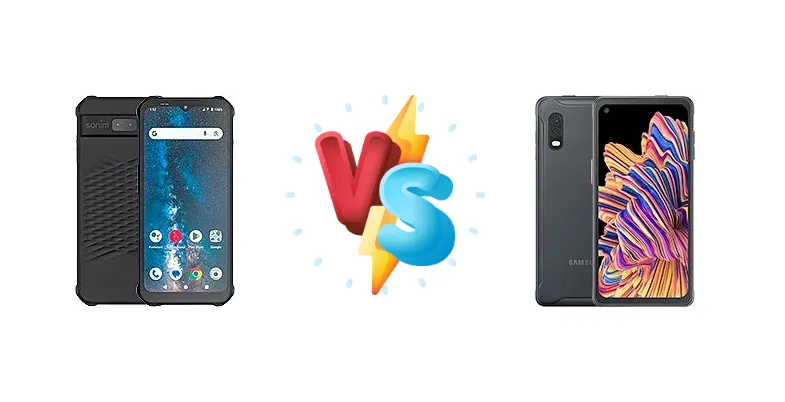
Sonim XP400 vs. Samsung Galaxy XCover Pro: Which Rugged Phone Reigns Supreme?
| Phones Images | |||||
|---|---|---|---|---|---|
|
🏆 Quick Verdict
For most users prioritizing performance and future-proofing, the Sonim XP400 is the better choice. Its Snapdragon 4 Gen 2 (4nm) chipset delivers a noticeable performance advantage over the XCover Pro’s Exynos 9611 (10nm), translating to smoother multitasking and potentially longer software support. However, the XCover Pro remains a viable option for those on a tighter budget.
| PHONES | ||
|---|---|---|
| Phone Names | Sonim XP400 | Samsung Galaxy XCover Pro |
| Network | ||
|---|---|---|
| 2G bands | GSM 850 / 900 / 1800 / 1900 | GSM 850 / 900 / 1800 / 1900 |
| 3G bands | HSDPA 850 / 900 / 1700(AWS) / 1900 / 2100 | HSDPA 850 / 900 / 1900 / 2100 - International |
| 4G bands | 1, 3, 5, 7, 8, 20, 26, 28, 32, 38, 40, 41, 42, 68, 71 | 1, 2, 3, 5, 7, 8, 20, 28, 38, 40, 41 - International |
| 5G bands | 1, 3, 5, 7, 8, 20, 26, 28, 38, 40, 41, 71, 75, 77, 78 SA/NSA | - |
| Speed | HSPA, LTE, 5G | HSPA 42.2/5.76 Mbps, LTE (3CA) Cat11 600/50 Mbps |
| Technology | GSM / HSPA / LTE / 5G | GSM / HSPA / LTE |
| - | 1, 2, 3, 4, 5, 7, 12, 13, 14, 20, 29, 38, 40, 41, 66 - Canada | |
| Launch | ||
|---|---|---|
| Announced | 2025, January 22 | 2020, January |
| Status | Available. Released 2025, January 22 | Available. Released 2020, January |
| Body | ||
|---|---|---|
| Dimensions | 170 x 78 x 10.2 mm (6.69 x 3.07 x 0.40 in) | 159.9 x 76.7 x 10 mm (6.30 x 3.02 x 0.39 in) |
| SIM | Nano-SIM + Nano-SIM | · Nano-SIM· Nano-SIM + Nano-SIM |
| Weight | 230 g (8.11 oz) | 218 g (7.69 oz) |
| - | IP68 dust/water resistant (up to 1.5m for 35 min) Drop-to-concrete resistance from up to 1.5m MIL-STD-810G compliant* *does not guarantee ruggedness or use in extreme conditions | |
| Display | ||
|---|---|---|
| Protection | Corning Gorilla Glass Victus 2 | Corning Gorilla Glass 5 |
| Resolution | 720 x 1612 pixels, 20:9 ratio (~272 ppi density) | 1080 x 2340 pixels, 19.5:9 ratio (~409 ppi density) |
| Size | 6.5 inches, 101.5 cm2 (~76.5% screen-to-body ratio) | 6.3 inches, 97.4 cm2 (~79.4% screen-to-body ratio) |
| Type | IPS LCD | IPS LCD |
| Platform | ||
|---|---|---|
| CPU | Octa-core (2x2.2 GHz Cortex-A78 & 6x1.95 GHz Cortex-A55) | Octa-core (4x2.3 GHz Cortex-A73 & 4x1.7 GHz Cortex-A53) |
| Chipset | Qualcomm SM4450 Snapdragon 4 Gen 2 (4 nm) | Exynos 9611 (10 nm) |
| GPU | Adreno 613 | Mali-G72 MP3 |
| OS | Android 14, up to 2 major Android upgrades | Android 10, upgradable to Android 13, One UI 5 |
| Memory | ||
|---|---|---|
| Card slot | microSDXC (uses shared SIM slot) | microSDXC (dedicated slot) |
| Internal | 128GB 6GB RAM | 64GB 4GB RAM |
| Main Camera | ||
|---|---|---|
| Dual | 50 MP, (wide), PDAF 5 MP, (ultrawide) | 25 MP, f/1.7, 26mm (wide), PDAF 8 MP, f/2.2, 123˚ (ultrawide), 1/4.0", 1.12µm |
| Features | LED flash | Dual-LED flash, HDR, panorama |
| Video | 1080p@30fps | 1080p@30fps |
| Selfie camera | ||
|---|---|---|
| Features | - | HDR |
| Single | 8 MP, (wide) | 13 MP, f/2.0, (wide), 1/3.1", 1.12µm |
| Video | 1080p@30fps | 1080p@30fps |
| Sound | ||
|---|---|---|
| 3.5mm jack | - | Yes |
| 35mm jack | No | Yes |
| Loudspeaker | Yes, with stereo speakers | Yes |
| Comms | ||
|---|---|---|
| Bluetooth | 5.1, A2DP, LE | 5.0, A2DP, LE |
| NFC | Yes | Yes |
| Positioning | GPS (L1+L5), GALILEO, GLONASS | GPS, GLONASS, GALILEO, BDS |
| Radio | FM radio | FM radio (market/region dependent) |
| USB | USB Type-C 3.1 | USB Type-C 2.0 |
| WLAN | Wi-Fi 802.11 a/b/g/n/ac, dual-band | Wi-Fi 802.11 a/b/g/n/ac/k/v/r, dual-band, Wi-Fi Direct |
| Features | ||
|---|---|---|
| Sensors | Fingerprint (side-mounted), accelerometer, gyro, proximity, compass, barometer | Fingerprint (side-mounted), accelerometer, gyro, proximity, compass |
| - | ANT+ | |
| Battery | ||
|---|---|---|
| Charging | - | 15W wired |
| Type | 5000 mAh | Li-Po 4050 mAh, removable |
| Misc | ||
|---|---|---|
| Colors | Black | Black |
| Models | - | SM-G715FN/DS, SM-G715FN, SM-G715F, SM-G715W, SM-G715U, SM-G715U1 |
| Price | € 249.90 | About 120 EUR |
| SAR EU | - | 0.47 W/kg (head) 1.23 W/kg (body) |
Sonim XP400
- More powerful and efficient Snapdragon 4 Gen 2 chipset
- Likely longer software support due to newer hardware
- Potentially better battery life due to 4nm process
- Less widely available than Samsung devices
- Specific display details are currently unknown
Samsung Galaxy XCover Pro
- Samsung ecosystem integration
- Wider carrier availability
- Established brand recognition
- Older and less efficient Exynos 9611 chipset
- Slower 15W charging
- Potential for throttling under sustained load
Display Comparison
Neither device is known for a groundbreaking display. Specifics like brightness nits and panel type are unavailable for the XP400, but given its focus on outdoor usability, we can assume a reasonably bright panel. The XCover Pro’s display is similarly functional. The key difference lies in the underlying processing power needed to drive the display; the XP400’s more efficient chipset may contribute to slightly better battery life during prolonged screen-on time. Bezels are likely comparable, prioritizing durability over a sleek aesthetic on both.
Camera Comparison
Detailed camera specs are limited. Both phones likely feature serviceable cameras for documentation purposes, but neither is positioned as a photography powerhouse. The XCover Pro may include features like a dedicated macro lens (often 2MP), but these are typically of limited utility. The larger sensor size, if present on the XP400, would be a key advantage, capturing more light and detail. Image processing will likely differ, with Samsung’s software generally aiming for more vibrant, saturated images, while Sonim may prioritize accuracy.
Performance
The core difference lies in the chipsets. The Sonim XP400’s Qualcomm SM4450 Snapdragon 4 Gen 2 (4nm) is a significant upgrade over the Samsung Galaxy XCover Pro’s Exynos 9611 (10nm). The 4nm process node of the Snapdragon offers superior power efficiency and thermal performance. The XP400’s CPU configuration – 2x2.2 GHz Cortex-A78 & 6x1.95 GHz Cortex-A55 – provides a more modern architecture than the XCover Pro’s 4x2.3 GHz Cortex-A73 & 4x1.7 GHz Cortex-A53. This translates to faster application loading times, smoother multitasking, and improved responsiveness. The XCover Pro, while adequate for basic tasks, is likely to exhibit throttling under sustained load due to its less efficient chipset and larger process node.
Battery Life
Battery capacity details are missing for the XP400. The XCover Pro supports 15W wired charging, a relatively slow rate by today’s standards. The XP400’s more efficient Snapdragon 4 Gen 2 chipset will likely result in better battery life, even with a comparable or slightly smaller battery capacity. The 4nm process node significantly reduces power consumption, extending usage time between charges. While the XCover Pro’s battery life is adequate, the XP400 is poised to offer a more enduring experience, particularly for users in the field.
Buying Guide
Buy the Sonim XP400 if you need a rugged phone with modern processing power for demanding applications, reliable performance under sustained loads, and a device likely to receive longer software updates. Buy the Samsung Galaxy XCover Pro if you prioritize Samsung’s ecosystem integration, prefer a more readily available device through carrier channels, and are comfortable with a slightly older, less efficient chipset for basic task management.