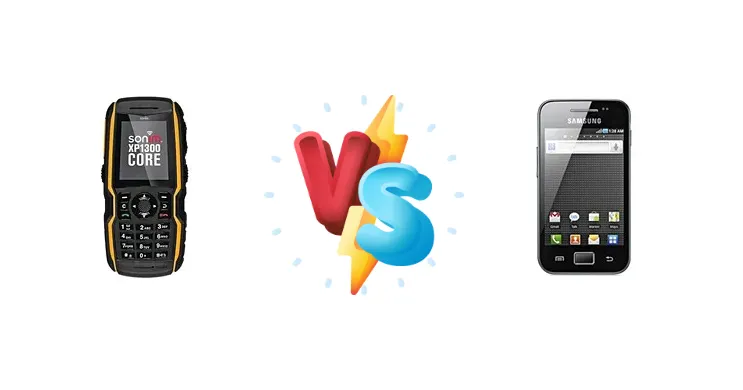
Comparing the Sonim XP1300 Core and the Samsung Galaxy Ace S5830 is a study in contrasts. The Ace represents the dawn of accessible smartphones, while the Sonim embodies a modern focus on extreme durability. This comparison isn't about raw specs; it's about understanding the vastly different priorities driving each device and who benefits from them.
🏆 Quick Verdict
For the average user seeking a modern smartphone experience, the Sonim XP1300 Core is the clear choice, despite limited available specifications. Its likely modern Android version and focus on durability offer a more functional and secure experience than the aging Galaxy Ace S5830, which is largely relegated to collector's status.
| Network |
|---|
| 2G bands | GSM 850 / 900 / 1800 / 1900 | GSM 850 / 900 / 1800 / 1900 |
| 3G bands | - | HSDPA 900 / 2100 |
| EDGE | Class 10 | - |
| GPRS | Class 10 | - |
| Speed | - | HSPA 7.2/0.384 Mbps |
| Technology | GSM | GSM / HSPA |
| | - | HSDPA 850 / 1900 - Samsung Galaxy Ace S5830L |
| Launch |
|---|
| Announced | 2010, October. Released 2010, November | 2011, January. Released 2011, February |
| Status | Discontinued | Discontinued |
| Body |
|---|
| Dimensions | 126 x 60 x 25 mm (4.96 x 2.36 x 0.98 in) | 112.4 x 59.9 x 11.5 mm (4.43 x 2.36 x 0.45 in) |
| SIM | Mini-SIM | Mini-SIM |
| Weight | 185 g (6.53 oz) | 113 g (3.99 oz) |
| | MIL-STD-810F compliant
IP68 dust/water resistant (up to 1.5m for 30 mins)
Drop-to-concrete resistance from up to 2m
Operational range -20°C to +55°C
Flashlight | - |
| Display |
|---|
| Protection | Corning Gorilla Glass | Corning Gorilla Glass |
| Resolution | 240 x 320 pixels, 4:3 ratio (~200 ppi density) | 320 x 480 pixels, 3:2 ratio (~165 ppi density) |
| Size | 2.0 inches, 12.4 cm2 (~16.4% screen-to-body ratio) | 3.5 inches, 36.5 cm2 (~54.2% screen-to-body ratio) |
| Type | TFT, 65K colors | TFT |
| Platform |
|---|
| CPU | - | 800 MHz ARM 11 |
| Chipset | - | Qualcomm MSM7227 Snapdragon S1 |
| GPU | - | Adreno 200 |
| OS | MediaTek MT6235 platform | Android 2.3 (Gingerbread), TouchWiz UI 3 |
| Memory |
|---|
| Card slot | microSDHC (dedicated slot) | microSDHC (dedicated slot), 2 GB included |
| Internal | - | 158MB 278MB RAM |
| Main Camera |
|---|
| Features | - | LED flash |
| Single | - | 5 MP, f/2.6, AF |
| Video | - | 480p@24fps |
| Sound |
|---|
| 3.5mm jack | Yes | Yes |
| 35mm jack | Yes | Yes |
| Loudspeaker | Yes | Yes |
| Comms |
|---|
| Bluetooth | 2.1, A2DP | 2.1, A2DP |
| Positioning | No | GPS, A-GPS |
| Radio | FM radio | Stereo FM radio, RDS |
| USB | 2.0 | microUSB 2.0 |
| WLAN | No | Wi-Fi 802.11 b/g/n, DLNA, hotspot |
| Features |
|---|
| Browser | WAP 2.0/xHTML (Opera Mini) | HTML |
| Sensors | - | Accelerometer, proximity, compass |
| | Organizer
MP3/WAV/AAC player
MP4/H.263 player
Voice memo
Stopwatch
Count-down timer
File manager | - |
| Battery |
|---|
| Stand-by | Up to 800 h | Up to 640 h (2G) / Up to 420 h (3G) |
| Talk time | Up to 18 h | Up to 11 h (2G) / Up to 6 h 30 min (3G) |
| Type | Removable Li-Ion 1750 mAh battery | Removable Li-Ion 1350 mAh battery |
| Misc |
|---|
| Colors | Black, Black/Yellow | Black, White, Hugo Boss Edition, La Fleur |
| Models | - | GT-S5830 |
| Price | About 290 EUR | About 90 EUR |
| SAR | - | 0.69 W/kg (head) 1.31 W/kg (body) |
| SAR EU | - | 0.84 W/kg (head) |
| Tests |
|---|
| Audio quality | - |
Noise -84.9dB / Crosstalk -82.1dB |
| Camera | - |
Photo |
| Display | - |
Contrast ratio: 683:1 (nominal) |
| Loudspeaker | - |
Voice 71dB / Noise 66dB / Ring 67dB
|
Sonim XP1300 Core
- Likely superior durability and water resistance
- Modern Android operating system (potentially)
- Longer battery life (estimated)
- Specific specifications are largely unknown
- Potentially higher price point
Samsung Galaxy Ace S5830
- Low cost (if available)
- Simple and easy-to-use interface
- Collector's item for early Android enthusiasts
- Outdated hardware and software
- Poor performance with modern apps
- Limited security updates
- Small screen and low resolution
Display Comparison
The Samsung Galaxy Ace S5830 boasts a contrast ratio of 683:1, a respectable figure for its time. However, details regarding the Sonim XP1300 Core’s display are unavailable. Given Sonim’s focus, we can infer the XP1300 Core’s display prioritizes visibility in direct sunlight and durability over color accuracy or high resolution. The Ace’s display technology is likely TFT LCD, common in 2010, while the Sonim likely utilizes a more robust, potentially laminated, display to withstand impacts. The Ace’s smaller screen size (likely around 3.5 inches) contrasts with the potentially larger display of the Sonim, geared towards usability with gloves.
Camera Comparison
Both devices feature a 'Photo' camera, but details are scarce. The Galaxy Ace S5830 likely has a 5MP camera, typical for its era, but image quality would be limited by the sensor size and processing capabilities. The Sonim XP1300 Core’s camera specifications are unknown, but given its target audience, it likely prioritizes functionality and reliability over high megapixel counts. It’s reasonable to expect a camera capable of documenting worksite conditions, even if it doesn’t compete with flagship smartphone cameras.
Performance
The Samsung Galaxy Ace S5830 is powered by a Qualcomm MSM7227 Snapdragon S1 chipset with an 800 MHz ARM 11 CPU. This was entry-level performance in 2010, suitable for basic tasks like calls, texts, and light web browsing. The Sonim XP1300 Core’s processor is unspecified, but given its modern release date, it almost certainly features a significantly more powerful and efficient processor. The Snapdragon S1’s architecture is outdated, lacking the multi-core processing and advanced features found in contemporary chipsets. This translates to a sluggish user experience on the Ace compared to the likely responsiveness of the Sonim.
Battery Life
Battery capacity for both devices is unknown. However, the Snapdragon S1 in the Galaxy Ace S5830 is relatively power-efficient, but its small battery capacity (likely around 1500mAh) would require frequent charging with moderate use. The Sonim XP1300 Core, designed for extended use in the field, likely features a larger battery capacity and optimized power management. Sonim phones are known for long standby times, a critical feature for users who may not have access to frequent charging opportunities. The Ace’s charging speed would be limited by its older technology, while the Sonim likely supports faster charging standards.
Buying Guide
Buy the Sonim XP1300 Core if you need a phone that can withstand harsh environments, prioritize reliability over cutting-edge features, and require a modern Android experience. Buy the Samsung Galaxy Ace S5830 if you're a collector of early Android devices, appreciate a simpler user interface, or need a very basic, inexpensive phone for minimal tasks – understanding its limitations are significant.
Frequently Asked Questions
❓ Is the Samsung Galaxy Ace S5830 still secure to use online in 2024?
No. The Samsung Galaxy Ace S5830 runs an extremely outdated version of Android that no longer receives security updates. Using it for online activities like banking or social media poses a significant security risk due to known vulnerabilities.
❓ What kind of work environments is the Sonim XP1300 Core designed for?
The Sonim XP1300 Core is designed for demanding work environments such as construction, manufacturing, public safety, and field services. Its ruggedized construction provides protection against drops, dust, water, and extreme temperatures.
❓ Can I run modern apps like WhatsApp or Facebook on the Samsung Galaxy Ace S5830?
While some older versions of WhatsApp and Facebook *might* technically run, the experience will be extremely slow and unreliable due to the phone's limited processing power and memory. Many modern apps are simply incompatible with such an old operating system.
❓ Does the Sonim XP1300 Core support 5G connectivity?
While specific details are unavailable, Sonim phones generally prioritize reliable connectivity. It's likely the XP1300 Core supports at least 4G LTE, and potentially 5G depending on the specific model and carrier compatibility.