
Sonim XP10 vs. XP5s: A Deep Dive into Rugged Performance and Value
| Phones Images | |||||
|---|---|---|---|---|---|
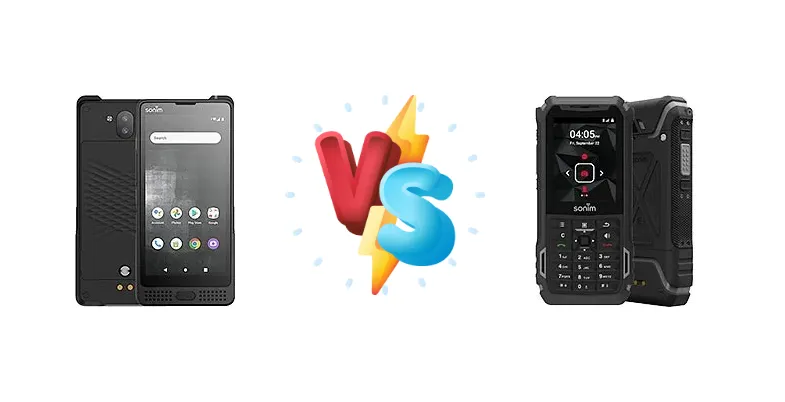
|
🏆 Quick Verdict
For most users needing a modern, capable rugged phone, the Sonim XP10 is the clear winner. Its Snapdragon 480 5G chipset delivers a substantially faster experience, and the inclusion of wireless charging adds convenience. However, the XP5s remains a viable choice for those on a tight budget prioritizing core rugged functionality over speed.
| PHONES | ||
|---|---|---|
| Phone Names | Sonim XP10 | Sonim XP5s |
| Network | ||
|---|---|---|
| 2G bands | GSM 850 / 900 / 1800 / 1900 | GSM 850 / 900 / 1800 / 1900 |
| 3G bands | HSDPA 850 / 900 / 1700(AWS) / 1900 / 2100 | HSDPA 850 / 900 / 1700(AWS) / 1900 / 2100 |
| 4G bands | 1, 2, 3, 4, 5, 7, 8, 12, 13, 14, 20, 25, 26, 29, 30, 38, 39, 40, 41, 42, 43, 46, 48, 66, 71 | 1, 2, 3, 4, 5, 7, 8, 12, 13, 14, 25, 26, 28, 30, 38, 41, 66 |
| 5G bands | 2, 5, 14, 25, 30, 41, 48, 66, 71, 77, 78 SA/NSA/Sub6 | - |
| Speed | HSPA, LTE, 5G | HSPA, LTE |
| Technology | GSM / HSPA / LTE / 5G | GSM / CDMA / HSPA / EVDO / LTE |
| - | CDMA2000 1xEV-DO | |
| Launch | ||
|---|---|---|
| Announced | 2022, December 02 | 2018, December 21. Released 2018, December 21 |
| Status | Available. Released 2023, Q1 | Discontinued |
| Body | ||
|---|---|---|
| Dimensions | 161 x 77.5 x 16.4 mm (6.34 x 3.05 x 0.65 in) | 141 x 64 x 23 mm (5.55 x 2.52 x 0.91 in) |
| SIM | Nano-SIM + Nano-SIM | Nano-SIM + Nano-SIM |
| Weight | 320 g (11.29 oz) | 260 g (9.17 oz) |
| - | IP68 dust/water resistant (up to 1.5m for 30 min) MIL-STD-810G | |
| Display | ||
|---|---|---|
| Protection | Corning Gorilla Glass Victus | Corning Gorilla Glass 1 |
| Resolution | 1080 x 2160 pixels, 18:9 ratio (~439 ppi density) | 320 x 432 pixels, 4:3 ratio (~204 ppi density) |
| Size | 5.5 inches, 78.1 cm2 (~62.6% screen-to-body ratio) | 2.64 inches, 21.5 cm2 (~23.8% screen-to-body ratio) |
| Type | IPS LCD | TFT LCD |
| Platform | ||
|---|---|---|
| CPU | Octa-core (2x2.2 GHz Cortex-A76 & 6x1.9 GHz Cortex-A55) | Quad-core 1.4 GHz Cortex-A53 |
| Chipset | Qualcomm SM4350 Snapdragon 480 5G (8 nm) | Qualcomm MSM8920 Snapdragon 427 (28 nm) |
| GPU | Adreno 619 | Adreno 308 |
| OS | Android 12, upgradable to Android 13, up to 2 major Android upgrades | Sonim OS (based on AOSP Android 8.1) |
| Memory | ||
|---|---|---|
| Card slot | microSDXC | microSDXC |
| Internal | 128GB 6GB RAM | 16GB 2GB RAM |
| Main Camera | ||
|---|---|---|
| Dual | 50 MP, (wide), PDAF 8 MP, (ultrawide) | - |
| Features | LED flash | LED flash |
| Single | - | 5 MP |
| Video | 1080p@30fps | 720p@30fps |
| Selfie camera | ||
|---|---|---|
| Single | 8 MP, (wide) | - |
| Video | 1080p@30fps | - |
| Sound | ||
|---|---|---|
| 3.5mm jack | - | No |
| 35mm jack | No | No |
| Loudspeaker | Yes, with stereo speakers (100dB+) | Yes |
| Comms | ||
|---|---|---|
| Bluetooth | 5.1, A2DP, LE, aptX | 4.2, A2DP, EDR, LE |
| NFC | Yes | No |
| Positioning | GPS (L1+L5), GALILEO, GLONASS, BDS | GPS, GLONASS |
| Radio | Unspecified | FM radio |
| USB | USB Type-C, magnetic connector pins | USB Type-C |
| WLAN | Wi-Fi 802.11 a/b/g/n/ac/mc, dual-band | Wi-Fi 802.11 a/b/g/n/ac/e/k/r/h, dual-band |
| Features | ||
|---|---|---|
| Sensors | Fingerprint (front-mounted), accelerometer, gyro, proximity, compass, barometer | Accelerometer, barometer |
| Battery | ||
|---|---|---|
| Charging | Wireless charging | - |
| Type | Li-Ion 5000 mAh, removable | Li-Ion 3180 mAh, removable |
| Misc | ||
|---|---|---|
| Colors | Black | Black |
| Models | - | XP5800 |
| Price | About 500 EUR | About 340 EUR |
Sonim XP10
- Significantly faster processor for smoother performance
- 5G connectivity for faster data speeds
- Wireless charging for added convenience
- Likely higher price point
- Potentially slightly shorter battery life under heavy load (despite efficiency gains)
Sonim XP5s
- More affordable price
- Reliable performance for basic tasks
- Proven durability and ruggedness
- Outdated and slow processor
- Limited to 4G LTE connectivity
- No wireless charging
Display Comparison
Neither Sonim provides detailed display specifications beyond basic resolution. However, the XP10’s more powerful processor suggests a potentially more responsive touchscreen experience. Given the focus on outdoor usability, both likely employ enhanced visibility features, but the XP10’s processing headroom could allow for more sophisticated brightness adjustments and color calibration. The lack of detailed specs makes a direct comparison difficult, but the XP10 benefits from the overall system performance.
Camera Comparison
Detailed camera specifications are unavailable for either device. However, given the target audience, image quality is likely secondary to durability. Both phones likely feature cameras adequate for documentation purposes (photos of job sites, damage reports, etc.). The XP10’s more powerful image signal processor (ISP) within the Snapdragon 480 could offer slightly improved image processing, particularly in low-light conditions, but this is speculative without further data. We can assume both prioritize robust camera housing over high megapixel counts or advanced features.
Performance
The performance gap between the XP10 and XP5s is substantial. The XP10’s Qualcomm SM4350 Snapdragon 480 5G, built on an 8nm process, features an octa-core CPU (2x2.2 GHz Cortex-A76 & 6x1.9 GHz Cortex-A55) compared to the XP5s’ quad-core 1.4 GHz Cortex-A53 running on the older, less efficient 28nm Snapdragon 427. This translates to significantly faster app loading times, smoother multitasking, and the ability to handle more demanding applications on the XP10. The 5G modem in the XP10 also provides a future-proofed connectivity option, while the XP5s is limited to 4G LTE. The architectural difference alone – Cortex-A76 vs A53 – represents a generational leap in performance per clock cycle.
Battery Life
Battery capacity isn't specified for either device. However, the XP10’s more efficient 8nm Snapdragon 480 chipset should result in better battery life despite potentially powering a more demanding display and 5G connectivity. The XP10 also gains the advantage of wireless charging, a convenience feature absent on the XP5s. While the XP5s might offer comparable standby time, the XP10 will likely excel in active usage scenarios, especially when utilizing 5G data.
Buying Guide
Buy the Sonim XP10 if you need a rugged phone capable of handling demanding tasks like streaming video, using multiple apps simultaneously, or relying on 5G connectivity for remote work. Buy the Sonim XP5s if you prioritize a lower price point and require a reliable, durable device for basic communication – voice calls, text messaging, and essential work apps – without the need for high-speed processing or data transfer.