
Sonim XP10 vs XP3plus: A Deep Dive into Rugged Smartphone Performance
| Phones Images | |||||
|---|---|---|---|---|---|
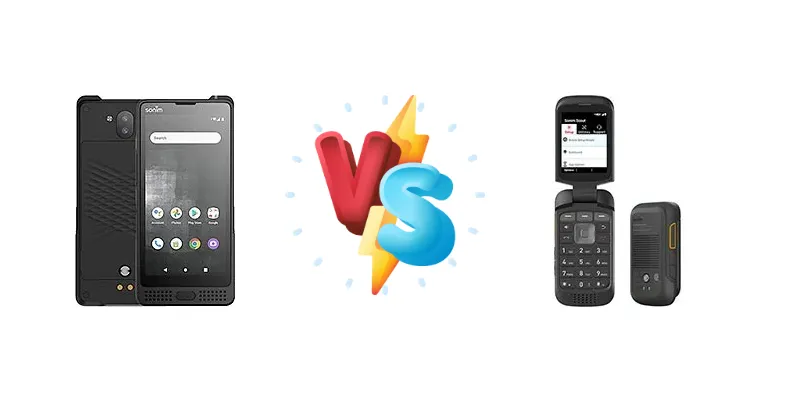
|
🏆 Quick Verdict
For users prioritizing 5G connectivity and a more modern processor for demanding tasks, the Sonim XP10 is the superior choice. However, the XP3plus offers a compelling value proposition for those who don't require 5G and prioritize a potentially more thermally stable experience with its 11nm process.
| PHONES | ||
|---|---|---|
| Phone Names | Sonim XP10 | Sonim XP3plus |
| Network | ||
|---|---|---|
| 2G bands | GSM 850 / 900 / 1800 / 1900 | GSM 850 / 900 / 1800 / 1900 |
| 3G bands | HSDPA 850 / 900 / 1700(AWS) / 1900 / 2100 | HSDPA 850 / 1700(AWS) / 1900 / 2100 |
| 4G bands | 1, 2, 3, 4, 5, 7, 8, 12, 13, 14, 20, 25, 26, 29, 30, 38, 39, 40, 41, 42, 43, 46, 48, 66, 71 | 1, 2, 3, 4, 5, 7, 12, 13, 14, 25, 26, 30, 39, 40, 41, 66, 71 |
| 5G bands | 2, 5, 14, 25, 30, 41, 48, 66, 71, 77, 78 SA/NSA/Sub6 | - |
| Speed | HSPA, LTE, 5G | HSPA, LTE |
| Technology | GSM / HSPA / LTE / 5G | GSM / HSPA / LTE |
| Launch | ||
|---|---|---|
| Announced | 2022, December 02 | 2021, September |
| Status | Available. Released 2023, Q1 | Available. Released 2021, September |
| Body | ||
|---|---|---|
| Dimensions | 161 x 77.5 x 16.4 mm (6.34 x 3.05 x 0.65 in) | 116 x 60 x 28 mm (4.57 x 2.36 x 1.10 in) |
| SIM | Nano-SIM + Nano-SIM | Nano-SIM |
| Weight | 320 g (11.29 oz) | 220 g (7.76 oz) |
| - | IP68 dust/water resistant (up to 1.5m for 30 min) MIL-STD-810H | |
| Display | ||
|---|---|---|
| Protection | Corning Gorilla Glass Victus | - |
| Resolution | 1080 x 2160 pixels, 18:9 ratio (~439 ppi density) | 240 x 320 pixels, 4:3 ratio (~143 ppi density) |
| Size | 5.5 inches, 78.1 cm2 (~62.6% screen-to-body ratio) | 2.8 inches, 24.3 cm2 (~34.9% screen-to-body ratio) |
| Type | IPS LCD | TFT LCD |
| - | Cover display: IPS LCD, 1.3 inches, 240 x 240 pixels | |
| Platform | ||
|---|---|---|
| CPU | Octa-core (2x2.2 GHz Cortex-A76 & 6x1.9 GHz Cortex-A55) | Octa-core (4x2.0 GHz Kryo 260 Gold & 4x1.8 GHz Kryo 260 Silver) |
| Chipset | Qualcomm SM4350 Snapdragon 480 5G (8 nm) | Qualcomm SM6115 Snapdragon 662 (11 nm) |
| GPU | Adreno 619 | Adreno 610 |
| OS | Android 12, upgradable to Android 13, up to 2 major Android upgrades | Sonim OS (based on AOSP Android 11) |
| Memory | ||
|---|---|---|
| Card slot | microSDXC | microSDXC (dedicated slot) |
| Internal | 128GB 6GB RAM | 16GB 2GB RAM |
| Main Camera | ||
|---|---|---|
| Dual | 50 MP, (wide), PDAF 8 MP, (ultrawide) | - |
| Features | LED flash | LED flash |
| Single | - | 8 MP |
| Video | 1080p@30fps | - |
| Selfie camera | ||
|---|---|---|
| Single | 8 MP, (wide) | - |
| Video | 1080p@30fps | - |
| Sound | ||
|---|---|---|
| 3.5mm jack | - | Yes |
| 35mm jack | No | Yes |
| Loudspeaker | Yes, with stereo speakers (100dB+) | Yes |
| Comms | ||
|---|---|---|
| Bluetooth | 5.1, A2DP, LE, aptX | 5.0, A2DP, LE |
| NFC | Yes | No |
| Positioning | GPS (L1+L5), GALILEO, GLONASS, BDS | GPS, GLONASS, GALILEO |
| Radio | Unspecified | FM Radio |
| USB | USB Type-C, magnetic connector pins | USB Type-C |
| WLAN | Wi-Fi 802.11 a/b/g/n/ac/mc, dual-band | Wi-Fi 802.11 a/b/g/n/ac, dual-band |
| Features | ||
|---|---|---|
| Sensors | Fingerprint (front-mounted), accelerometer, gyro, proximity, compass, barometer | Accelerometer, barometer |
| Battery | ||
|---|---|---|
| Charging | Wireless charging | - |
| Type | Li-Ion 5000 mAh, removable | Li-Ion 2300 mAh, removable |
| Misc | ||
|---|---|---|
| Colors | Black | Black |
| Price | About 500 EUR | About 240 EUR |
Sonim XP10
- 5G Connectivity for faster data speeds
- More powerful Snapdragon 480 processor
- Wireless Charging for added convenience
- Potentially higher price point
- Newer chipset may have initial software bugs
Sonim XP3plus
- Proven Snapdragon 662 chipset reliability
- Potentially better thermal management due to 11nm process
- Likely more affordable price
- Lacks 5G connectivity
- Less powerful processor for demanding tasks
Display Comparison
Display specifications are not provided, but given Sonim’s focus, both likely utilize hardened displays with good outdoor visibility. The absence of details prevents a direct comparison of brightness nits or panel technology. However, the XP10’s newer chipset *could* support higher resolution displays or refresh rates in future iterations, though this isn’t confirmed for this model. Bezels are likely substantial on both to contribute to drop protection.
Camera Comparison
Camera details are absent, but Sonim phones typically prioritize functionality over photographic excellence. Both devices likely feature basic camera setups suitable for documentation and quick snapshots. Without sensor size or aperture information, it’s difficult to assess image quality. The inclusion of a 2MP macro lens on either device is likely a marketing feature with limited real-world benefit. Image processing will likely be geared towards quick capture and clarity in challenging conditions, rather than artistic effects.
Performance
The core difference lies in the chipsets. The Sonim XP10’s Qualcomm SM4350 Snapdragon 480 5G (8nm) features an octa-core CPU with 2x2.2 GHz Cortex-A76 and 6x1.9 GHz Cortex-A55 cores. This architecture provides a noticeable performance uplift over the XP3plus’s Snapdragon 662 (11nm) with its 4x2.0 GHz Kryo 260 Gold & 4x1.8 GHz Kryo 260 Silver configuration. The 8nm process of the Snapdragon 480 generally translates to better power efficiency and potentially lower thermal throttling under sustained load. The XP3plus, while still capable, will likely exhibit more performance limitations when multitasking or running graphically intensive applications. The 5G modem in the XP10 is a significant advantage for users in areas with 5G coverage.
Battery Life
Battery capacity isn’t specified, but Sonim prioritizes long battery life. The Snapdragon 480’s 8nm process in the XP10 *should* contribute to better battery efficiency compared to the 11nm Snapdragon 662 in the XP3plus, all else being equal. The XP10 also benefits from wireless charging, a convenience feature absent on the XP3plus. Actual 0-100% charging times will depend on the charger used, but the XP10’s wireless charging adds flexibility, while the XP3plus may offer faster wired charging speeds if a higher wattage adapter is supported.
Buying Guide
Buy the Sonim XP10 if you need 5G connectivity for remote work or data-intensive applications, and anticipate using apps that benefit from the Snapdragon 480’s Cortex-A76 cores. Buy the Sonim XP3plus if you prioritize a proven, reliable chipset in a rugged package, and your usage primarily revolves around voice communication, basic productivity, and don't require the latest in cellular technology.