
Sonim XP10 vs Cat S52: A Deep Dive into Rugged Smartphone Performance
| Phones Images | |||||
|---|---|---|---|---|---|
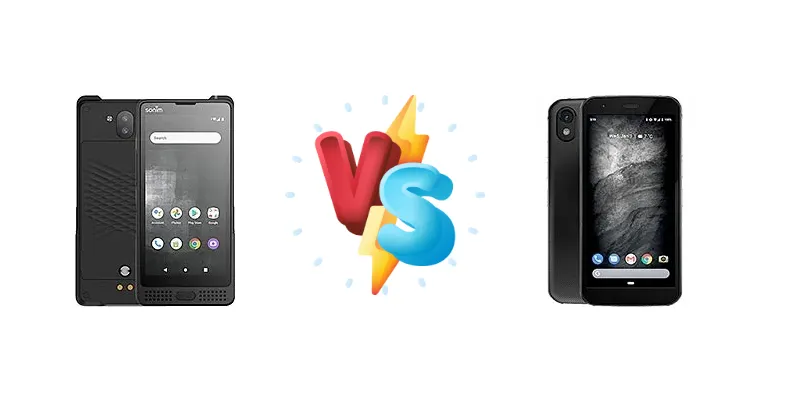
|
🏆 Quick Verdict
For users prioritizing performance and future-proofing, the Sonim XP10 is the clear winner. Its Snapdragon 480 5G chipset offers a substantial performance advantage over the Cat S52’s Helio P35, alongside the convenience of wireless charging. While the S52 is more affordable, the XP10’s superior processing power justifies the price difference for demanding tasks.
| PHONES | ||
|---|---|---|
| Phone Names | Sonim XP10 | Cat S52 |
| Network | ||
|---|---|---|
| 2G bands | GSM 850 / 900 / 1800 / 1900 | GSM 850 / 900 / 1800 / 1900 |
| 3G bands | HSDPA 850 / 900 / 1700(AWS) / 1900 / 2100 | HSDPA 850 / 900 / 1700(AWS) / 1900 / 2100 |
| 4G bands | 1, 2, 3, 4, 5, 7, 8, 12, 13, 14, 20, 25, 26, 29, 30, 38, 39, 40, 41, 42, 43, 46, 48, 66, 71 | 1, 2, 3, 4, 5, 7, 8, 20, 28, 38 |
| 5G bands | 2, 5, 14, 25, 30, 41, 48, 66, 71, 77, 78 SA/NSA/Sub6 | - |
| Speed | HSPA, LTE, 5G | HSPA 42.2/5.76 Mbps, LTE (2CA) Cat6 300/100 Mbps |
| Technology | GSM / HSPA / LTE / 5G | GSM / HSPA / LTE |
| Launch | ||
|---|---|---|
| Announced | 2022, December 02 | 2019, October. Released 2019, November |
| Status | Available. Released 2023, Q1 | Discontinued |
| Body | ||
|---|---|---|
| Build | - | Glass front (Gorilla Glass 6), plastic back, aluminum frame |
| Dimensions | 161 x 77.5 x 16.4 mm (6.34 x 3.05 x 0.65 in) | 158.1 x 76.6 x 9.7 mm (6.22 x 3.02 x 0.38 in) |
| SIM | Nano-SIM + Nano-SIM | · Nano-SIM· Nano-SIM + Nano-SIM |
| Weight | 320 g (11.29 oz) | 210 g (7.41 oz) |
| - | IP68 dust/water resistant (up to 1.5m for 35 mins) Drop-to-concrete resistance from up to 1.5m MIL-STD-810G compliant | |
| Display | ||
|---|---|---|
| Protection | Corning Gorilla Glass Victus | Corning Gorilla Glass 6 |
| Resolution | 1080 x 2160 pixels, 18:9 ratio (~439 ppi density) | 720 x 1440 pixels, 18:9 ratio (~285 ppi density) |
| Size | 5.5 inches, 78.1 cm2 (~62.6% screen-to-body ratio) | 5.65 inches, 82.4 cm2 (~68.0% screen-to-body ratio) |
| Type | IPS LCD | IPS LCD |
| Platform | ||
|---|---|---|
| CPU | Octa-core (2x2.2 GHz Cortex-A76 & 6x1.9 GHz Cortex-A55) | Octa-core (4x2.3 GHz Cortex-A53 & 4x1.8 GHz Cortex-A53) |
| Chipset | Qualcomm SM4350 Snapdragon 480 5G (8 nm) | Mediatek MT6765 Helio P35 (12 nm) |
| GPU | Adreno 619 | PowerVR GE8320 |
| OS | Android 12, upgradable to Android 13, up to 2 major Android upgrades | Android 9.0 (Pie), planned upgrade to Android 10 |
| Memory | ||
|---|---|---|
| Card slot | microSDXC | microSD |
| Internal | 128GB 6GB RAM | 64GB 4GB RAM |
| - | eMMC 5.1 | |
| Main Camera | ||
|---|---|---|
| Dual | 50 MP, (wide), PDAF 8 MP, (ultrawide) | - |
| Features | LED flash | LED flash |
| Single | - | 12 MP, f/1.8, (wide), 1/2.55", 1.4µm, dual pixel PDAF |
| Video | 1080p@30fps | 1080p@30fps, gyro-EIS |
| Selfie camera | ||
|---|---|---|
| Single | 8 MP, (wide) | 8 MP |
| Video | 1080p@30fps | 1080p@30fps |
| Sound | ||
|---|---|---|
| 3.5mm jack | - | Yes |
| 35mm jack | No | Yes |
| Loudspeaker | Yes, with stereo speakers (100dB+) | Yes |
| Comms | ||
|---|---|---|
| Bluetooth | 5.1, A2DP, LE, aptX | 5.0, A2DP, LE |
| NFC | Yes | Yes |
| Positioning | GPS (L1+L5), GALILEO, GLONASS, BDS | GPS, GLONASS, GALILEO, BDS |
| Radio | Unspecified | FM radio |
| USB | USB Type-C, magnetic connector pins | USB Type-C 2.0, OTG |
| WLAN | Wi-Fi 802.11 a/b/g/n/ac/mc, dual-band | Wi-Fi 802.11 a/b/g/n/ac, dual-band, Wi-Fi Direct |
| Features | ||
|---|---|---|
| Sensors | Fingerprint (front-mounted), accelerometer, gyro, proximity, compass, barometer | Fingerprint (rear-mounted), accelerometer, gyro, proximity, compass |
| Battery | ||
|---|---|---|
| Charging | Wireless charging | 10W wired |
| Type | Li-Ion 5000 mAh, removable | Li-Ion 3100 mAh, non-removable |
| Misc | ||
|---|---|---|
| Colors | Black | Black |
| Price | About 500 EUR | About 440 EUR |
Sonim XP10
- Significantly faster processor with Snapdragon 480 5G
- 5G connectivity for faster data speeds
- Wireless charging for added convenience
- Likely higher price point
- Potentially larger size due to 5G components
Cat S52
- More affordable price
- Rugged design for durability
- Acceptable performance for basic tasks
- Slow 10W wired charging
- Outdated Helio P35 chipset
- Limited performance for demanding applications
Display Comparison
Neither device's display specifications are provided, so a direct comparison is limited. However, given the XP10's more modern chipset, it's reasonable to assume it benefits from a more advanced display panel, potentially with higher brightness and color accuracy. The Cat S52, targeting a lower price point, likely utilizes a more basic LCD panel. Bezels are likely similar, prioritizing durability over a sleek aesthetic on both devices.
Camera Comparison
Without detailed camera specifications, a precise comparison is difficult. However, the chipset difference suggests the XP10 benefits from a more capable image signal processor (ISP), leading to better image quality, especially in low-light conditions. The S52 likely relies on basic image processing algorithms. The presence of a 2MP macro camera on the S52 is unlikely to provide significant value, as these sensors typically lack the resolution and quality to produce detailed macro shots. The XP10’s ISP, coupled with a potentially larger main sensor (assumed based on the higher-tier chipset), will likely deliver superior overall camera performance.
Performance
The core difference lies in the chipsets. The Sonim XP10’s Qualcomm Snapdragon 480 5G (8nm) is a significant leap ahead of the Cat S52’s MediaTek Helio P35 (12nm). The Snapdragon 480’s Cortex-A76 cores provide substantially more processing power than the P35’s Cortex-A53 cores, resulting in faster app loading times, smoother multitasking, and improved responsiveness. The 8nm process node also contributes to better thermal efficiency, reducing the likelihood of throttling under sustained load. The P35, while adequate for basic tasks, will struggle with more demanding applications. The XP10’s 5G capability is another key advantage, offering significantly faster data speeds where available.
Battery Life
Battery capacity isn't specified for either device. However, the XP10’s more efficient Snapdragon 480 5G chipset should translate to better battery life despite potentially having a similar capacity to the S52. The Cat S52 is limited to 10W wired charging, which is significantly slower than the XP10’s wireless charging capability. Wireless charging offers convenience, while the slower charging speed of the S52 means longer downtime between uses. The XP10’s efficiency advantage will also contribute to faster overall charging times, even if the battery capacities are comparable.
Buying Guide
Buy the Sonim XP10 if you need a phone capable of handling demanding work applications, streaming, or occasional gaming, and value 5G connectivity and wireless charging. It’s ideal for field workers, first responders, or anyone who needs a reliable, future-proof device. Buy the Cat S52 if you prioritize affordability and basic smartphone functionality in a rugged package. It’s a suitable choice for users who primarily need a durable phone for calls, texts, and light app usage, and aren't concerned with high performance or 5G.