
Sonim XP Pro E vs XP8: A Deep Dive into Rugged Smartphone Performance and Endurance
| Phones Images | |||||
|---|---|---|---|---|---|
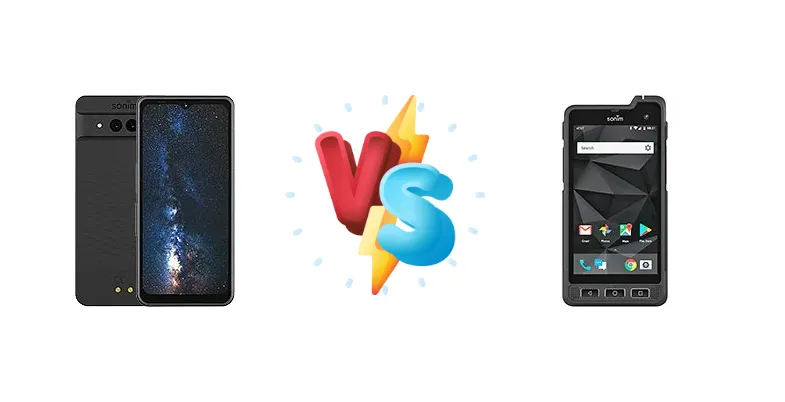
|
🏆 Quick Verdict
For most users, the Sonim XP Pro E is the clear winner. Its Snapdragon 7 Gen 3 chipset delivers substantially improved performance and efficiency compared to the XP8’s aging Snapdragon 630, alongside the added benefit of wireless charging. While the XP8 remains a viable option for basic use, the XP Pro E offers a future-proofed experience.
| PHONES | ||
|---|---|---|
| Phone Names | Sonim XP Pro E | Sonim XP8 |
| Network | ||
|---|---|---|
| 2G bands | GSM 850 / 900 / 1800 / 1900 | GSM 850 / 900 / 1800 / 1900 |
| 3G bands | HSDPA 850 / 900 / 1700(AWS) / 1900 / 2100 | HSDPA 850 / 900 / 1700(AWS) / 1900 / 2100 |
| 4G bands | 1, 2, 3, 4, 5, 7, 8, 12, 13, 14, 18, 20, 25, 26, 28, 29, 30, 38, 39, 40, 41, 42, 43, 46, 48, 66, 68, 71 | 1, 2, 3, 4, 5, 7, 8, 12, 13, 14, 20, 25, 26, 28, 29, 30, 38, 40, 41, 66 |
| 5G bands | 1, 2, 3, 5, 7, 14, 20, 25, 26, 28, 30, 38, 40, 41, 48, 66, 70, 71, 77, 78 SA/NSA/Sub6/mmWave | - |
| Speed | HSPA, LTE, 5G | HSPA 42.2/5.76 Mbps, LTE (3CA) Cat12 600/150 Mbps |
| Technology | GSM / HSPA / LTE / 5G | GSM / CDMA / HSPA / EVDO / LTE |
| - | CDMA2000 1xEV-DO | |
| Launch | ||
|---|---|---|
| Announced | 2025, July 09 | 2018, April. Released 2018, May |
| Status | Available. Released 2025, October | Discontinued |
| Body | ||
|---|---|---|
| Dimensions | 171.5 x 80 x 11.5 mm (6.75 x 3.15 x 0.45 in) | 152 x 79.5 x 18 mm (5.98 x 3.13 x 0.71 in) |
| SIM | Nano-SIM | Nano-SIM + Nano-SIM |
| Weight | 267 g (9.42 oz) | 335 g (11.82 oz) |
| - | IP69 dust proof and water resistant over 1 meter and 30 minutes MIL-STD-810G | |
| Display | ||
|---|---|---|
| Protection | Corning Gorilla Glass Victus 2, Mohs level 5 | Corning Gorilla Glass 3 |
| Resolution | 1080 x 2408 pixels, 20:9 ratio (~401 ppi density) | 1080 x 1920 pixels, 16:9 ratio (~441 ppi density) |
| Size | 6.58 inches, 104.3 cm2 (~76.0% screen-to-body ratio) | 5.0 inches, 68.9 cm2 (~57.0% screen-to-body ratio) |
| Type | IPS LCD, 90Hz | IPS LCD |
| Platform | ||
|---|---|---|
| CPU | Octa-core (1x2.63 GHz Cortex-A715 & 3x2.4 GHz Cortex-A715 & 4x1.8 GHz Cortex-A510) | Octa-core 2.2 GHz Cortex-A53 |
| Chipset | Qualcomm SM7550-AB Snapdragon 7 Gen 3 (4 nm) | Qualcomm SDM630 Snapdragon 630 (14 nm) |
| GPU | Adreno 720 | Adreno 508 |
| OS | Android 14, up to 2 major Android upgrades | Android 7.0 (Nougat) |
| Memory | ||
|---|---|---|
| Card slot | microSDXC (dedicated slot) | microSDXC |
| Internal | 256GB 8GB RAM | 64GB 4GB RAM |
| Main Camera | ||
|---|---|---|
| Dual | 50 MP, (wide), PDAF 13 MP, (ultrawide) | - |
| Features | LED flash | LED flash, HDR, panorama |
| Single | - | 12 MP, PDAF |
| Video | 4K@30fps, 1080p@30fps | 1080p@30fps |
| Selfie camera | ||
|---|---|---|
| Single | 16 MP, (wide) | 8 MP |
| Video | 1080p@30fps | 1080p@30fps |
| Sound | ||
|---|---|---|
| 3.5mm jack | - | No |
| 35mm jack | No | No |
| Loudspeaker | Yes, with stereo speakers (100dB+) | Yes |
| Comms | ||
|---|---|---|
| Bluetooth | 5.3, A2DP, LE | 5.0, A2DP, EDR, LE |
| NFC | Yes | Yes |
| Positioning | GPS (L1+L5), GALILEO | GPS, GLONASS |
| Radio | Unspecified | FM radio |
| USB | USB Type-C, magnetic connector pins | USB Type-C 2.0, magnetic connector |
| WLAN | Wi-Fi 802.11 a/b/g/n/ac/6, tri-band | Wi-Fi 802.11 a/b/g/n/ac, dual-band, Wi-Fi Direct |
| Features | ||
|---|---|---|
| Sensors | Fingerprint (side-mounted), accelerometer, gyro, proximity, compass, barometer | Accelerometer, gyro, proximity, compass, barometer |
| Battery | ||
|---|---|---|
| Charging | Wireless charging | 18W wired, QC4 |
| Music play | - | Up to 70 h |
| Stand-by | - | Up to 720 h |
| Talk time | - | Up to 30 h |
| Type | 5000 mAh | Li-Ion 4900 mAh, removable |
| Misc | ||
|---|---|---|
| Colors | Black | Black |
| Models | X802 | XP8800 |
| Price | About 670 EUR | About 700 EUR |
| EU LABEL | ||
|---|---|---|
| Battery | 41:21h endurance, 1000 cycles | - |
| Energy | Class C | - |
| Free fall | Class A (300 falls) | - |
| Repairability | Class C | - |
Sonim XP Pro E
- Significantly faster processor for smoother performance
- Superior battery endurance (41:21h)
- Wireless charging capability for added convenience
- Likely higher price point than the XP8
- Rugged design may result in a bulkier form factor
Sonim XP8
- More affordable price point
- Proven rugged durability
- QC4 fast charging support
- Outdated Snapdragon 630 processor
- Shorter battery life compared to the XP Pro E
- Lacks wireless charging
Display Comparison
Neither Sonim explicitly details display specs beyond ruggedization. However, the focus is on visibility in harsh conditions, not high-end panel technology. The XP Pro E’s more powerful processor could potentially drive a higher resolution or refresh rate display in future iterations, but currently, the display experience is likely similar between the two, prioritizing durability over visual fidelity. Bezels are expected to be substantial on both models, reflecting the rugged design.
Camera Comparison
Detailed camera specifications are lacking for both devices. However, given Sonim’s focus, expect practical, reliable cameras rather than flagship-level imaging. The XP Pro E’s more powerful ISP (Image Signal Processor) within the Snapdragon 7 Gen 3 will likely result in better image processing, particularly in low-light conditions. While neither phone is likely to compete with dedicated camera phones, the XP Pro E should offer a noticeable improvement in image quality and processing speed. We can assume both will prioritize functionality over high megapixel counts.
Performance
The performance gap between these two devices is substantial. The Sonim XP Pro E’s Qualcomm SM7550-AB Snapdragon 7 Gen 3 (4nm) is a generational leap over the XP8’s Snapdragon 630 (14nm). The 7 Gen 3 features an octa-core configuration with a prime Cortex-A715 core clocked at 2.63 GHz, alongside additional A715 and A510 cores, offering significantly improved CPU and GPU performance. The 630’s Cortex-A53 cores at 2.2 GHz are simply outmatched. This translates to faster app loading times, smoother multitasking, and the ability to handle more demanding applications on the XP Pro E. The 4nm process node also contributes to better thermal efficiency, reducing throttling during sustained workloads.
Battery Life
The Sonim XP Pro E boasts an impressive 41:21h endurance rating, indicating exceptional battery life. While the XP8’s battery capacity isn’t specified, its less efficient Snapdragon 630 and lack of wireless charging suggest significantly shorter runtimes. The XP8 does offer 18W wired charging with Quick Charge 4 (QC4), which is faster than a standard charge, but the XP Pro E’s endurance and wireless charging capabilities provide greater flexibility and convenience. The XP Pro E’s 1000 charge cycle rating also suggests a longer lifespan for the battery itself.
Buying Guide
Buy the Sonim XP Pro E if you need a rugged phone capable of handling demanding tasks like data-intensive field work, running multiple apps simultaneously, or benefiting from faster software updates. Buy the Sonim XP8 if you prioritize a lower price point and only require basic communication features – voice calls, texting, and light app usage – and aren't concerned with future performance demands.