
Sonim XP Pro E vs. Nokia XR20: A Deep Dive into Rugged Smartphone Choices
| Phones Images | |||||
|---|---|---|---|---|---|
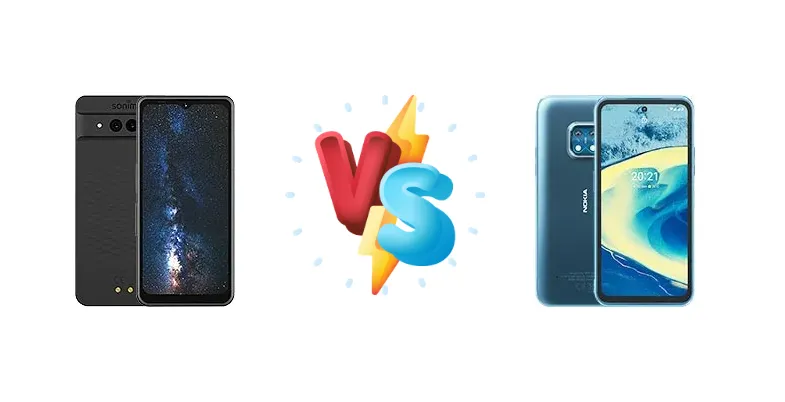
|
🏆 Quick Verdict
For users demanding maximum uptime and resilience in harsh environments, the Sonim XP Pro E is the clear winner. Its Snapdragon 7 Gen 3 chipset and exceptional 41:21h battery endurance significantly outperform the Nokia XR20. However, the Nokia XR20 offers a compelling value proposition for those seeking a durable 5G phone without the premium price tag.
| PHONES | ||
|---|---|---|
| Phone Names | Sonim XP Pro E | Nokia XR20 |
| Network | ||
|---|---|---|
| 2G bands | GSM 850 / 900 / 1800 / 1900 | GSM 850 / 900 / 1800 / 1900 |
| 3G bands | HSDPA 850 / 900 / 1700(AWS) / 1900 / 2100 | HSDPA 850 / 900 / 1700(AWS) / 1900 / 2100 |
| 4G bands | 1, 2, 3, 4, 5, 7, 8, 12, 13, 14, 18, 20, 25, 26, 28, 29, 30, 38, 39, 40, 41, 42, 43, 46, 48, 66, 68, 71 | 1, 2, 3, 4, 5, 7, 8, 12, 13, 14, 20, 25, 26, 28, 30, 38, 40, 41, 48, 66, 71 |
| 5G bands | 1, 2, 3, 5, 7, 14, 20, 25, 26, 28, 30, 38, 40, 41, 48, 66, 70, 71, 77, 78 SA/NSA/Sub6/mmWave | 2, 5, 25, 38, 41, 48, 66, 77, 78 SA/NSA |
| Speed | HSPA, LTE, 5G | HSPA, LTE, 5G |
| Technology | GSM / HSPA / LTE / 5G | GSM / CDMA / HSPA / EVDO / LTE / 5G |
| - | CDMA2000 1xEV-DO | |
| Launch | ||
|---|---|---|
| Announced | 2025, July 09 | 2021, July 27 |
| Status | Available. Released 2025, October | Available. Released 2021, August 04 |
| Body | ||
|---|---|---|
| Dimensions | 171.5 x 80 x 11.5 mm (6.75 x 3.15 x 0.45 in) | 171.6 x 81.5 x 10.6 mm (6.76 x 3.21 x 0.42 in) |
| SIM | Nano-SIM | · Nano-SIM· Nano-SIM + Nano-SIM |
| Weight | 267 g (9.42 oz) | 248 g (8.75 oz) |
| - | IP68 dust/water resistant (up to 1.5m for 60 min) Drop-to-concrete resistance from up to 1.8m MIL-STD-810H compliant | |
| Display | ||
|---|---|---|
| Protection | Corning Gorilla Glass Victus 2, Mohs level 5 | Corning Gorilla Glass Victus |
| Resolution | 1080 x 2408 pixels, 20:9 ratio (~401 ppi density) | 1080 x 2400 pixels, 20:9 ratio (~395 ppi density) |
| Size | 6.58 inches, 104.3 cm2 (~76.0% screen-to-body ratio) | 6.67 inches, 107.4 cm2 (~76.8% screen-to-body ratio) |
| Type | IPS LCD, 90Hz | IPS LCD, 550 nits |
| Platform | ||
|---|---|---|
| CPU | Octa-core (1x2.63 GHz Cortex-A715 & 3x2.4 GHz Cortex-A715 & 4x1.8 GHz Cortex-A510) | Octa-core (2x2.0 GHz Kryo 460 & 6x1.8 GHz Kryo 460) |
| Chipset | Qualcomm SM7550-AB Snapdragon 7 Gen 3 (4 nm) | Qualcomm SM4350 Snapdragon 480 5G (8 nm) |
| GPU | Adreno 720 | Adreno 619 |
| OS | Android 14, up to 2 major Android upgrades | Android 11, upgradable to Android 13 |
| Memory | ||
|---|---|---|
| Card slot | microSDXC (dedicated slot) | microSDXC (uses shared SIM slot) |
| Internal | 256GB 8GB RAM | 64GB 4GB RAM, 128GB 6GB RAM |
| Main Camera | ||
|---|---|---|
| Dual | 50 MP, (wide), PDAF 13 MP, (ultrawide) | 48 MP, f/1.8, (wide), 1/2.25", 0.8µm, PDAF 13 MP, f/2.4, 123˚ (ultrawide), 1/3.0", 1.12µm |
| Features | LED flash | Zeiss optics, Dual-LED dual-tone flash, second LED flash, HDR, panorama |
| Single | - | 8 MP, f/2.0 (wide), 1/4.0", 1.12µm |
| Video | 4K@30fps, 1080p@30fps | 1080p@30fps |
| Selfie camera | ||
|---|---|---|
| Single | 16 MP, (wide) | 8 MP, f/2.0 (wide), 1/4.0", 1.12µm |
| Video | 1080p@30fps | 1080p@30fps |
| Sound | ||
|---|---|---|
| 3.5mm jack | - | Yes |
| 35mm jack | No | Yes |
| Loudspeaker | Yes, with stereo speakers (100dB+) | Yes, with stereo speakers |
| Comms | ||
|---|---|---|
| Bluetooth | 5.3, A2DP, LE | 5.1, A2DP, LE, aptX Adaptive |
| NFC | Yes | Yes |
| Positioning | GPS (L1+L5), GALILEO | GPS (L1+L5), GLONASS, BDS, GALILEO, QZSS, NavIC |
| Radio | Unspecified | Unspecified |
| USB | USB Type-C, magnetic connector pins | USB Type-C 3.0 |
| WLAN | Wi-Fi 802.11 a/b/g/n/ac/6, tri-band | Wi-Fi 802.11 a/b/g/n/ac/6, dual-band, Wi-Fi Direct |
| Features | ||
|---|---|---|
| Sensors | Fingerprint (side-mounted), accelerometer, gyro, proximity, compass, barometer | Fingerprint (side-mounted), accelerometer, gyro, proximity, compass, barometer |
| Battery | ||
|---|---|---|
| Charging | Wireless charging | 18W wired 15W wireless |
| Type | 5000 mAh | Li-Po 4630 mAh |
| Misc | ||
|---|---|---|
| Colors | Black | Ultra Blue, Granite Gray |
| Models | X802 | TA-1368, TA-1362 |
| Price | About 670 EUR | About 270 EUR |
| SAR EU | - | 1.13 W/kg (head) 1.43 W/kg (body) |
| EU LABEL | ||
|---|---|---|
| Battery | 41:21h endurance, 1000 cycles | - |
| Energy | Class C | - |
| Free fall | Class A (300 falls) | - |
| Repairability | Class C | - |
Sonim XP Pro E
- Exceptional battery life (41:21h endurance)
- Powerful Snapdragon 7 Gen 3 processor
- 1000 charge cycle battery longevity
- Likely higher price point
- Potentially bulky design due to ruggedization
Nokia XR20
- More affordable price
- 5G connectivity
- Durable build quality
- Less powerful Snapdragon 480 processor
- Shorter battery life
Display Comparison
Display specifications are not provided, but given the rugged focus, both likely utilize reinforced glass. The Nokia XR20's market positioning suggests a standard LCD panel, while the Sonim XP Pro E may employ a slightly higher-quality display to justify its price. Bezels are expected to be substantial on both to enhance drop protection. Color accuracy is likely secondary to durability in both cases.
Camera Comparison
Camera details are limited, but the focus on ruggedness suggests neither phone prioritizes cutting-edge camera technology. The absence of specific sensor information implies both likely feature mid-range sensors. The Sonim XP Pro E, positioned as a professional tool, may have slightly better image processing algorithms optimized for quick documentation in challenging conditions. The Nokia XR20 likely offers a more consumer-focused camera experience, but without detailed specs, it's difficult to assess its capabilities beyond basic photography.
Performance
The Sonim XP Pro E’s Qualcomm Snapdragon 7 Gen 3 (4nm) represents a significant leap in performance over the Nokia XR20’s Snapdragon 480 5G (8nm). The 4nm process node delivers superior power efficiency and thermal management, meaning the Sonim will sustain peak performance for longer periods. The XP Pro E’s octa-core CPU, with its Cortex-A715 cores, offers substantially faster processing speeds compared to the Kryo 460 cores in the XR20. This translates to smoother multitasking, faster app loading times, and a more responsive user experience, particularly for demanding applications. The Snapdragon 7 Gen 3 also boasts a more capable GPU, providing a better gaming experience.
Battery Life
The Sonim XP Pro E’s 41:21h endurance is a standout feature, dwarfing the expected battery life of the Nokia XR20. This longevity is likely due to the more efficient Snapdragon 7 Gen 3 chipset and optimized power management. While the Nokia XR20 offers both 18W wired and 15W wireless charging, the Sonim XP Pro E includes wireless charging without specifying wattage, suggesting a focus on convenience. The 1000 charge cycle rating for the Sonim XP Pro E indicates a commitment to long-term battery health, a crucial factor for users who rely on their phone for extended periods.
Buying Guide
Buy the Sonim XP Pro E if you need a virtually indestructible phone for demanding work environments, extended field operations, or simply peace of mind against accidental damage. Its superior battery life and processing power are crucial for professionals. Buy the Nokia XR20 if you prefer a more affordable, everyday-durable smartphone with 5G connectivity, suitable for outdoor enthusiasts or users who want a phone that can withstand the rigors of daily life without breaking the bank.