
Sonim XP Pro E vs. Doogee S96 Pro: A Deep Dive into Rugged Smartphone Performance
| Phones Images | |||||
|---|---|---|---|---|---|
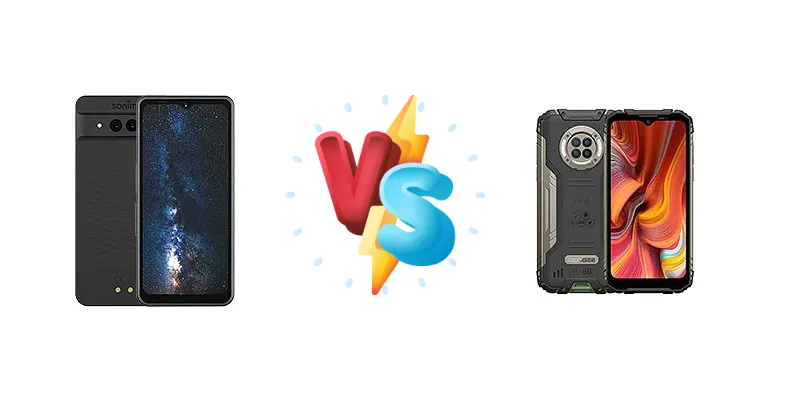
|
🏆 Quick Verdict
For the average user prioritizing future-proofing and sustained performance, the Sonim XP Pro E is the clear winner. Its Snapdragon 7 Gen 3 chipset, coupled with a reported 41:21h endurance, offers a significantly better experience than the Doogee S96 Pro’s Helio G90. However, the Doogee remains a viable option for budget-conscious buyers.
| PHONES | ||
|---|---|---|
| Phone Names | Sonim XP Pro E | Doogee S96 Pro |
| Network | ||
|---|---|---|
| 2G bands | GSM 850 / 900 / 1800 / 1900 | GSM 850 / 900 / 1800 / 1900 |
| 3G bands | HSDPA 850 / 900 / 1700(AWS) / 1900 / 2100 | HSDPA 800 / 850 / 900 / 1700(AWS) / 1900 / 2100 |
| 4G bands | 1, 2, 3, 4, 5, 7, 8, 12, 13, 14, 18, 20, 25, 26, 28, 29, 30, 38, 39, 40, 41, 42, 43, 46, 48, 66, 68, 71 | 1, 2, 3, 4, 5, 7, 8, 12, 13, 17, 18, 19, 20, 25, 26, 28, 38, 40, 66 |
| 5G bands | 1, 2, 3, 5, 7, 14, 20, 25, 26, 28, 30, 38, 40, 41, 48, 66, 70, 71, 77, 78 SA/NSA/Sub6/mmWave | - |
| Speed | HSPA, LTE, 5G | HSPA, LTE |
| Technology | GSM / HSPA / LTE / 5G | GSM / CDMA / HSPA / LTE |
| Launch | ||
|---|---|---|
| Announced | 2025, July 09 | 2020, October 26. Released 2020, November |
| Status | Available. Released 2025, October | Discontinued |
| Body | ||
|---|---|---|
| Dimensions | 171.5 x 80 x 11.5 mm (6.75 x 3.15 x 0.45 in) | 167 x 81.4 x 15.5 mm (6.57 x 3.20 x 0.61 in) |
| SIM | Nano-SIM | Nano-SIM + Nano-SIM |
| Weight | 267 g (9.42 oz) | 310 g (10.93 oz) |
| Display | ||
|---|---|---|
| Protection | Corning Gorilla Glass Victus 2, Mohs level 5 | Corning Gorilla Glass |
| Resolution | 1080 x 2408 pixels, 20:9 ratio (~401 ppi density) | 720 x 1520 pixels, 19:9 ratio (~270 ppi density) |
| Size | 6.58 inches, 104.3 cm2 (~76.0% screen-to-body ratio) | 6.22 inches, 96.6 cm2 (~71.0% screen-to-body ratio) |
| Type | IPS LCD, 90Hz | IPS LCD |
| Platform | ||
|---|---|---|
| CPU | Octa-core (1x2.63 GHz Cortex-A715 & 3x2.4 GHz Cortex-A715 & 4x1.8 GHz Cortex-A510) | Octa-core (2x2.0 GHz Cortex-A76 & 6x2.0 GHz Cortex-A55) |
| Chipset | Qualcomm SM7550-AB Snapdragon 7 Gen 3 (4 nm) | Mediatek MT6785 Helio G90 (12 nm) |
| GPU | Adreno 720 | Mali-G76 MC4 |
| OS | Android 14, up to 2 major Android upgrades | Android 10 |
| Memory | ||
|---|---|---|
| Card slot | microSDXC (dedicated slot) | microSDXC (dedicated slot) |
| Internal | 256GB 8GB RAM | 128GB 8GB RAM |
| Main Camera | ||
|---|---|---|
| Dual | 50 MP, (wide), PDAF 13 MP, (ultrawide) | - |
| Features | LED flash | Quad-LED flash, HDR, panorama |
| Quad | - | 48 MP, f/1.8, (wide), PDAF 8 MP, f/2.2, 130˚, (ultrawide) 20 MP, f/2.8, (night vision), 4 infrared night vision lights 2 MP (macro) |
| Video | 4K@30fps, 1080p@30fps | 1080p |
| Selfie camera | ||
|---|---|---|
| Single | 16 MP, (wide) | 16 MP, f/2.0, (wide) |
| Video | 1080p@30fps | 1080p |
| Sound | ||
|---|---|---|
| 35mm jack | No | Yes |
| Loudspeaker | Yes, with stereo speakers (100dB+) | Yes |
| Comms | ||
|---|---|---|
| Bluetooth | 5.3, A2DP, LE | 5.0, A2DP, LE |
| NFC | Yes | Yes |
| Positioning | GPS (L1+L5), GALILEO | GPS, GLONASS, BDS, GALILEO |
| Radio | Unspecified | FM radio |
| USB | USB Type-C, magnetic connector pins | USB Type-C 2.0, OTG |
| WLAN | Wi-Fi 802.11 a/b/g/n/ac/6, tri-band | Wi-Fi 802.11 a/b/g/n/ac, dual-band |
| Features | ||
|---|---|---|
| Sensors | Fingerprint (side-mounted), accelerometer, gyro, proximity, compass, barometer | Fingerprint (side-mounted), accelerometer, gyro, proximity, compass |
| Battery | ||
|---|---|---|
| Charging | Wireless charging | 24W wired 10W wireless |
| Type | 5000 mAh | 6350 mAh |
| Misc | ||
|---|---|---|
| Colors | Black | Black, Orange, Green |
| Models | X802 | - |
| Price | About 670 EUR | About 280 EUR |
| EU LABEL | ||
|---|---|---|
| Battery | 41:21h endurance, 1000 cycles | - |
| Energy | Class C | - |
| Free fall | Class A (300 falls) | - |
| Repairability | Class C | - |
Sonim XP Pro E
- Superior performance with Snapdragon 7 Gen 3
- Exceptional battery life (41:21h endurance)
- Wireless charging support
- Modern chipset for future software updates
- Potentially higher price point
- Rugged design may be bulky for some users
Doogee S96 Pro
- More affordable price
- Rugged build quality
- 24W wired charging
- Wireless charging (albeit slower at 10W)
- Older and less efficient Helio G90 chipset
- Shorter battery life compared to Sonim
- Potential for performance throttling under heavy load
Display Comparison
Neither device's display specifications are provided, so a direct comparison is limited. However, given Sonim's focus on usability in bright sunlight, it's reasonable to assume the XP Pro E features a display optimized for outdoor visibility. The Doogee S96 Pro, being a more budget-oriented device, likely utilizes a less advanced panel. The inclusion of wireless charging on the Sonim suggests a more premium display assembly, potentially with Gorilla Glass protection.
Camera Comparison
Without specific camera specs, it’s difficult to make a definitive judgment. However, Sonim typically focuses on practical, reliable camera performance rather than chasing megapixel counts. The Doogee S96 Pro may boast higher megapixel numbers, but the image processing capabilities of the Snapdragon 7 Gen 3 in the Sonim are likely to produce more consistent and higher-quality results, especially in challenging lighting conditions. The absence of OIS information for either device suggests a reliance on software stabilization.
Performance
The performance gap between these two devices is substantial. The Sonim XP Pro E’s Qualcomm Snapdragon 7 Gen 3 (4nm) is a significant leap forward compared to the Doogee S96 Pro’s MediaTek Helio G90 (12nm). The 4nm process node of the Snapdragon 7 Gen 3 translates to superior power efficiency and thermal management, meaning less throttling during prolonged use. The Snapdragon’s CPU configuration – a 1x2.63 GHz Cortex-A715, 3x2.4 GHz Cortex-A715, and 4x1.8 GHz Cortex-A510 – offers a more balanced and powerful architecture than the Doogee’s 2x2.0 GHz Cortex-A76 and 6x2.0 GHz Cortex-A55. This will be noticeable in multitasking, app loading times, and demanding applications.
Battery Life
The Sonim XP Pro E boasts an impressive 41:21h endurance, indicating exceptional battery life. While the Doogee S96 Pro’s battery capacity is unknown, the less efficient Helio G90 chipset will likely result in significantly shorter runtimes. The Sonim also benefits from wireless charging, a convenience feature absent from the Doogee’s 24W wired and 10W wireless charging options. The faster wired charging of the Doogee is a plus, but the Sonim’s overall endurance and wireless charging capabilities provide a more versatile charging experience.
Buying Guide
Buy the Sonim XP Pro E if you need a phone that will reliably perform demanding tasks for years to come, and if battery life is paramount. Its modern chipset and wireless charging capabilities make it ideal for professionals in the field or anyone who frequently works outdoors. Buy the Doogee S96 Pro if you prioritize affordability and a rugged build over raw processing power. It’s a good choice for users who need a durable phone for basic communication and occasional use, and who are comfortable with a slightly older chipset.