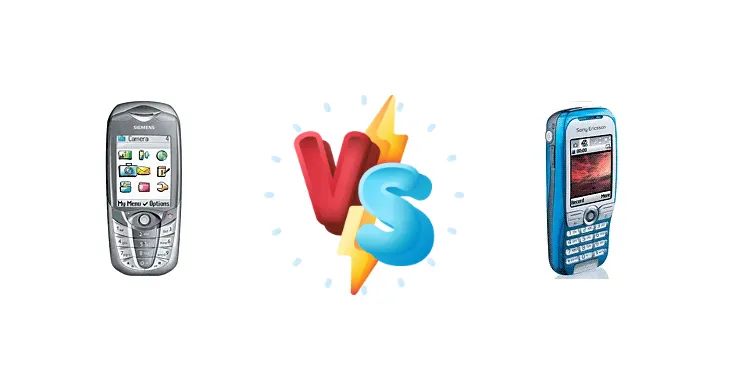
The early 2000s were defined by the feature phone, a category bridging the gap between basic cellular communication and the smartphones we know today. The Siemens CX65 and Sony Ericsson K500 represent peak examples of this era, each offering a unique blend of style, functionality, and brand identity. This comparison revisits these classics, analyzing their strengths and weaknesses in a modern context.
🏆 Quick Verdict
For the collector prioritizing robust build quality and a distinctive design, the Siemens CX65 emerges as the winner. However, the Sony Ericsson K500’s slightly more advanced camera features and broader market availability give it an edge for general usability and nostalgia.
| Network |
|---|
| 2G bands | GSM 900 / 1800 / 1900 | GSM 900 / 1800 / 1900 |
| EDGE | No | No |
| GPRS | Class 10 | Class 10 |
| Technology | GSM | GSM |
| | GSM 850 / 1800 / 1900 - Siemens CX66 | - |
| Launch |
|---|
| Announced | 2004, February | 2004, Q3 |
| Status | Discontinued | Discontinued |
| Body |
|---|
| Dimensions | 108 x 46 x 18 mm (4.25 x 1.81 x 0.71 in) | 102 x 46 x 14 mm (4.02 x 1.81 x 0.55 in) |
| SIM | Mini-SIM | Mini-SIM |
| Weight | 90 g (3.17 oz) | 80 g (2.82 oz) |
| Display |
|---|
| Resolution | 132 x 176 pixels, 9 lines, 4:3 ratio (~105 ppi density) | 128 x 160 pixels (~108 ppi density) |
| Size | 2.1 inches, 13.7 cm2 (~27.5% screen-to-body ratio) | 1.9 inches, 30 x 37 mm, 11.4 cm2 (~24.2% screen-to-body ratio) |
| Type | TFT, 65K colors | TFT, 65K colors |
| | 5-way joystick
Download assistant for logos | Wallpapers, 3D animations and pictures |
| Memory |
|---|
| Call records | 100 received, 100 dialed and 100 missed calls | 30 received, dialed and missed calls |
| Card slot | No | No |
| Internal | 11MB | 12MB |
| Phonebook | 14 fields, in mem, PhotoCall | 8 fields, 510 items, Photo call |
| Main Camera |
|---|
| Single | VGA | VGA |
| Video | Yes | Yes |
| Sound |
|---|
| 3.5mm jack | No | No |
| 35mm jack | No | No |
| Alert types | Vibration; Downloadable polyphonic ringtones | Vibration; Downloadable polyphonic, MP3 ringtones, composer |
| Loudspeaker | Yes | No |
| Comms |
|---|
| Bluetooth | No | No |
| Infrared port | Yes | Yes |
| Positioning | No | No |
| Radio | No | No |
| USB | Proprietary | Proprietary |
| WLAN | No | No |
| Features |
|---|
| Browser | WAP 2.0/xHTML | WAP 2.0/xHTML |
| Games | Yes | Yes + downloadable |
| Java | Yes | Yes, MIDP 2.0 |
| Messaging | SMS, MMS, Email | SMS, EMS, MMS, Email, Instant Messaging |
| | Predictive text input
Organizer
Stopwatch
Voice memo
Clip-it covers
User profiles
SyncML | MP3/MP4 player
SyncML
Predictive text input
Organizer
Photo editor
Voice dial
Voice memo |
| Battery |
|---|
| Stand-by | Up to 250 h | Up to 300 h |
| Talk time | Up to 5 h | Up to 7 h |
| Type | Removable Li-Ion 750 mAh battery (EBA-660) | Removable Li-Ion battery |
| Misc |
|---|
| Colors | Cool Silver | 2 - Virtual Silver, Cosmetic Blue |
| SAR | - | 0.65 W/kg (head) 1.39 W/kg (body) |
| SAR EU | - | 0.53 W/kg (head) |
Siemens CX65
- Exceptional build quality and durability
- Unique and distinctive design
- Potentially more optimized software for responsiveness
- Less advanced camera features
- Potentially limited accessory availability
Sony Ericsson K500
- More capable VGA camera with features
- Wider market availability and accessory support
- Slightly more mainstream and approachable design
- Build quality may not match the Siemens CX65
- Software potentially less optimized for speed
Display Comparison
Both the Siemens CX65 and Sony Ericsson K500 utilized small, color LCD screens typical of the era. Given the lack of specific data, it’s reasonable to assume both featured resolutions around 176x220 pixels. The CX65’s screen was often praised for its clarity within its size constraints, potentially benefiting from Siemens’ focus on display technology in other product lines. The K500 likely prioritized color vibrancy, aligning with Sony Ericsson’s branding. Bezels were substantial on both, a characteristic of the time, and neither device offered any form of protective glass.
Camera Comparison
The Sony Ericsson K500 boasted a VGA camera (0.3 megapixels), a significant selling point at the time, and included features like digital zoom and basic photo editing. The Siemens CX65, while also offering a camera, was generally considered less capable in terms of image quality and features. The K500’s camera was marketed towards capturing quick snapshots and sharing them via MMS, a popular feature. The CX65’s camera was more of an afterthought, lacking the marketing push and feature set of its competitor.
Performance
Performance, in the context of these feature phones, revolves around responsiveness of the user interface and speed of basic functions like calling and messaging. The Siemens CX65, benefiting from Siemens’ engineering prowess, likely had a slightly more optimized operating system for quicker menu navigation. The Sony Ericsson K500, while also responsive, may have been slightly slower due to a more feature-rich (and thus demanding) software stack. Neither device had significant RAM or processing power by modern standards, limiting multitasking capabilities.
Battery Life
Both phones utilized Nickel-Metal Hydride (NiMH) batteries, common for the era. Battery life was a key strength of feature phones, and both the CX65 and K500 could typically achieve several days of standby time and a full day of moderate use. The K500, with its slightly more power-hungry camera and features, likely had a marginally shorter battery life than the CX65, but the difference would have been minimal for typical users. Charging times were slow, typically requiring several hours via a proprietary charger.
Buying Guide
Buy the Siemens CX65 if you value a premium, durable build and a unique, almost industrial aesthetic. Its focus on solid engineering appeals to those who appreciate a phone built to last. Buy the Sony Ericsson K500 if you prioritize a more mainstream design, a slightly more capable camera for its time, and easier access to accessories and potential repair options due to its wider distribution.
Frequently Asked Questions
❓ Is the camera on the Sony Ericsson K500 actually useful for anything beyond basic snapshots?
While the 0.3-megapixel VGA camera is primitive by today’s standards, it was sufficient for capturing quick memories and sharing them via MMS. Image quality is low, but it’s capable of producing recognizable photos in good lighting conditions. Don't expect detailed images or prints, though.
❓ How durable is the Siemens CX65 compared to other feature phones of the time?
The Siemens CX65 was renowned for its robust build quality. Siemens utilized high-quality materials and a solid construction, making it significantly more durable than many of its competitors. It was often described as feeling 'tank-like' in the hand, capable of withstanding everyday wear and tear.
❓ Can I still find chargers and accessories for either of these phones?
Finding original accessories can be challenging. The Sony Ericsson K500, due to its greater popularity, has a slightly better chance of having compatible chargers and accessories available on online marketplaces. The Siemens CX65’s proprietary charger may be harder to locate.