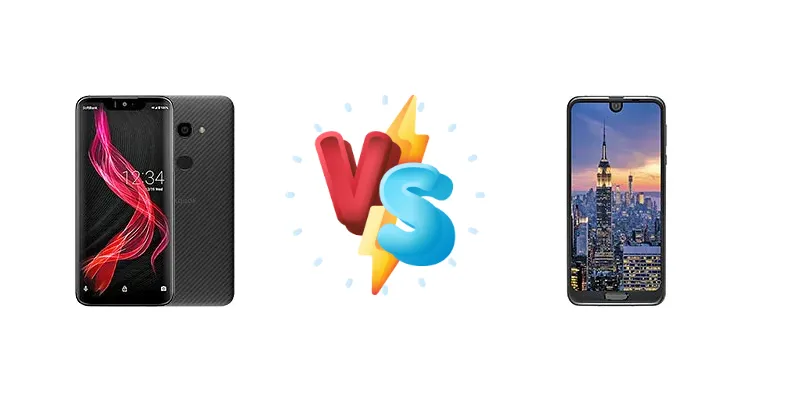
The Sharp Aquos Zero and R2 represent a fascinating period for the Japanese manufacturer, both leveraging the Qualcomm Snapdragon 845. While sharing the same core chipset, these devices diverge in key areas, most notably charging technology. This comparison dissects those differences to determine which phone delivers the better overall experience for today's user.
🏆 Quick Verdict
For most users, the Sharp Aquos Zero emerges as the superior choice. Its inclusion of 18W PD2.0 charging significantly reduces charging times compared to the R2’s 10W standard, a practical advantage that outweighs any other minor differences between these otherwise similar devices.
| Network |
|---|
| 2G bands | GSM 850 / 900 / 1800 / 1900 | GSM 850 / 900 / 1800 / 1900 |
| 3G bands | HSDPA 900 / 2100 | HSDPA 850 / 900 / 1900 / 2100 |
| 4G bands | 1, 3, 7, 8, 28, 38 | 1, 3, 5, 8, 11, 12, 17, 19, 26, 28, 41, 42 |
| Speed | HSPA 42.2/5.76 Mbps, LTE (3CA) Cat15 1024/50 Mbps | HSPA, LTE |
| Technology | GSM / HSPA / LTE | GSM / CDMA / HSPA / LTE |
| | - | CDMA 800 & TD-SCDMA |
| Launch |
|---|
| Announced | 2019, January. Released 2019, January | 2018, May. Released 2018, May |
| Status | Discontinued | Discontinued |
| Body |
|---|
| Build | Glass front (Gorilla Glass 5), aluminum frame | - |
| Dimensions | 154 x 73 x 8.8 mm (6.06 x 2.87 x 0.35 in) | 156 x 74 x 9 mm (6.14 x 2.91 x 0.35 in) |
| SIM | Nano-SIM | Nano-SIM + Nano-SIM |
| Weight | 146 g (5.15 oz) | 181 g (6.38 oz) |
| | IP68 dust/water resistant (up to 1.5m for 30 mins) | IPX5/IPX8/IP6X |
| Display |
|---|
| Protection | Corning Gorilla Glass 5 | - |
| Resolution | 1440 x 2992 pixels, 18.7:9 ratio (~536 ppi density) | 1440 x 3040 pixels, 19:9 ratio (~561 ppi density) |
| Size | 6.2 inches, 96.9 cm2 (~86.2% screen-to-body ratio) | 6.0 inches, 89.9 cm2 (~77.8% screen-to-body ratio) |
| Type | OLED, HDR10, Dolby Vision | IGZO IPS LCD |
| Platform |
|---|
| CPU | Octa-core (4x2.6 GHz Kryo 385 Gold & 4x1.7 GHz Kryo 385 Silver) | Octa-core (4x2.6 GHz Kryo 385 Gold & 4x1.7 GHz Kryo 385 Silver) |
| Chipset | Qualcomm SDM845 Snapdragon 845 (10 nm) | Qualcomm SDM845 Snapdragon 845 (10 nm) |
| GPU | Adreno 630 | Adreno 630 |
| OS | Android 9.0 (Pie) | Android 8.0 (Oreo), upgradable to Android 10 |
| Memory |
|---|
| Card slot | No | microSDXC (uses shared SIM slot) |
| Internal | 128GB 6GB RAM | 64GB 4GB RAM |
| Main Camera |
|---|
| Dual | - | 22.6 MP, PDAF
16.3 MP, PDAF (for video recording only) |
| Features | LED flash, HDR, panorama | LED flash, HDR, panorama |
| Single | 22.6 MP, f/1.9, 22 mm, PDAF, OIS | - |
| Video | 4K@30fps, 1080p@30fps (gyro-EIS) | 4K@30fps (dedicated video camera) |
| Selfie camera |
|---|
| Features | HDR | - |
| Single | 8 MP, f/2.2, 23 mm | 16.3 MP |
| Video | 1080p@30fps | - |
| Sound |
|---|
| 3.5mm jack | No | Yes |
| 35mm jack | No | Yes |
| Loudspeaker | Yes, with stereo speakers | Yes |
| |
24-bit/192kHz audio | - |
| Comms |
|---|
| Bluetooth | 5.0, A2DP, LE | 5.0, A2DP, LE |
| NFC | Yes | Yes |
| Positioning | GPS, GLONASS, GALILEO, QZSS | GPS, GLONASS |
| Radio | No | No |
| USB | USB Type-C 2.0 | USB Type-C 2.0 |
| WLAN | Wi-Fi 802.11 a/b/g/n/ac, dual-band, Wi-Fi Direct | Wi-Fi 802.11 a/b/g/n/ac, dual-band, Wi-Fi Direct |
| Features |
|---|
| Sensors | Fingerprint (rear-mounted), accelerometer, gyro, proximity, compass | Fingerprint (front-mounted), accelerometer, gyro, proximity, compass |
| Battery |
|---|
| Charging | 18W wired, PD2.0 | 10W wired |
| Type | Li-Ion 3130 mAh, non-removable | Li-Ion 3130 mAh, non-removable |
| Misc |
|---|
| Colors | Meteorite Black | Black, White |
| Models | SH-Z10 | 706SH, SHV42 |
| Price | About 600 EUR | About 350 EUR |
Sharp Aquos Zero
- Faster 18W PD2.0 charging
- Potential for slightly better thermal management
- Future-proofed charging standard
- May be harder to find or more expensive
- Battery capacity unknown
Sharp Aquos R2
- Potentially lower price point
- Similar performance to the Aquos Zero
- Reliable Snapdragon 845 chipset
- Significantly slower 10W charging
- Lacks PD2.0 support
- May exhibit more thermal throttling under sustained load
Display Comparison
Both the Aquos Zero and R2 likely feature high-quality LCD panels, a Sharp specialty. However, specific details like peak brightness (nits) and color gamut coverage are absent. Given Sharp’s focus on visual fidelity, we can assume both offer excellent viewing experiences. The absence of LTPO technology suggests standard refresh rates, likely 60Hz, impacting smoothness compared to newer displays. Bezels were a key design element for Sharp at this time, and a visual comparison would be needed to determine which device minimizes them more effectively.
Camera Comparison
Without detailed sensor specifications, a direct camera comparison is difficult. However, both phones likely feature a multi-camera setup. The absence of information suggests neither device boasts a particularly groundbreaking camera system for its time. Lens apertures and OIS (Optical Image Stabilization) would be crucial factors, but are unknown. Image processing style is also a key differentiator, and would require side-by-side sample photos to assess. Any 2MP macro or depth sensors are likely to offer limited real-world benefit.
Performance
Both devices are powered by the Qualcomm Snapdragon 845 (10nm), featuring an octa-core CPU configuration with 4x2.6 GHz Kryo 385 Gold and 4x1.7 GHz Kryo 385 Silver cores. This means CPU performance will be virtually identical. The GPU performance will also be the same. The key differentiator isn't processing power, but thermal management. While both use the same chipset, the Aquos Zero’s slightly more modern design *may* offer marginally better heat dissipation, though this is speculative without thermal testing. RAM configurations are unknown, but likely 6GB or 8GB, impacting multitasking capabilities.
Battery Life
Battery capacity is not specified for either device. However, the critical difference lies in charging speed. The Aquos Zero supports 18W wired charging with PD2.0 (Power Delivery 2.0), enabling faster and more efficient charging. The Aquos R2 is limited to 10W wired charging. This translates to a significantly longer 0-100% charge time for the R2. For a user charging their phone daily, this difference is substantial. PD2.0 also offers intelligent charging, potentially extending battery lifespan.
Buying Guide
Buy the Sharp Aquos Zero if you prioritize faster charging and future-proofing with PD2.0 support, making it ideal for users who frequently top up their phones throughout the day. Buy the Sharp Aquos R2 if you find it at a significantly lower price point and are willing to trade charging speed for potential savings, and aren't concerned about the slower charging.
Frequently Asked Questions
❓ Does the Aquos R2's slower charging significantly impact daily use?
Yes, the 10W charging on the Aquos R2 will take considerably longer to fully charge compared to the Aquos Zero's 18W PD2.0 charging. This is particularly noticeable if you frequently run out of battery and need a quick top-up.
❓ Is PD2.0 charging on the Aquos Zero compatible with all USB-C chargers?
While most USB-C chargers will work, to achieve the full 18W PD2.0 charging speed, you need a charger that specifically supports the Power Delivery 2.0 protocol. Standard USB-C chargers will likely charge at a slower rate.
❓ Will I notice a performance difference between the Aquos Zero and R2 during gaming?
No, you likely won't notice a significant performance difference during gaming. Both devices utilize the same Snapdragon 845 chipset and similar RAM configurations. However, the Aquos Zero *may* sustain peak performance for longer due to potentially better thermal management.